
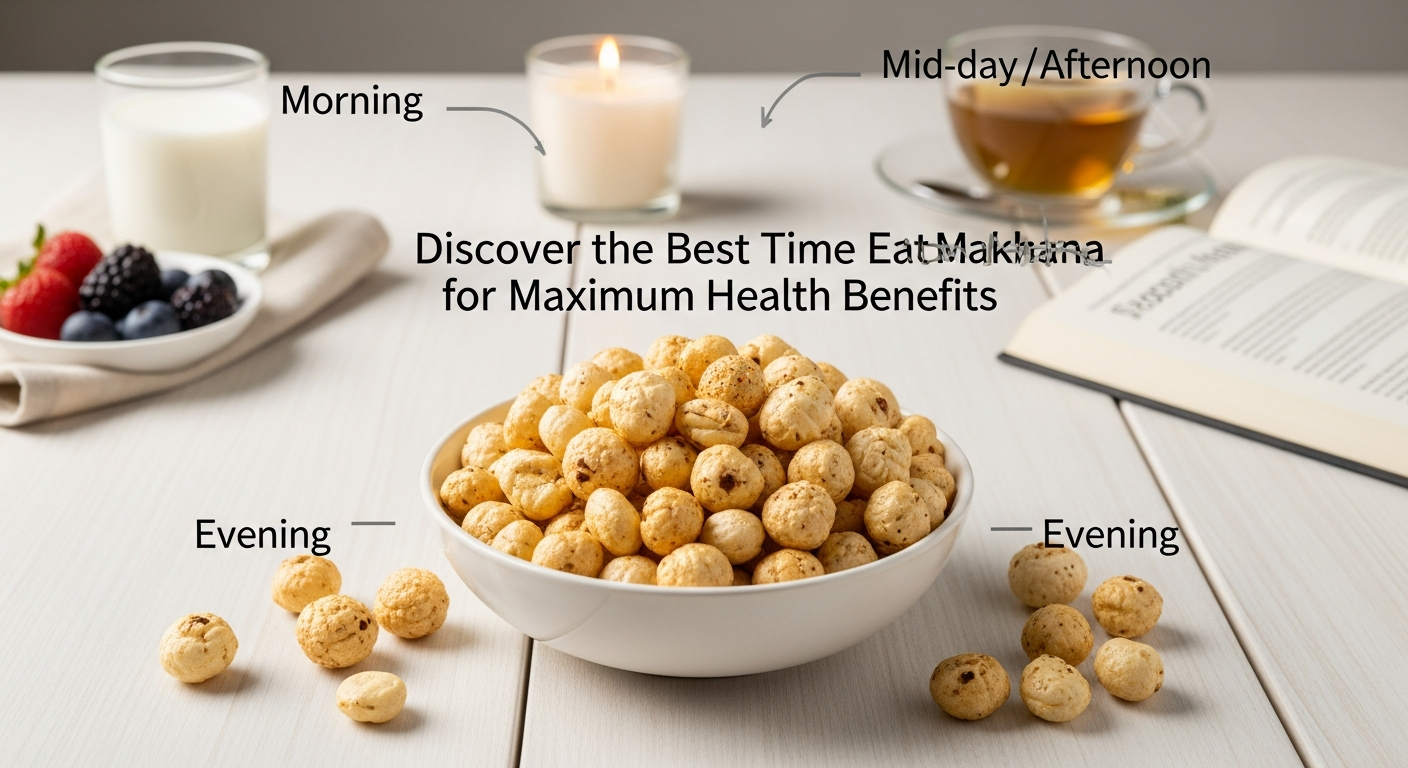
Makhanas represent the venerable Indian delicacy known as a 'super food'. The food itself has been very popular with families for many, many years because of its healthy, comforting ефect.
The three biggest nutrients in makhanas are protein, calcium and magnesium, which are also rich sources of antioxidants. Because of how easily and quickly these nutrients can be absorbed by your body, makhana makes an excellent snack for every age group when eaten at the correct times throughout the day. Throughout the day, there is the potential for energy enhancement in the morning and satiety in the evening—eating makhana, at the right time, can provide the best health-benefiting qualities with every crunchy bite.
Why Timing Matters – Unlocking the Power of Makhana Consumption
Makhana (lotus seed) is a light, nutrient-rich superfood. However, your body will get the most benefit if you eat it at the right time. Like other healthy foods, Makhana works best when it is eaten at certain times during the day because it allows for better digestion and improved nutrient absorption, as well as more sustained energy. Understanding the ideal time to consume Makhana can help you maximize your body's use of its nutrients (protein, minerals & antioxidants) and reduce risk of feeling heavy or uncomfortable.
How Meal Timing Impacts Makhana’s Nutrient Absorption
Makhana contains protein and magnesium, calcium and antioxidants; therefore, the best time to eat Makhana is when your digestion is working actively and is not overloaded with food. If you eat Makhana at a time when your digestion is not working actively, or if you eat Makhana between meals, you will be able to utilize its nutrients more efficiently rather than having them stored for later use or causing uncomfortable bloating.
Importance of Timing – Why It is Important to Eat Makhana at the Right Time
- The Importance of Timing
- More Efficient Absorption of Calcium & Magnesium
- More Efficient Digestive Comfort & Improves Gut Health
- Energy Released More Sustainably
The Importance of Knowing When to Consume Makhana to Maximize Makhana's Health Benefits
Why Makhana Works Better as a Timed Healthy Snack
Makhana is most effectively consumed as a snack versus with large meals. Makhana is quite filling but also relatively light, which makes it an attractive choice to combat hunger and overconsumption when eaten mid-morning or evening. Properly timed 'snack' consumption of Makhana will satisfy cravings while not adding unnecessary calories (i.e. hungry at breakfast).
Optimal Snacking Time / Usefulness:
- Mid-Morning- (Help in preventing a mid-morning unhealthy snack)
- Evening- (To control your appetite prior to dinner)
- Pre-Workout- (Provides immediate energy boost for workouts)
Additionally, Makhana is an excellent snack for controlling weight and maintaining a steady supply of energy throughout the day.
Understanding Makhana's Role in Daily Nutrition
Depending on the time of day you eat Makhana it will support your nutritional needs differently.
- Mornings - Provide energy and concentration.
- Afternoons - Helps prevent fatigue.
- Evenings - Allows you to feel full while providing no burden to indigestion.
The knowledge of when to eat Makhana and when your body's natural circadian cycle dictates will allow you to more effectively incorporate Makhana into your daily nutrition.

The Best Time to Eat Makhana: Morning Rituals & Benefits
In general, morning is believed to be the best time to eat makhana because the body has just awakened, is actively digesting its first meal, and is ready for optimum absorption of nutrients. Eating makhana first thing in the morning also helps get the body's metabolism going, provides the body with clean, natural energy, and helps manage the sensation of hunger for extended periods. Since makhana is light, is rich in protein, is easy to digest, and provides physical and mental energy without the added weight, eating it for breakfast will help maintain physical energy and increase mental focus all day.
Eating Makhana on an Empty Stomach for Energy Boost
Eating makhana before breakfast (on an empty stomach) in the morning helps the body maximally absorb vitamins and minerals from the food eaten for breakfast and creates more overall energy throughout the day. Along with magnesium, protein, and good complete carbohydrates that provide constant energy, makhana also contains no processed sugars that can create sugar spikes from eating those energy-producing foods. Since makhana is light in texture, it has a less intense effect on the stomach, which is great for people who have difficulty digesting heavier foods or are sensitive to certain foods.
Why it works:
- increase your body's natural energy level.
- activates your metabolism earlier.
- prevents feelings of fatigue during mid-mornings.
Therefore, early morning is the best time to eat makhana for the long-term vitality of your body.
Makhana as a Healthy Breakfast Addition
Makhana can easily be added to your breakfast without altering your usual breakfast routine. You can mix it with milk, smoothies, porridge or fruit bowls and you’ll enhance the nutritional content of the breakfast meal. Adding Makhana to breakfast means your meals can be balanced, light, and filling.
Best Ways to Eat Makhana in the Morning:
- Roasted Makhana + hot milk
- Makhana mixed in smoothies and oats
- Mild Diarrhoea Porridge of Makhana.
When used as a breakfast option, Makhana produces an even source of energy which helps sustain Fullness.
Ideal Morning Snack for Weight Management & Focus
Makhana is a nutritionally balanced and satisfying snack between breakfast and lunch for those who would like to manage their weight. It’s very low in calories but high in fibre, so it helps keep appetite in check and reduce the risk of overeating at lunchtime.
Because they provide gradual energy, Makhana is a great snack option to help maintain focus and concentration at work or when studying.
Morning Snacking Benefits:
- Keeps Appetites under Control & Prevents Overeating
- Helps Reach Weight Maintenance Goals
- Increases Mental Focus & Productivity

Makhana as a Midday Snack – Sustained Energy & Better Focus
Eating makhana at noon is the best time of day to consume this healthy food. Your body is likely feeling fatigued and hungry at this time of day. Therefore our bodies require healthy and nutritious snacks that provide long-lasting energy without being either too heavy or too tired. Makhana meets all these requirements as it is a low calorie food, easily digested and packed with minerals and protein. Thus, choosing when to eat makhana depends on your body's need to maintain a higher level of productivity, to be able to concentrate on work in the afternoon and to avoid overeating at dinner time.
Midday Makhana Snacking to Beat Hunger Cravings
Makhana is one of the best snacks for curbing hunger during the middle of the day.
- The fiber found in makhana helps to keep you full longer.
- The high protein content in makhana reduces your chance of experiencing sudden hunger pangs.
- This allows for a solution to the desire for fried or sugary foods.
- The reason why this is effective is that by eating makhana between meals, your blood sugar will remain steady, so there isn't a chance for you to have an energy crash later in the day, making makhana an excellent midday snack option.
Office-Friendly Makhana Snack Ideas
Makhana – portable, clean and easy to snack on, making Makhana great for any work environment!
- Dry Roasted Makhana with Light Seasoning.
- Herb Flavored Makhana Mixes.
- Plain Roasted Makhana (good for those with sensitive digestion).
- Makhana works well because:
Makhana can be consumed without refrigeration and doesn't create a mess; plus, it keeps your energy levels up without slowing down. They are a great addition to the office desk and for meetings.
How Midday Makhana Helps Maintain Productivity
Eating Makhana at specific times during the day (when eaten during the afternoon) supports your physical and mental performance.
- Magnesium reduces fatigue.
- Slow-releasing (energy) helps concentration.
- Prevents drowsiness after lunch.
- Makhana works during the afternoon because you don't have to rely on caffeine or junk food to

Makhana in the Evening – A Light & Satisfying Pre-Dinner Option
Time for eating Makhana (fox nuts) is generally considered a good time for individuals who have cravings during the period between lunch and dinner. The evening is an ideal time for you to eat Makhana because, at this point in your day, you want something light and suitable for your digestion but not overloading (i.e., keeping you feeling overly full or too full from eating prior to dinner). Makhana is great for this level of eating because of its low-calorie content, it’s easy for your body to digest (and, therefore, you can consume without a lot of problems) and keeps your stomach feeling slightly satisfied (but you still will likely want to eat dinner). Makhana is also a good time to eat to support your digestion. Makhana is a good way to help maintain your portion sizes at dinner (and limit yourself to what you really want) and keep you energized throughout the evening.
Low-Calorie Evening Snacking Benefits
- Makhana is the perfect evening snack alternative and is an excellent low-calorie option that counts toward your total daily calories.
- It satisfies your need for crunchiness and filling satisfaction while providing little to no additional fat/calories.
- It is a great substitute for fried snacks, biscuits, and/or sweet tea snacks.
- If you eat Makhana in moderation, it will help with your weight management efforts.
How Makhana Works:
During the evening hours, our metabolism is slightly slower than during the daytime hours, making it easier for heavy evening snacking to lead to bloating or being overweight. Makhana gives you the nutritional benefits of heavy snacks without feeling heavy! Makhana is one of the smartest choices for an evening snack.
Appetite Control Before Dinner with Makhana
- Makhana, when consumed 1-2 hours prior to dinner, helps maintain satiety and thereby avoids overeating at your main meal.
- The fibre component present in makhanas is also effective in minimizing hunger spikes
- The carbohydrate consumption experienced from protein in Makhana continues to provide you with even energy for a long duration.
- Also, eating Makhana prior to dinner helps avoid overeating at dinner time, as well as minimise late-night cravings.
Makhana for Digestion & Night-Time Comfort
- Makhana is also effective in helping your digestive tract function, and provides a relaxed body at night.
- Makhana is easy to digest; therefore, it is unlikely to interfere with digestion when consumed in the evening.
- Makhana aids in preventing bloating/acidity; therefore, you can enjoy digestively calm periods at night with the aid of Makhana.
Also, Makhana helps to calm your digestive tract prior to sleeping. By being eaten at the correct times, Makhana allows for a relaxed body prior to sleeping.

Avoiding Common Mistakes – When NOT to Eat Makhana
Makhana is highly nutritious, very light, and a "superfood," but like any healthy food, the benefit you'll get from eating makhana will depend upon when and how much you eat. If incorrect timing was used, or if you eat too much of it, then your body will not get as much from the makhana; in fact, if you eat makhana in excess, you could have more discomfort. To avoid this discomfort and maximize the health benefits of eating makhana, it is important to know what time is the best to eat makhana and when not to eat it.
Why Late-Night Makhana Snacking May Not Work for All
Make sure to always take your time eating your meals
- Eating late in the evening might not be an appropriate choice for some people, especially those who experience difficulty digesting food.
- Because late night snacking can often disrupt the digestion of food and therefore lead to lower quality of sleep, it’s not ideal to snack before going to bed.
- Even at night when you are not feeling hungry, eating makhana could result in experiencing an uncomfortable bloated feeling if eaten close to bedtime.
Even though eating makhana has wonderful health benefits, it should be consumed earlier in the day (during the morning, afternoon, or early evening hours) since your body will be better prepared to digest the makhana as it will be more actively digesting food.
Overeating Concerns & Digestive Issues
- Even healthy foods such as makhana can pose problems if consumed in excess
- Excessive consumption of makhana can cause you to have excessive gas, bloating and/or feeling heavy
- If you overeat on this food you will increase your caloric intake above what your body is able to take off through weight management (so you won’t lose weight)
- If you consume dry roasted makhana without sufficient liquids, that may cause your food to slow down your digestive process.
Why do we even care about portion size? When eaten correctly, makhana is a better snack than other options available, it can make you feel much lighter and reduce the likelihood of having digestive issues.
Understanding the Right Portion for the Right Time
Portion size is one factor that is important when determining how effective makhana can be for you.
- Morning or mid-morning - larger size servings can help give you energy and concentration during that time frame
- Evening - smaller quantity servings help reduce your desire for food, but do not cause any issues with your digestion.
At night - only serve in small quantities and/of course meal as a last resort.

How to Incorporate Makhana Into Your Daily Routine for Best Results
Makhana can easily become part of your daily regimen because of its high nutrient density, versatility, ease of preparation, lightness on the digestive system, and ability to provide energy throughout the day. Makhana is a good source of energy in the morning, at lunch, and to help control evening cravings. You can benefit from eating makhana at optimal times for your body and will get the most health benefits from consuming the correct amounts for your lifestyle.
Easy Roasted Makhana Tips for Everyday Snacking
The easiest, and most popular way to eat roasts of makhana as a daily superfood.
- They are roasted on low heat, until light and crunchy when dry roasted (by singing them on the open flame).
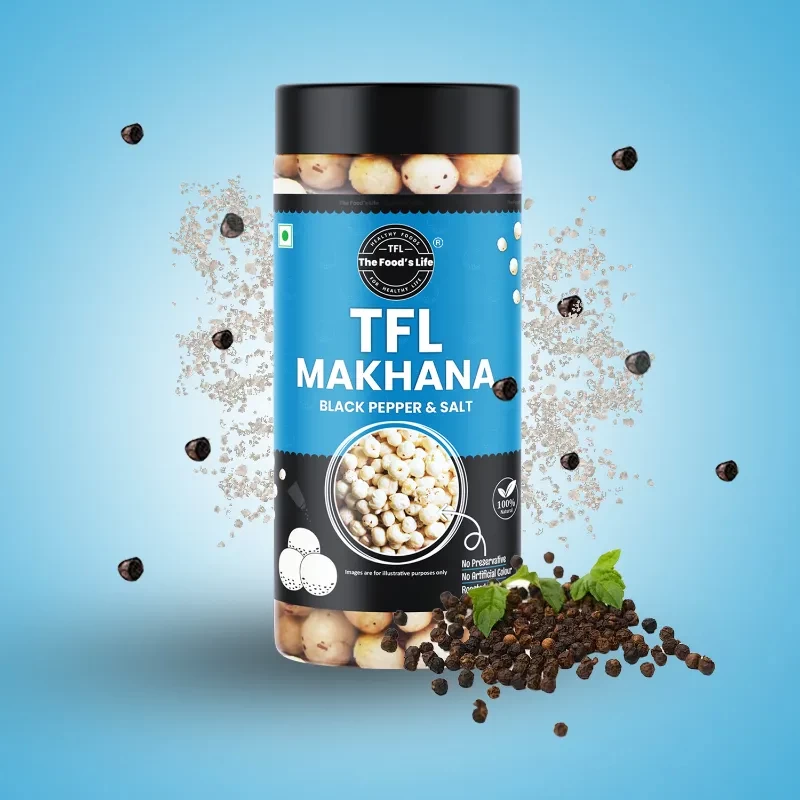
- When you dry roast Makhana add the minimum (as choices) rock salt, turmeric powder, black pepper powder etc.
- When roast Makhana it does not require too much oil and butter, therefore is healthier than roast Makhana with high oil content.
Roasted Makhana is an excellent snack between the recommended times of day to eat Makhana (either during or after breakfast, or between breakfast and lunch), and has also been shown to support weight loss, prevent low blood sugar, and have increased energy production because it is light on the tummy and fits easily into a daily routine for people of all ages.
Portion Size Recommendations for Each Makhana Eating Time
To prevent eating too much or an upset stomach, it is important to eat sufficient amounts of makhana throughout the day but at different times of day.
- Small-to-medium portion sizes are best for frequent consumption of makhana.
- The larger portion size is recommended in the morning and/or early afternoon.
- Larger portions should never be consumed in the evening or before bedtime.
Simple Makhana Recipes to Enjoy Throughout the Day
One of the benefits of eating makhana is that it is easy to prepare without complicated cooking methods.
- Since makhana can be used in a variety of dishes, including light curries or vegetable dishes, it provides a variety of options for eating makhana at different times during the day while also meeting your energy requirements.
- Morning recipes help you remain awake, midday meals provide focus, and evening meals help you avoid unhealthy snacking.
- Rotating recipes allows for variety and balanced consumption of makhana during each daily period.

FAQs:
Q1. What is the best time to eat makhana?
Morning or early evening is the best time to eat makhana for maximum energy and easy digestion.
Q2. Does makhana eating time affect weight loss?
Yes, eating makhana at the right time helps control appetite and supports weight loss more effectively.
Q3. Can I eat makhana at night?
You can eat a small portion in the early evening, but late-night consumption should be avoided to prevent bloating.
Q4. Is makhana good before or after a workout?
Yes, makhana works well both as a pre-workout energy snack and a post-workout recovery food.
Q5. How much makhana should I eat at a time?
A serving of 20–30 grams is ideal for one time to enjoy its benefits without overeating.
Conclusion – Make the Most of Makhana by Choosing the Right Time for a Healthier You
Makhana is a nutritious superfood that can be even healthier if you consume it when you are hungry. By consuming makhana at the proper time, the body will use your body’s nutrients more efficiently, aid in better digestion, and keep the user’s energy level even throughout the day. Eating makhana in the morning can increase your energy levels throughout the day while eating it in the late evening can help control your appetite. Therefore, how and when you eat makhana is a very important factor for maximizing its health benefits.
In addition to providing energy and a great source of nutrients, eating your makhana at the wrong time of the day can lead to overeating and digestive discomfort. Pairing your makhana portion size and timing can make your use of makhana a healthy snack to aid in weight management, improve your focus, and improve your overall health. Making the small change of switching from unhealthy snacks to eating makhana at the appropriate times can begin the process of creating healthy habits for yourself over time.
Incorporating makhana into your daily routine doesn’t require a major overhaul of your life. It only requires the right timing and uncomplicated preparation, which will help in your health journey as you will experience makhana’s benefits over time. Be mindful of when you eat makhana, stay committed to consistently eating makhana each week, and enjoy all the positive aspects of the combination of energy, digestion, and balance that you experience from eating one piece of crunchy makhana at a time.





 +91 63528 07509
 sales@thefoodslife.com
 225, Orchid Plaza, Sama-Savli Rd, behind McDonald's, Vemali, Vadodara, Gujarat 390008