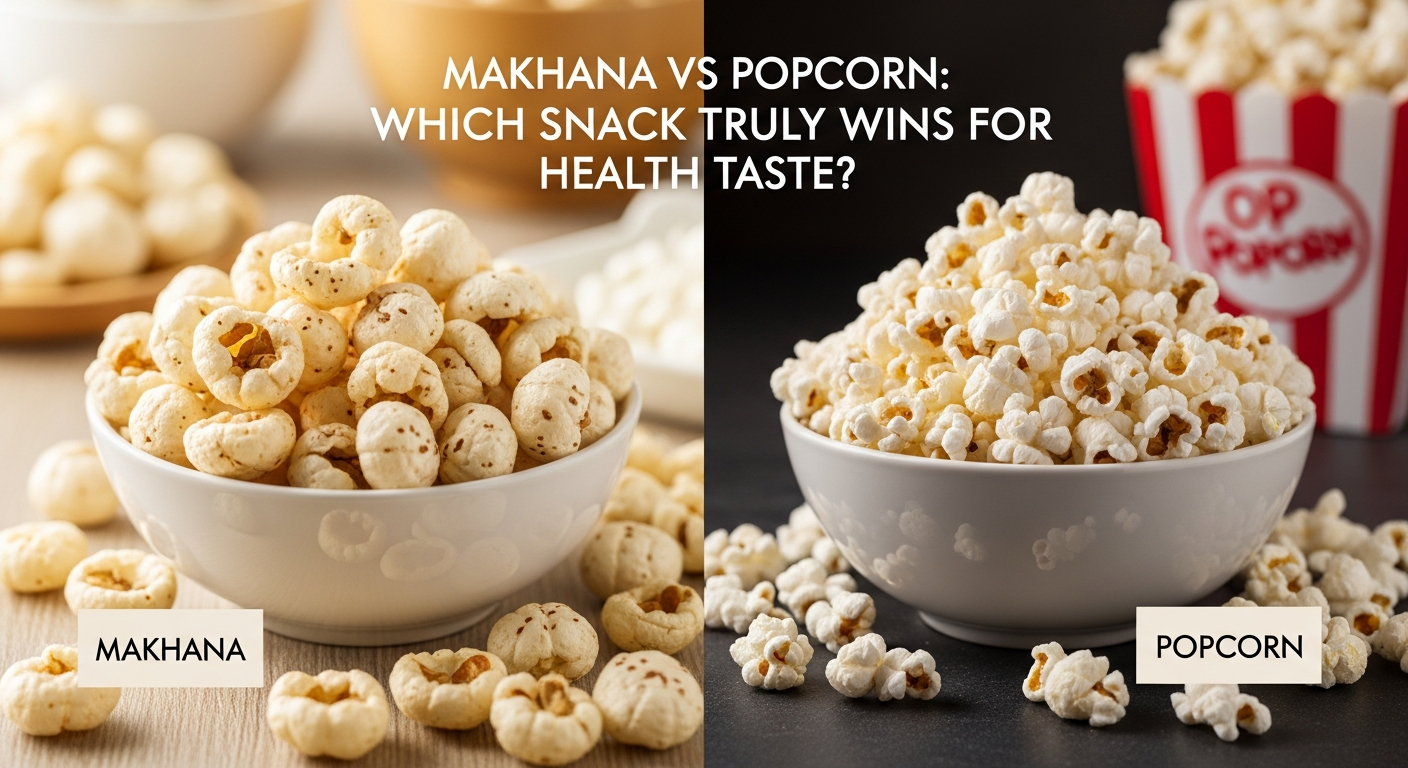
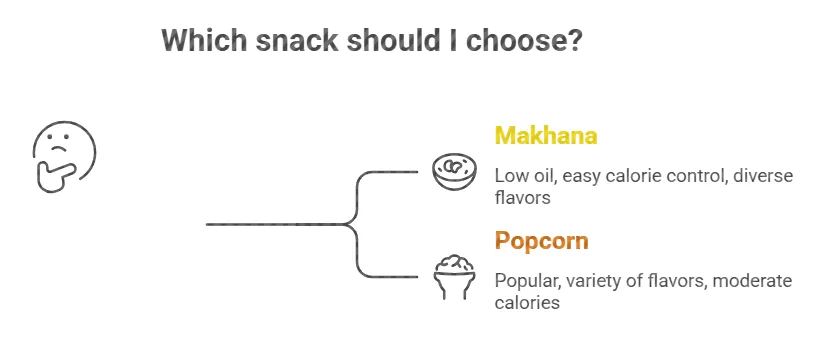
Healthy or unhealthy, which is the more nutritious snack Makhana or Popcorn? These two snack types may be crunchy, light, and easy to prepare, but the nutritional content is very different for these snack foods. While Popcorn is a whole grain that is eaten in many parts of the world, on the other hand, Makhana aka fox nuts are traditionally found in India. They have traditionally been used as an Indian snack and have been recognized for their purity and balance. So how do nutrition values compare when looking at Makhana versus Popcorn?
Nutritionally, Makhana wins regarding nutrition values with its natural low amounts of sodium and fat, because Makhana has significant amounts of protein, calcium, and antioxidants versus Popcorn's good source of fiber, which may depend on how it is prepared (butter and salt).
Calories for Makhana versus Popcorn are usually lower for Makhana (serving size) and keep you feeling full longer; therefore Makhana is more consistent with mindful snacking. Popcorn can also be low in calories if eaten plain (air-popped) versus being eaten with added flavors or toppings. Both snack types taste good, but Makhana beats Popcorn when it comes to everyday health.
Understanding Makhana and Popcorn: Origins and Popularity
There is often a debate concerning the mahayana or mahakya and the popcorn because both are snack foods that are lightweight, crunchy, and considered to be healthier alternatives to unhealthy choices. Both of these snack foods are considered as light snack food options that are widely popular as traditional snacks and are consumed daily.
While they have similarities in ways they may be eaten, there are also significant differences in ways each originated historically, traditionally used, and their respective nutritional journeys. Knowing and understanding both types of snacks will help to clarify how both are viewed differently in terms of health value and frequency of consumption.
Origin of Makhana and Its Traditional Use
Makhana is a food product that has been utilized in Ayurveda and Indian Food Culture for a long period of time. People have understood and appreciated Makhana’s health benefits since ancient times and continue to use it in their cooking today.
The following are benefits of Makhana:
- The lotus seed from which makhana comes is collected from a pond
- Many people in India use Makhana while fasting and during religious rituals
- Makhana is considered a light food type and is easily digested because it is a "sattvic" food type (pure, healthy).
The following traditional benefits are associated with Makhana:
✓ Calcium supports strong bones.
✓ Good for recovery and gut health.
✓ Recommended for children and the elderly.
In comparison to popcorn, Makhana has more nutritional value due to its lower fat content and sodium levels, as it is not a product of processing.
History of Popcorn as a Global Snack
Ancient Mesoamericans developed popcorn and have eaten it since then. Today they are still using it for entertainment purposes.
Key Points:
- There are special types of maize used for making popcorn.
- It became popular around the world with the arrival of the cinema and along with snacks eaten while at home.
- Popcorn is typically consumed with butter, salt and/or different flavors on top.
Why Both Are Popular Healthy Snack Options Today
More Than Just A Healthy Snack, The Health Benefits For Makhana And Popcorn Vary Based On Servings And Preparation.
People Favor Makhana For The Following Reasons:
- Low Calorie Count And High Satiety
- High Mineral & Antioxidant Content
- Great Add-In To Any Weight Loss/Mindful Eating Plan
People Favor Popcorn For The Following Reasons:
- Inexpensive And Readily Available
- Whole Grain Snack (When Not Flavored)
- Familiar Flavor And Texture.
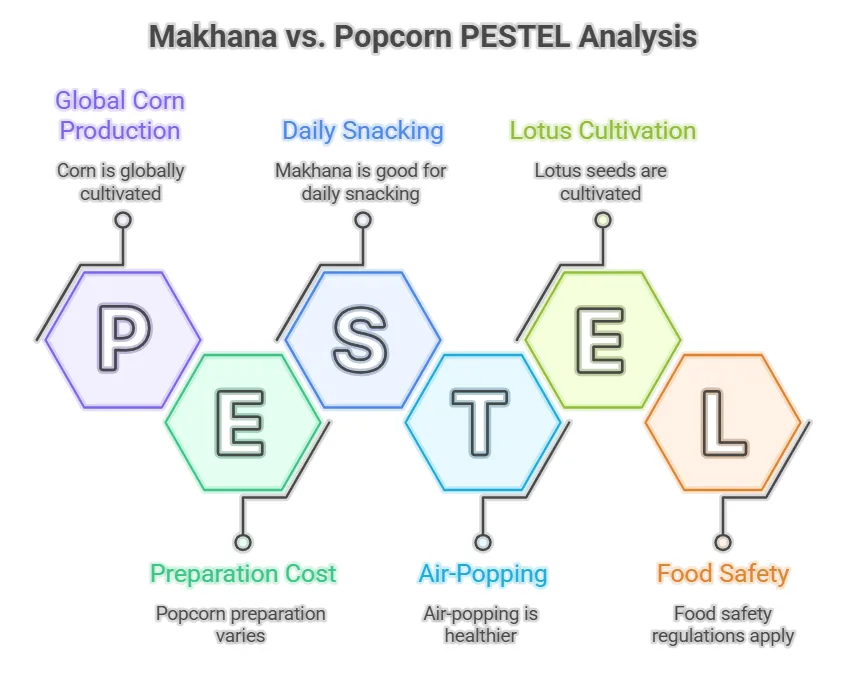
Nutritional Breakdown: Makhana vs Popcorn
The nutritional characteristics of various snacks influence your decision about what snack may be eaten most frequently throughout your daily diet. An example would be the comparison of makhana versus popcorn.
While both are relatively low in calories and can often be eaten without remorse, they differ in calorie count, macronutrients, and how each food affects your health. Here, we'll examine these differences.
Calories Comparison – Makhana vs Popcorn Calories
When it comes to calorie consumption, this is usually the first priority for people counting calories. Both snacks can generally be low in calories, but the way they are made greatly affects your total calorie intake.
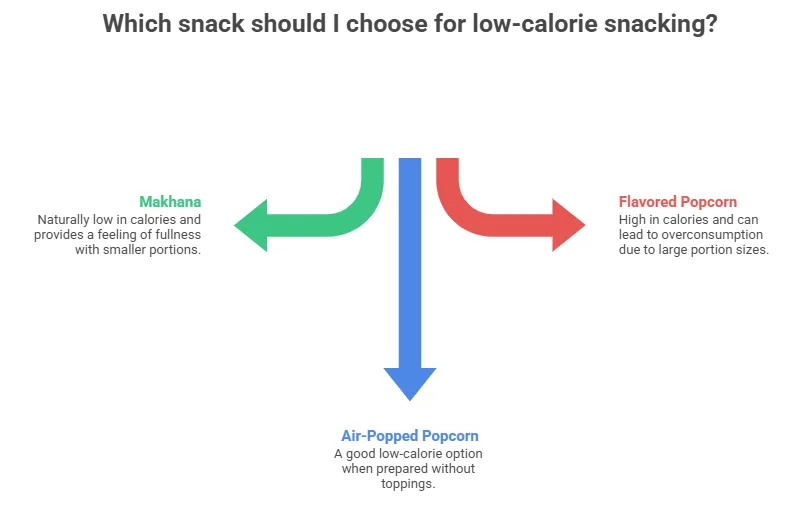
Protein, Fiber & Fat Content Comparison
When it comes to how filling and nutritious a snack is, we need to take into account the three macronutrients.
Makhana contains:
✓ Moderate amount of plant protein for satiety
✓ Very low fat and no trans fats
✓ Very easy to digest
Popcorn contains:
✓ Large amount of fiber (benefits of being whole grain)
✖ Less protein than makhana
✖ Amount of fat is highly dependent on what type of oil / butter is used.
To summarize: Makhana has cleaner macronutrients compared to popcorn; popcorns’ nutritional value is dependent upon how it is prepared.
Makhana vs Popcorn Nutrition at a Glance
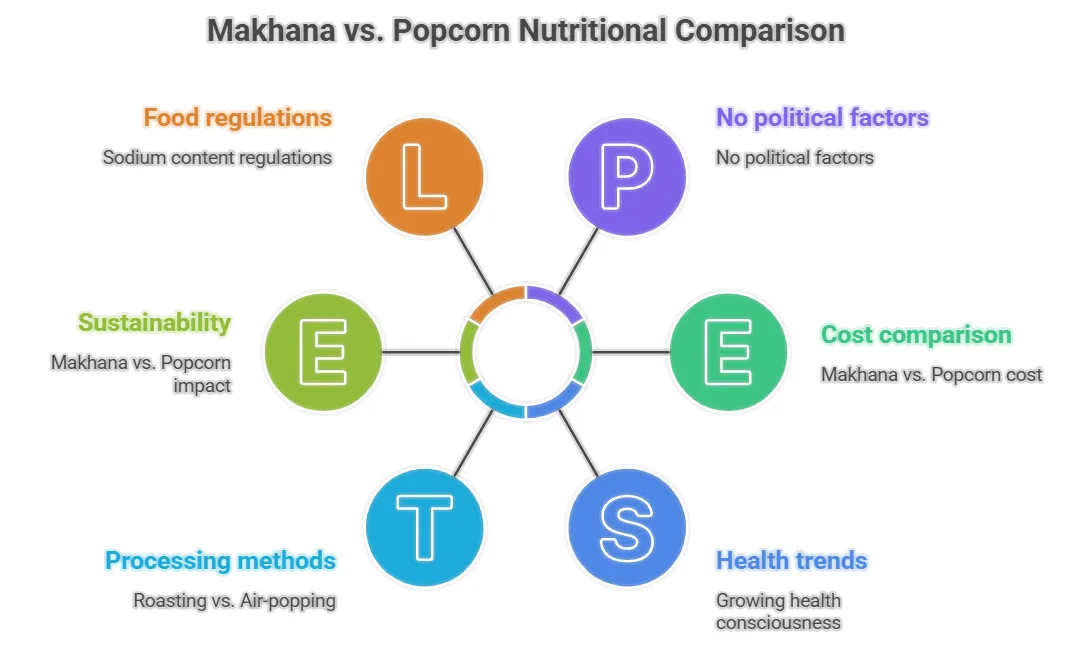
Health Benefits Compared: Which Snack Is Better?
As far as health benefits go, which between snacks is superior? Makhana or Popcorn? It’s obviously not only about taste; it’s equally important to consider how the snack affects your overall health.
Both snacks have their own benefits, however; because of this, the digestive effect, the effect on body weight, and how each snack contributes to an individual’s dietary needs will vary based on the way and time each is consumed.
Benefits of Makhana for Overall Health
Makhana (Fox Nut) has been a traditional food in India for generations. It is highly regarded for being light, healthy, and easily digestible.
What are some important health benefits of Makhana?
- They are low in calories and hence can play an important role in helping control weight.
- They are high in calcium and magnesium and provide some protection from free radical damage with the antioxidant content.
- They can assist with maintaining a healthy digestive system and may help decrease constipation and bloating.
- They can keep your energy stable throughout the day.
Star quality: When comparing the nutritional value of makhana vs popcorn, the nutritious content of makhana is much better than popcorn because of how they are processed; therefore, they can be eaten daily as healthy snacks regardless of age.
Health Benefits of Popcorn When Prepared Right
Popcorn, provided it is prepared correctly, is also a source of nutrition although it can be potentially unhealthy if you add toppings such as butter, oil, or caramel.
Healthy Ingredients:
- Popcorn is a whole grain and contains a large amount of fibre and will help your digestive system and keep your intestinal tract healthy.
- Air-popped popcorn contains very few calories when compared to other methods of preparing popcorn.
Some Points To Be Aware Of:
- The addition of butter, toppings of oil, cheese, or caramel will increase the total calories in popcorn extremely fast.
- Some packaged popcorn can have a very high sodium content.
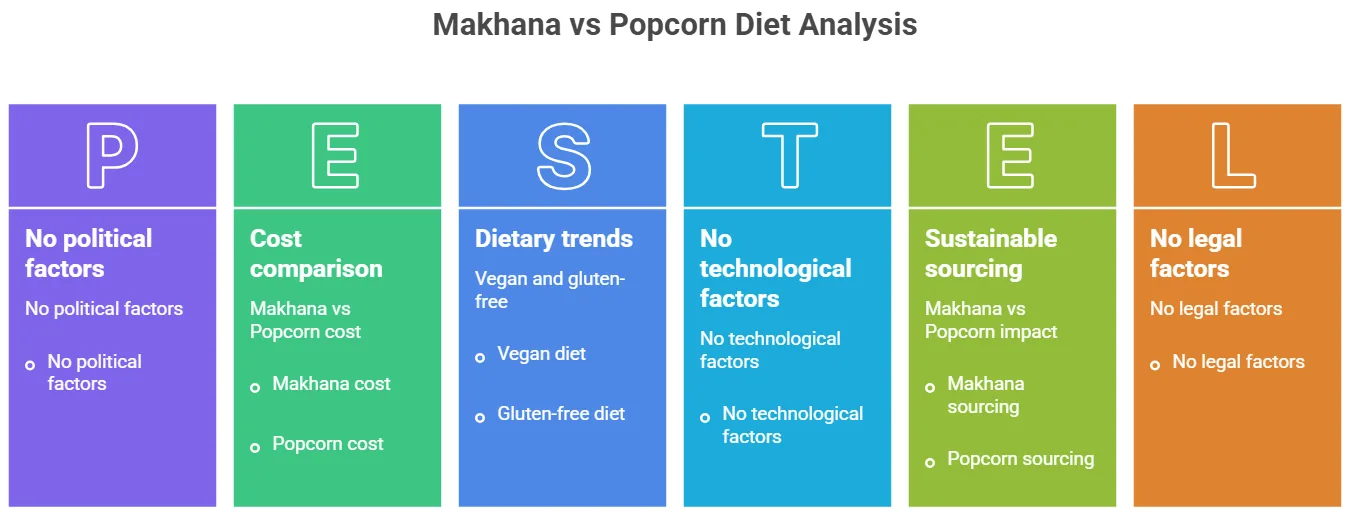
Gluten-Free, Vegan & Diet-Friendly Comparison
Both snacks suit modern dietary needs, but one is more versatile.
Taste Test: Flavor Profiles and Recipe Versatility
When selecting a snack, taste is one of the most important factors to consider. This is particularly true when comparing Makhanas to Popcorn as snacks.
Both of these crunchy, tasty snacks provide satisfying crunchiness; however, because of their natural flavor profiles, different textures and processes, each type of snack provides a unique application for many recipe types.
Taste and Texture of Makhana
The flavor profile of makhana is naturally mild and nutty, making it versatile enough to pair with bold or light seasonings.
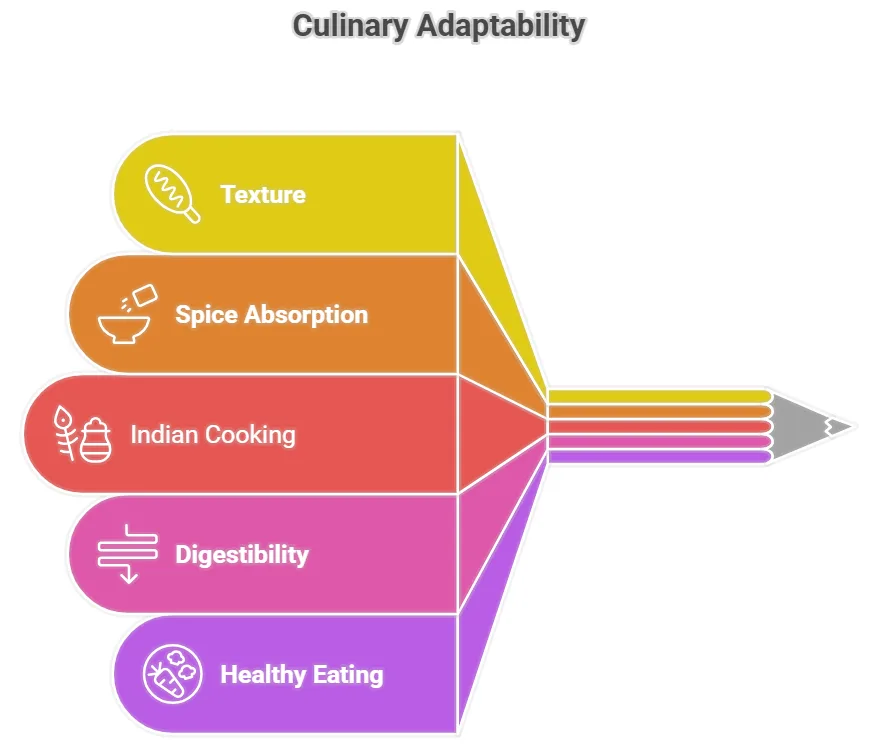
As far as the nutritional comparison between makhana and popcorn goes, the neutral flavour of makhana allows you to prepare it in a healthy manner with little or no additional calories being added.
Flavor Variations in Popcorn
The types of flavor in popcorn are generally:
- Traditionally salted and buttered varieties
- Mixtures of spices and herbs
- Caramel, cheese, and chocolate-covered options
Things to note:
- Oil or butter must be added to flavored varieties. Flavored varieties typically increase the fat and sodium content.
- Flavored popcorn can also feel over-dry if not topped with anything.
- When comparing the caloric content of makhana and popcorn, flavored popcorn is typically more calorie dense than makhana.
Savory vs Sweet Snack Possibilities
Both snacks are versatile, but one offers more flexibility for healthier recipes.
Which Snack Is Better for Weight Loss?
When following a balanced approach toward weight management, it’s important to pay attention to your snacking choices.
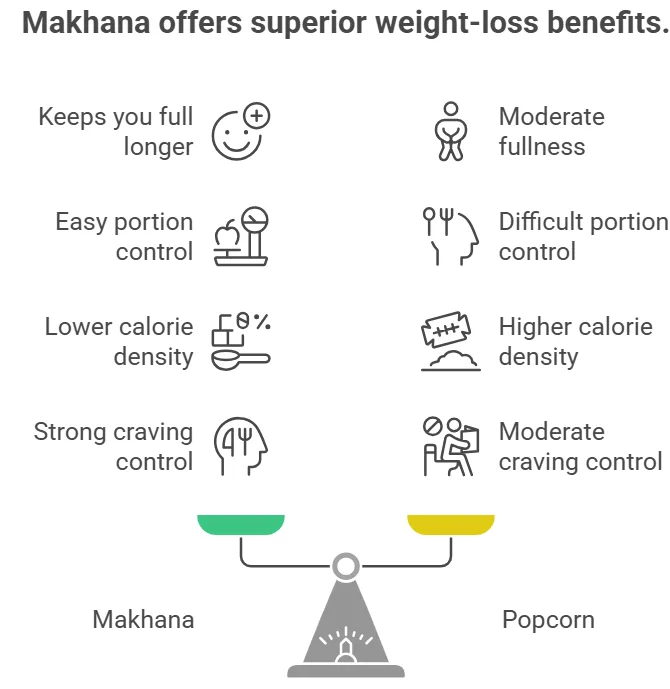
In the session of makhana vs. popcorn, both products tend to be considered “healthy”, however, how each affects your hunger, portion sizes and total calories can differ greatly when compared to each other.
Satiety Factor – Makhana vs Popcorn
Satiety is the feeling of fullness you get from eating a snack and how long it keeps you from feeling hungry.
Makhana Offers...
✔ More protein will keep you fuller for a longer period of time.
✔ The slow digestion of Makhana will create a longer sustained source of energy.
✔ Will reduce the need to snack frequently.
Popcorn Offers...
✔ The high fiber in Popcorn creates a feeling of fullness for a short duration.
✖ Popcorn is airy so it will digest quicker.
✖ Therefore, it is likely that your hunger will return faster.
Makhana provides more sustainable long term satiety than Popcorn due to the nutritional differences between the two.
Portion Control and Overeating Risks
The size of your portion helps you to manage your calorie intake.
Makhana:
- Dense texture naturally limits over eating
- Satisfying to eat out of smaller bowls
- After eating Makhana you will have less cravings.
Popcorn:
- Large portions can be consumed very quickly
- Flavored Popcorn has a higher tendency to increase hunger
- There is a greater chance of mindless munching.
The key takeaway is that Popcorn calories offer a greater potential for eating more calories without knowing it when compared to Makhana.
Best Snack Choice for Calorie-Conscious Diets
Enjoying this read? Get more like it.
Get fresh snack inspiration and updates from our team.
Cost, Accessibility & Sustainability Comparison
Snack choices are not just about flavours and nutrition; they also require consideration of prices, availability and eco-friendliness.
It can be helpful to understand the cost, access & sustainability differences between makhana and popcorn to enable consumers to make selections that suit their lifestyle preferences, financial resources, and overall philosophy.
Makhana vs Popcorn Price and Availability
Both are readily available for purchase, however, they differ considerably in price and where each may be purchased.
Makhana
- Price is higher than popcorn because there are only a few places that it can be grown
- Available in Indian grocery stores and on the internet
- Seen as a premium quality snack that is also a healthy choice (nutrient dense)
Popcorn
- Price of popcorn is very low and popcorn can be bought almost anywhere in the world
- Sold as kernels, microwave packages, and in ready-to-eat containers
- Price varies with different brands
Makhana has a better nutritional profile as compared to popcorn per serving despite being higher priced than popcorn.
Ease of Preparation at Home
The way a snack is made affects how healthy and easy it is to eat.
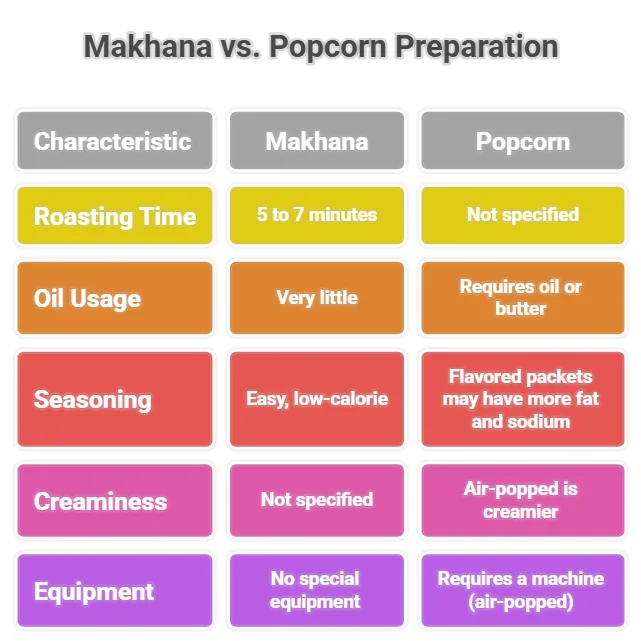
In comparing the calories between makhana and plain popcorn, makhana is lower in calories when compared to Cooking Popcorn Plainly.
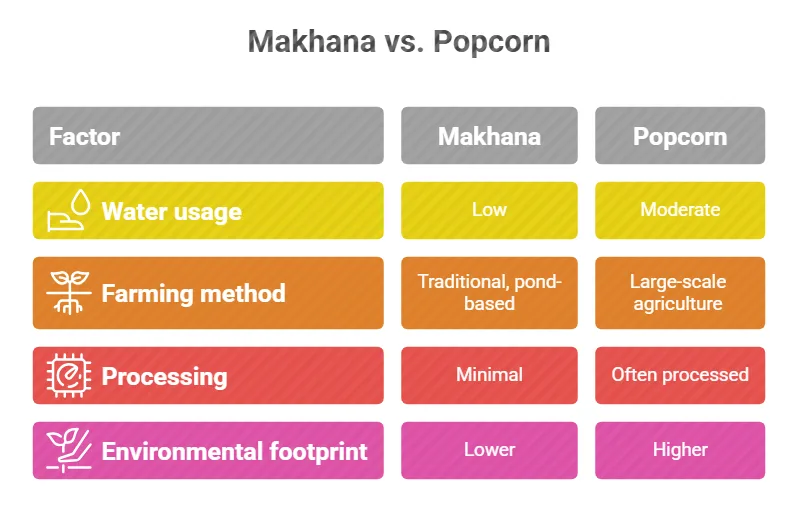
Environmental & Farming Impact
Sustainability is becoming an important part of food choices.
FAQs:
Q1. Is makhana healthier than popcorn?
Yes, makhana is generally healthier because it is lower in fat, easier to digest, and offers cleaner nutrition compared to popcorn.
Q2. Which has fewer calories, makhana or popcorn?
In the makhana vs popcorn calories comparison, makhana usually has fewer calories per serving than popcorn, especially flavored popcorn.
Q3. Is popcorn good for weight loss?
Popcorn can support weight loss only when air-popped and eaten in controlled portions without butter or added flavors.
Q4. Can diabetics eat makhana instead of popcorn?
Yes, makhana is a better choice for diabetics as it has a lower glycemic impact and helps control blood sugar levels.
Q5. Which snack keeps you full longer?
Between makhana vs popcorn, makhana keeps you full longer due to its protein content and slower digestion.
Conclusion: Choosing the Best Snack for Your Lifestyle
When it comes to deciding between makhana versus popcorn, the decision you make regarding which one is best will rely on your individual health goals, your overall eating habits, and your daily activities.
With its high amounts of nutrients and very low calories, as well as being very easily digestible, makhana is an ideal type of snack food that you can regularly eat each day. Because of its clean product profile, minimal processing and steady energy-release properties, makhana can be a great snack option for someone who wants to maintain their weight and eat mindfully and for long-term health benefits.
Popcorn, however, can be a healthy snack option when prepared in a proper manner. Air-popped popcorn provides fibre and whole-grain benefits, making it a suitable option for occasional snacking. However, once you add additional butter, oil or flavours to your air-popped popcorn, the amount of calories and nutrition will likely shift towards popcorn’s favour—since this will often result in increased calorie intake and less nutrition value compared to the original popcorn.
In the end, if you are someone looking to maintain proper nutrition, control portion sizes and improve digestive health, makhana is clearly superior to popcorn as far as nutritional value. Makhana fits seamlessly into your overall health-oriented lifestyle and can be eaten regularly, while popcorn is more suited to being treated as an occasional snack.