For hundreds of years, various regions in India have been cultivating and consuming Makhana or fox nuts. Makhana's history can be traced to many ancient texts and traditional customs of India that point toward a close association between Makhana and the various bodies of water in India, particularly those with lotus plants. Fox nuts are derived from the dried seeds of lotus flowers. The seeds are harvested carefully, then dried and processed before being used to create the light, nutritious Makhana that we know and enjoy today. Fox nuts are considered to be very easy to digest, and their nutritional regimen has been used for centuries as a source of nourishment and healing. Makhana's journey continues to be a representation of tradition, purity and wholesome goodness - from religious rituals to the modern kitchen, to healthy snack bowls.
The Historical Roots of Makhana in Ancient Civilizations
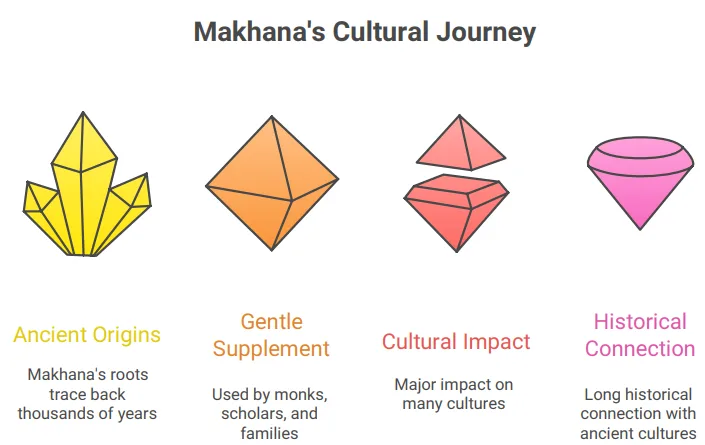
The history of makhana spans thousands of years and has played a major role in several ancient cultures. Makhanas are linked to religious beliefs, natural farming systems, and traditional food practices which emphasized purity, sustenance, balance, and comprehensive diets. Makhana continues to be harvested from Lotus ponds/wetlands and is regarded as sacred, full of nutrition, and easy for anyone to digest and allows for optimal energy levels, making them appropriate for all age groups. As time passed, makhana developed into a staple food consumed by many people throughout everyday life and became an integral part of many rituals and healing arts.
Makhana in Ancient India and Early Diets
In Ancient India, makhana was a primary source of a natural and sattvic diet.
- A major source of food provided to temples, many food offerings were made by followers participating in fasting and Ayurvedic religious celebration/rites.
- Makhanas are light on the stomach therefore they were given to people who were sick and recuperating.
- Makhana was considered a gentle supplement for those practicing living simply (Monks, Scholars, Families).isiúnta x Makhana traces its roots back thousands of years and has had a major impact on many cultures through a long historical connection with садокан мастацкі к некоторых стародавних культур.
Euryale Ferox and the Fox Nuts Origin
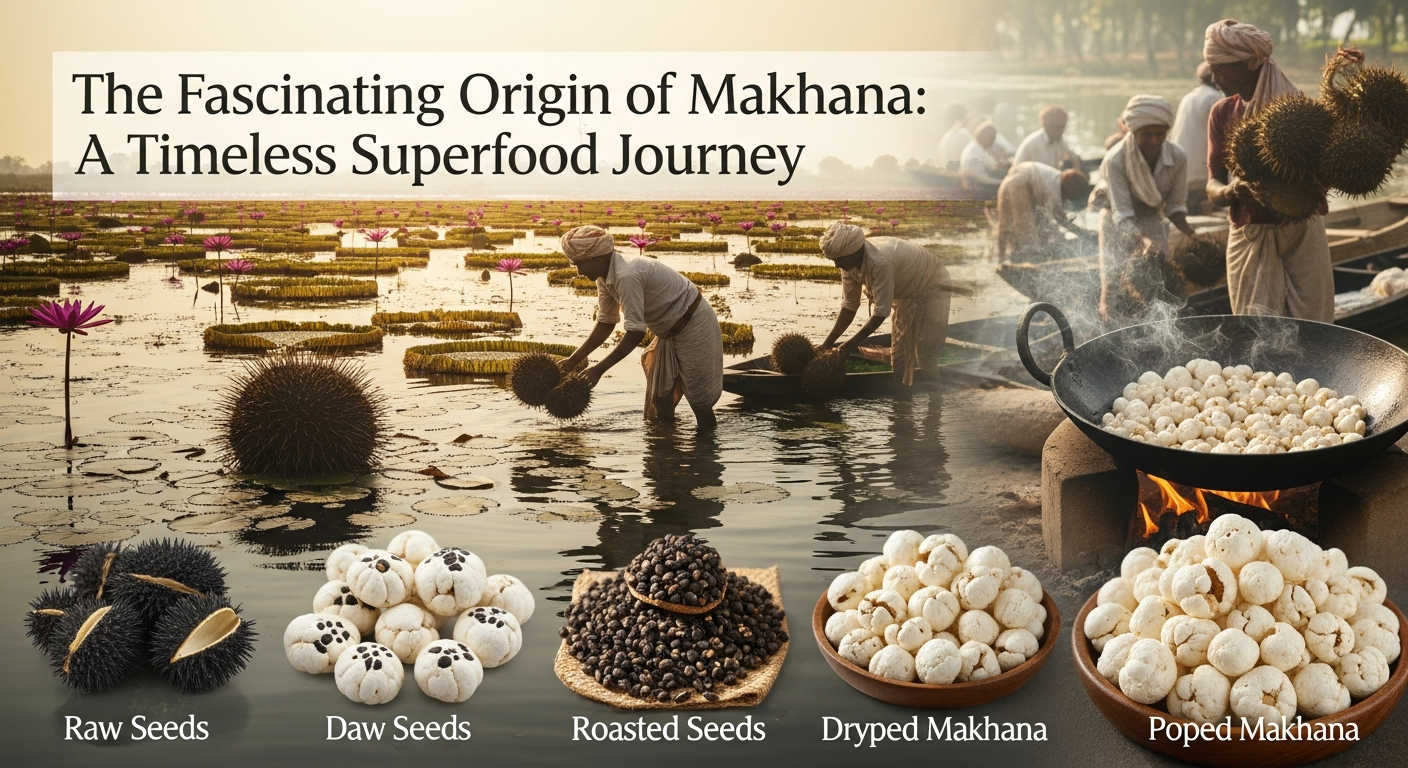
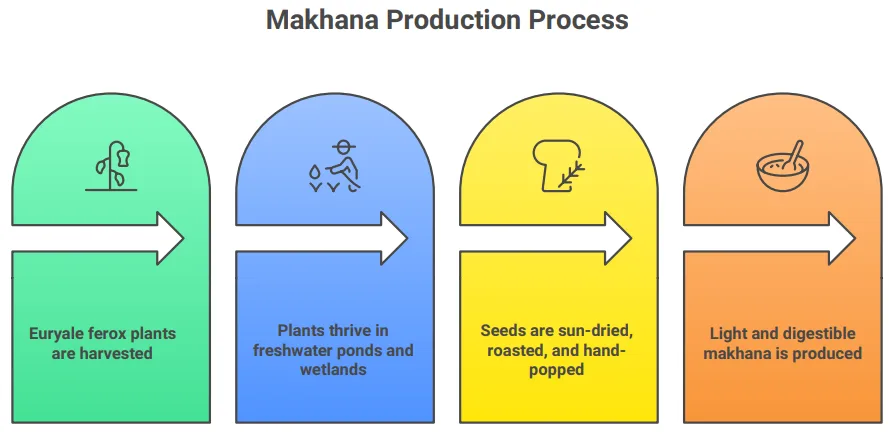
- The fox nut is the seed of the Euryale ferox plant, which has a lotus-like appearance and can be found naturally growing in freshwater ponds/wetlands.
- The seeds of the plant are physically harvested by hand from ponds.
- The harvested seeds are dried in the sun, roasted, and popped according to traditional methods before being transformed into the light crispy makhana product that we know today.
- These processes kept the nutritional properties and other qualities in the seed of the plant intact, which is why the nutritional properties and purity of the makhana have been preserved. Due to the minimal processing methods and the natural growing conditions of the plant, makhana remains a food that has been passed down from generation to generation.
Traditional Knowledge Passed Through Generations
- The journey of makhana does not end with the ancient civilizations. Makhana is still preserved and passed down from farming, home-cooking, and medicinal use.
- Knowledge of how to grow makhana was passed down orally.
- Recipes that use makhana were designed to accommodate the climate of the area/region and the specific needs of that particular family/community.
In addition to being a food source, makhana has traditionally been found in home remedies and medicines, making it part of everyday life, not just a food item. The generational knowledge surrounding the use of makhana has helped sustain it as a symbol of balance, tradition, and conscious eating. Today, the ancient knowledge that surrounds the use of makhana is of benefit to modern-day kitchens. Modern societies can now continue to develop a better understanding of the role of makhana in their daily diet.
Geographic Origin and Cultivation Regions of Makhana
Makhana's origin can be traced back to India's wetland ecosystems, since these environments support large numbers of water bodies and thrive due to their natural growth from lotus plants grown in water bodies. Makhana farming traditionally uses traditional cultivation practices that have been passed down from one generation to another; the farms require clean ponds that are fed by seasonal floods, and skilled labourers who know how to harvest makhana from the lotus plants. The Clean Pond and the Seasonal Flood provide an essential basis for high-quality, well-textured and high-nutrition makhana, so it’s very important that the geographic origin of makhana is part of the makhana’s identity.
Bihar: The Heartland of Makhana Cultivation
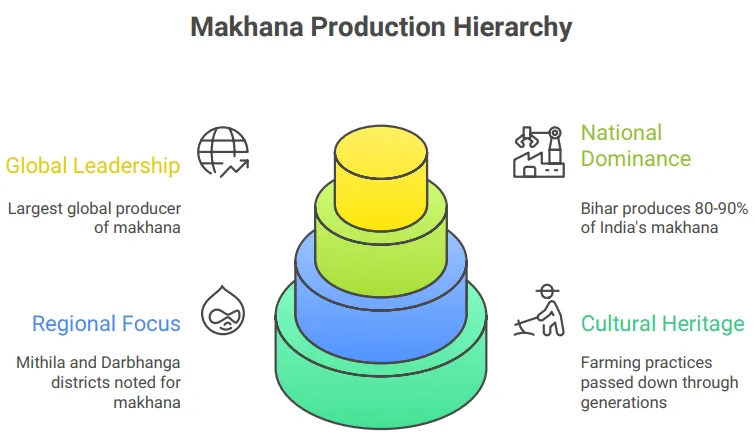
- Bihar is widely considered to be the primary state associated with the mukhson (mukh-on), the scientific name for the makhana plant, and is the largest global producer of makhana.
- Bihar produces over 80% - 90% of India's total makhana production.
- The districts of Mithila and Darbhanga are particularly noted for growing makhana.
- Farming practices and cultural knowledge have been passed down from farmer to farmer over many generations.
Bihar's ponds provide ideal growing conditions for the lotus plant (Nymphaea). Farmers are highly skilled at harvesting lotus seeds and processing them to create makhana through roasting and popping. Because of this cultural tradition, Bihar is often referred to as the cultural and agricultural birthplace of the mukhson.
Wetland Farming and Aquatic Ecosystems
Makhana or Fox Nuts are a Food Grown in Wetlands and are Organic in Nature. Makhana cultivation is intrinsically linked to water based ecosystems.
- Makhana is grown in shallow ponds, lakes, and wetlands
- Makhana requires fresh, clean and mineral enriched water.
- Lotus plants typically grow in calm fresh water.
Makhana was developed and has its roots based on the wetland farming system indicative of the fact that makhanas can be sustainably cultivated and provide eco-friendly products. Makhana benefits from the aquatic medium for proper seed growth, light-weight texture, and easy digestion as food. Due to the fact that Makhana relies on water during its time of maturity, Makhana is one of the few foods classified as Super Food type of Foods that are naturally grown in Water.
Expansion to Other Regions
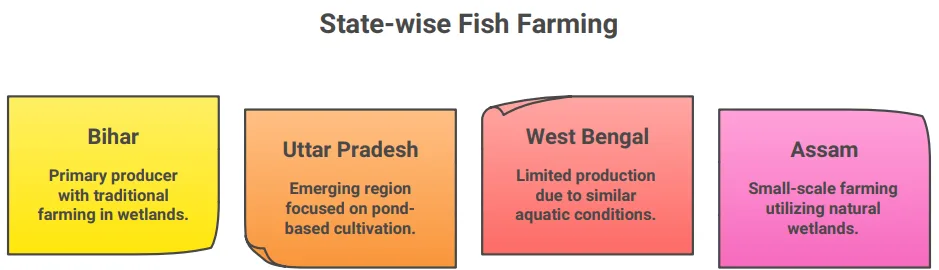
- Although the major producing region of Makhana continues to be the Indian state of Bihar, the growing popularity of Makhana as Super Foods has led to increasing numbers of Makhana Crops being grown in other parts of India.
- Makhana is now being cultivated in Eastern Uttar Pradesh as well as West Bengal and Assam and the rise of such interest is also due to the increase in demand for Makhana as a healthy snack food item.
- However, due to the traditional environmental growing modes that exist in Bihar, the origin of Makhana will always reflect back to Bihar.
- Depending on future conditions and growing requirements of Makhana, this position may change and Makhana may eventually be grown in other areas of India that reflect similar growing conditions.
Cultural and Religious Significance of Makhana
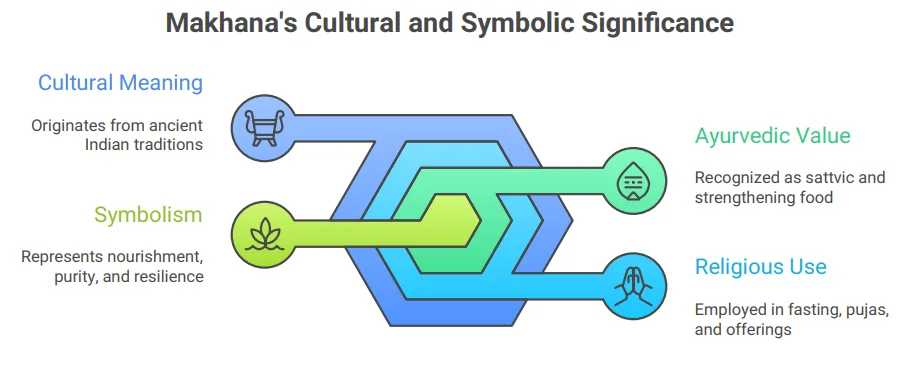
Aside from its nutritional value, Makhana has an important cultural significance within India. The origin of Makhana can be traced back to ancient Indian traditions, religious beliefs, and Ayurvedic teachings. Makhana is a product of the Lotus seeds and is therefore symbolic of purity, spirituality, and healthy eating habits. Makhana has existed as a food source as well as a sacred offering and a representation of nourishment for thousands of years in India, and has therefore become an integral aspect of Indian culture and spirituality.
Makhana in Hindu Rituals and Festivals
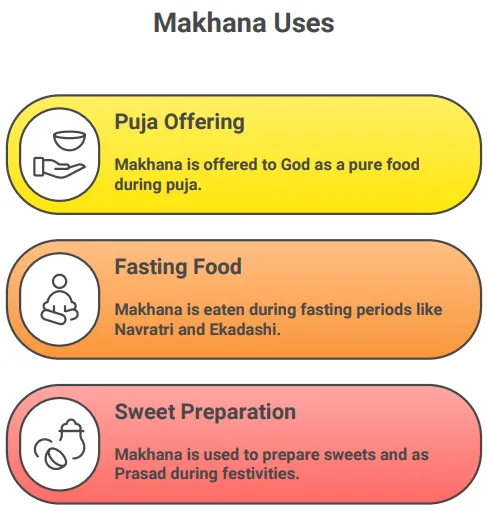
Makhana is used extensively during Hindu ceremonies, fasts, and celebrations.
- During puja, it is a pure food that is offered to God as a 'Sattvic' (pure) food.
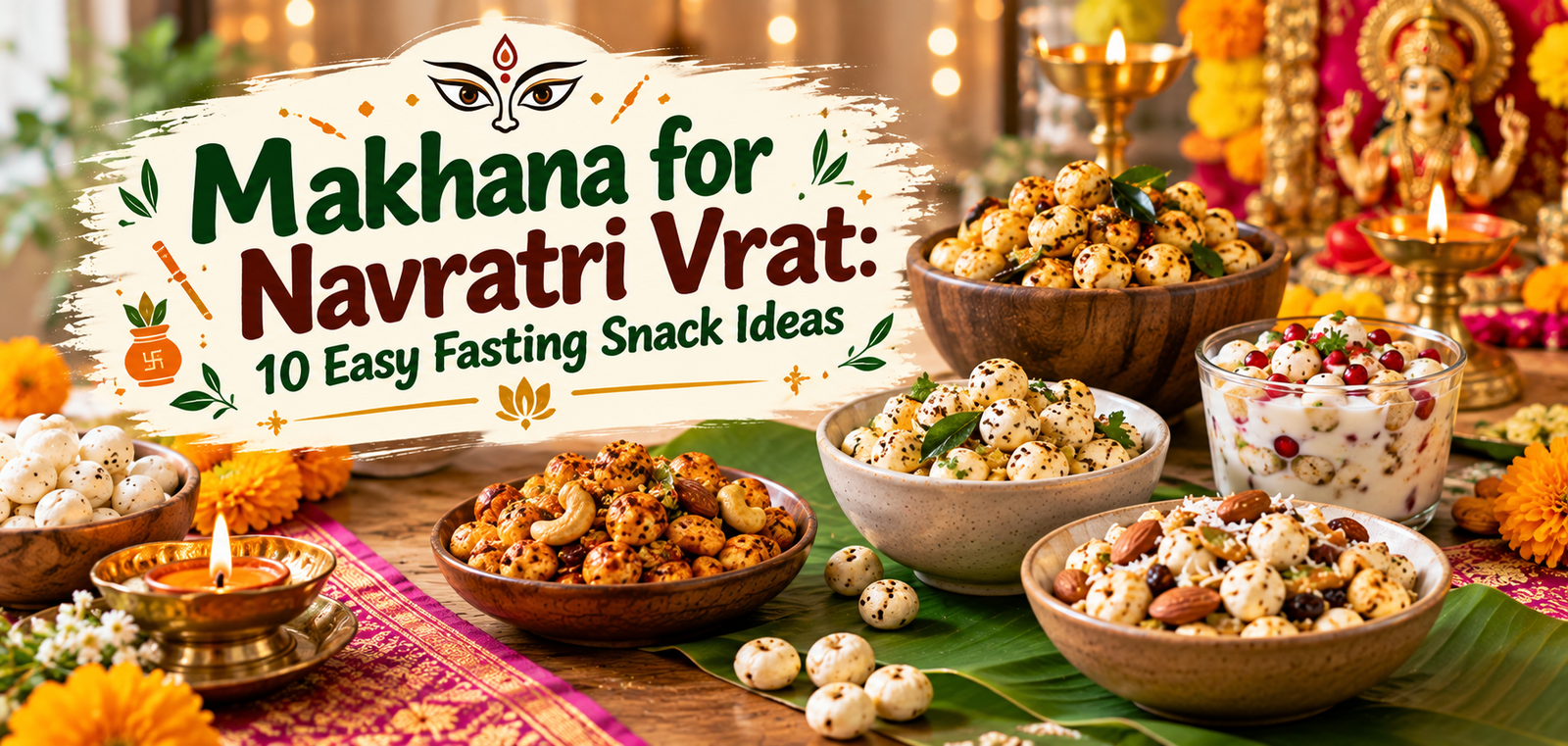
- It is eaten during fasting periods such as Navratri, Ekadashi, and Maha Shivratri.
- It is also used to prepare sweets and as Prasad (food given to a deity after worship) during festivities because of its lightness and holiness.
The history of Makhana traces back to the Lotus flower, which embodies Divine qualities and purity. Therefore, Makhana has a high degree of spiritual cleanliness and is appropriate for use in religious rites as well. Furthermore, due to its non-grain/non-cereal composition, it is frequently consumed during Vrat (fasting) traditions.
Ayurvedic Importance of Makhana
- In Ayurveda, "Makhana" serves as a tool to enhance, balance, restore and support all the metabolic processes.
- It has the properties of calming the mind, body and soul.
- Makhana is also supportive of the digestive function and is particularly effective in the balancing of the Vata and Pitta doshas.
- Traditionally, it is recommended that people use Makhana for enhancing their overall vitality/sustained energy and physical capacity.
The lineage of the Makhana seed is as a naturally cooling and wholesome seed. Due to its gentle effect on digestive function, Makhana is often part of a therapeutic diet during times of recovery from illness, weakness or simply for overall health and wellness.
Symbol of Purity and Nourishment
- Makhana has been considered since the beginning of time, a symbol of purity, growth, nourishment & strength.
- Makhana is harvested from the Lotus Plant, which is known for growing in mud and deep waters; yet still remains clean and produces `grown'/mature products.
- Makhana is used in the traditional diets of children, grandmother/grandpas (elderly), and also for those who are recovering from the effects of an injury or illness.
The journey of Makhana from the Lotus Ponds to our dinner tables reflects the teachings of transforming something simple into something sacred and nourishing. This journey illustrates why Makhana will continue to be respected by subsequent generations.
Enjoying this read? Get more like it.
Get fresh snack inspiration and updates from our team.
From Lotus Pond to Plate: Traditional Processing of Makhana
Makhana has been processed in the same manner and with the same level of skill as it was originally done. The history of the makhana begins in the wetlands or lotus ponds, where the makhana is harvested using traditional processing methods. These traditional methods provide a way for the raw lotus seeds to be processed into a crunchy superfood while preserving the nutritional content of the lotus seed and increasing its digestibility and shelf life as well.
Harvesting Lotus Seeds from Water Bodies
- This stage of the makhana starts in freshwater ponds and wetlands where the lotus plants can grow at their natural strength.
- Experienced farmers will harvest the lotus seeds by hand from deep areas of the pond.
- Care must be taken in conducting this harvesting due to the need to collect the seeds at the optimal maturity.
- This stage of the process also illustrates that the makhana has been harvested according to the natural demands of the land that provided it.
After the seeds are collected, they undergo a drying process to remove any moisture before being carefully cleaned of any impurities. At the conclusion of the collection process, the makhana is in its purest form and free from all contaminants.
Traditional Roasting and Popping Techniques
The roasted and dried seed is consumable makhana.
Roasting:
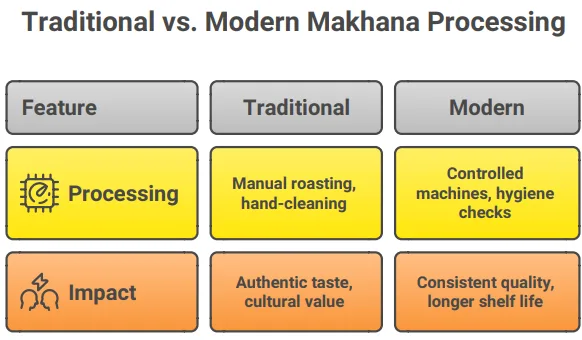
- Roasting is facilitated by covering the seeds with sand.
- The rapid changes in temperature are what cause the seed to pop (expand).
- The soft white inner makhana is separated from the sand shell by hand.
- There is extensive labor involved in creating the lighter and puffier texture of makhana and also maintaining the cleanliness of makhana, which are key features in the traditional history of the makhana product and are important to Cultural Importance of Makhana.
Evolution to Modern Processing’
- The use of technology to expedite and simplify traditional methods of production while still producing a quality product is one of the biggest advances in modern technology.
- The processes for cleaning and roasting have become semi-automated; this has reduced artisan labor and improved operating conditions.
- Quality Control (QC) allows for improved hygiene standards and more uniform sizes of makhana.
- Maintaining the nutrients of makhana through modern production methods is one of the most important advances in the processing of makhana.
Global Spread and Modern Popularity of Makhana
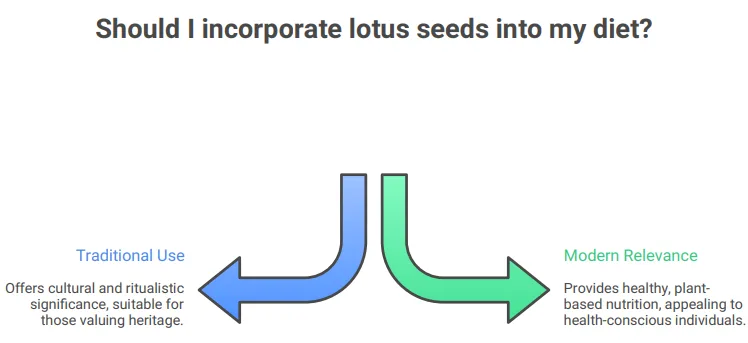
Makhana has evolved dramatically from being part of the diet of ancient wetland peoples in India to now being found in kitchens throughout the world. The food item that was originally consumed by people living in wetlands as part of their culture is now being accepted on the world stage as a clean, plant-based superfood. It has origins in ancient India, which may account for its increasing popularity outside of India; however, the nutritional properties associated with makhana have helped to develop makhana's international reputation among health and fitness industries. Furthermore, today, makhana is appreciated for being very light and nutritionally dense, and is an ideal addition to many modern-day diet plans.
How Makhana Gained Global Recognition
- Makhana has gained worldwide recognition because many consumers are seeking natural and minimally processed foods.
- Because of the unique way in which fox nuts are harvested and then popped, it has created curiosity amongst consumers.
- In addition to being a nutritionally beneficial and low-calorie snack, makhana is also a high-mineral source of snack.
- As the awareness of makhana increased among global health trends, health blogs, fitness communities, and export markets began to see makhana as an alternative to fried food and popcorn.
As global health trends, as a result of health blogs, fitness communities, and export markets promoted makhana, the world's population gradually developed a perception of makhana as a premium superfood beyond India.
Fox Nuts in Modern Diet Trends
- Makhana is an excellent addition to the current trend of healthy eating and awareness of our nutrition decisions (Clean Eating & Mindful Nutrition)
- Naturally Vegan, and Gluten Free (whole food) Plant Based
- Vegan, Vegetarian, Low Fat diet compatible
- Can be roasted, seasoned, or added to any meal or snack
Makhana has an appeal to the modern diet because it is light yet substantial in nutrients; its Adaptability and Simplicity allow it to fit into all modern fitness regimens, Weight Loss diets, and Snacking habits
Why Makhana Remains Relevant Today
- Makhana has remained relevant regardless of the many different food trends that have come and gone because of the fact that it is based on both Ancient and Modern principles
- Roots of makhana are found in the basis of both Ancient Makhana and Ayurvedic Tradition
- Provides nutritional value without the addition of chemical preservatives or other artificial substances.
FAQs:
Q1. What is the origin of makhana?
The origin of makhana lies in India, where it has been traditionally harvested from lotus seeds growing in ponds and wetlands.
Q2. What is the origin of fox nuts?
Fox nuts originate from the seeds of the lotus plant, which are dried, roasted, and popped to make makhana.
Q3. Why is makhana important in Indian culture?
Makhana has been used in Ayurvedic diets, fasting foods, and religious rituals for centuries due to its purity and nourishment.
Q4. How was makhana traditionally processed?
Traditionally, lotus seeds were sun-dried, roasted, and hand-popped using controlled heat to create makhana.
Q5. Why has makhana become popular worldwide?
Makhana is now popular globally because it is a low-calorie, nutrient-rich, gluten-free snack that fits modern healthy diets.
Conclusion: Embracing the Legacy of the Origin of Makhana
Makhana (a plant that produces this type of seed pod) was traditionally used in India and is now known as a healthful food. Makhana's roots extend from the wild marshes of northeast India and have been globalized to include Asian cuisine, African and South American cuisine. Over the years, the nutritional value of makhana has remained consistent; the nutritional profile of this seed pod will remain an important part of many people's diet and lifestyle.
Makhana connects us back to nature, and with increasing awareness of the environment and health, this has never been more important. We can pay tribute to the plant, by eating and enjoying it, and continue to appreciate its long history in creating healthy food choices and ultimately improving our health and quality of living. Each day we choose to eat makhana, we are reminded of how important it is to make healthy and informed decisions in choosing what foods to eat.