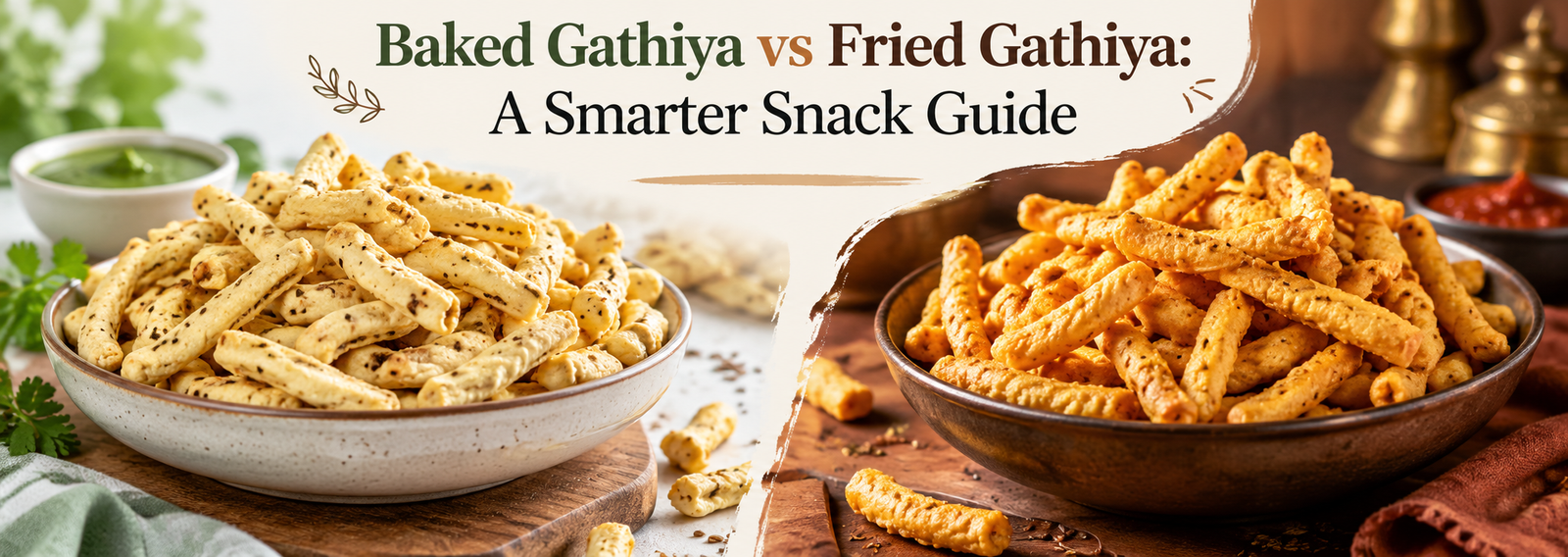
Baked gathiya vs fried gathiya is a useful comparison if you love the classic Gujarati crunch but want to make a more informed everyday snack choice. Baking changes the cooking method and can reduce the amount of oil used compared with deep frying, but that does not automatically make every baked snack “healthy.” Ingredients, sodium, fat, serving size and frequency still matter.
This guide breaks down the practical differences between baked and fried gathiya, explains what to check on the label, and shows how to enjoy gathiya more mindfully at tea-time.
Baked Gathiya vs Fried Gathiya: What Changes?
The biggest difference is the cooking process. Traditional fried gathiya is cooked in hot oil, while baked gathiya is cooked using dry heat. Because deep-fried foods are immersed in oil, they can absorb more fat during cooking. A baked version may use less oil overall, depending on the recipe and manufacturing process.
That makes baking a useful factor to consider, but it is only one factor. A baked snack can still be high in sodium or calories, and a fried snack can still be eaten in a modest portion as part of an overall balanced diet.
FactorBaked gathiyaFried gathiyaWhat to compare Cooking methodDry heatImmersed in hot oilHow the product is prepared Oil useOften lowerOften higherTotal fat per 100 g TextureCrisp and lighter-feelingRich, classic fried crunchPersonal preference SodiumCan still be highCan still be highSodium on the nutrition panel CaloriesMay be lower if less oil is usedMay be higher if more oil is absorbedEnergy per 100 g Portion sizeStill mattersStill mattersServing size and pack size Is Baked Gathiya Better for Everyday Snacking?
For many people, baked gathiya can be a practical option when they want a savoury snack with less reliance on deep frying. The World Health Organization recommends limiting saturated and trans fats and encourages cooking methods that reduce unnecessary frying as part of a healthy diet.
But “baked” should not be treated as a free pass. If a snack is very salty, heavily seasoned or eaten in a large quantity, the benefits of a different cooking method can be outweighed by the rest of the eating pattern.
What to Check on a Gathiya Pack
Front-of-pack phrases can be helpful, but the nutrition panel and ingredient list tell you more. When comparing two gathiya products, use the same basis—preferably per 100 g—so the comparison is fair.
1. Total fat and saturated fat
A baked snack may use less oil than a deep-fried one, but oil may still be part of the dough or seasoning. Compare total fat and saturated fat instead of assuming the baked option is automatically low-fat.
2. Sodium
Gathiya is a savoury snack, so sodium deserves attention. FSSAI nutrition labelling rules require packaged foods to declare key nutrients, helping shoppers compare products more meaningfully.
3. Ingredients
Look at the first few ingredients. Besan-based snacks can offer a different nutrient profile from snacks made mainly with refined starches. Spices, oils and leavening ingredients also affect the final product.
4. Serving size
A small printed serving can look modest on the label, but it may not match how much you actually eat. A useful habit is to portion gathiya into a bowl rather than eat directly from a large pack.
What Makes The Foods Life Oven Baked Masala Gathiya Different?
The Foods Life’s Oven Baked Masala Gathiya 250 gm and Oven Baked Masala Gathiya 500 gm are described on their product pages as oven-baked rather than deep-fried.
The visible ingredient list includes besan, salt, asafoetida, red chilli powder, rice bran oil, chilli flakes, baking soda and ajwain. The product pages also state that the recipe uses no palm oil. Those are useful product attributes, but shoppers should still review the nutrition panel and choose portions that fit their own diet.
How to Make Tea-Time More Balanced
Gathiya can be enjoyed as part of tea-time without making it the entire snack. A simple way to build a more balanced plate is to pair a measured portion of gathiya with one or two foods that add freshness, fibre or protein.
- Add freshness: cucumber, tomato, carrots or fruit.
- Add protein: plain curd, roasted chana or a small handful of nuts.
- Choose your drink wisely: unsweetened or lightly sweetened tea can help keep the overall snack lighter.
- Use a bowl: portioning the snack before eating makes quantity easier to judge.
Baked Gathiya vs Fried Gathiya for Weight Management
If you are managing your weight, baked gathiya may be a useful alternative when it contains less fat and fewer calories than a comparable fried option. However, weight management depends on total calorie intake over time, not on a single label claim.
The most practical approach is to compare nutrition panels, keep portions realistic and include a variety of minimally processed foods in your overall diet.
Does Besan Make Gathiya a Better Choice?
Besan is made from chickpeas and naturally contains protein and fibre. That can make besan-based foods nutritionally different from snacks made mostly from refined flour. Still, the finished snack also contains oil, salt and seasonings, so the final nutrition profile matters more than one ingredient alone.
FAQs About Baked and Fried Gathiya
Is baked gathiya always healthier than fried gathiya?
No. Baked gathiya may use less oil, but you should still compare calories, total fat, saturated fat, sodium and serving size.
Does baked gathiya contain oil?
It can. Baking does not mean oil-free. Oil may be used in the dough or seasoning, so check the ingredient list and nutrition panel.
Can I eat gathiya every day?
That depends on your overall diet, health needs and portion size. Packaged savoury snacks are best enjoyed as part of a varied eating pattern rather than as your only daily snack.
Is besan gathiya high in protein?
Besan contains protein, but the amount in a finished gathiya product depends on the full recipe and serving size. Check the nutrition panel for the actual protein value.
Is baked gathiya good for weight loss?
It can fit into a weight-loss diet if portions and total calorie intake are appropriate, but “baked” alone does not make a food low-calorie.
What should I pair with gathiya at tea-time?
Try a measured portion with plain curd, roasted chana, nuts, cucumber, carrots or fruit for a more balanced snack plate.
Conclusion: Choose by the Full Label, Not One Claim
When comparing baked gathiya vs fried gathiya, the cooking method is a meaningful difference—but it is not the whole answer. Baked gathiya can be a useful option for people who want to reduce deep-fried snacks, especially when the nutrition panel also compares well for fat and sodium.
If you want to try an oven-baked Gujarati-style option, explore The Foods Life’s 250 gm Oven Baked Masala Gathiya or the 500 gm pack and compare the label with the snacks you usually buy.
Sources: World Health Organization healthy-diet guidance; Food Safety and Standards Authority of India nutrition-labelling requirements; The Foods Life product information.




 +91 63528 07509
 sales@thefoodslife.com
 225, Orchid Plaza, Sama-Savli Rd, behind McDonald's, Vemali, Vadodara, Gujarat 390008