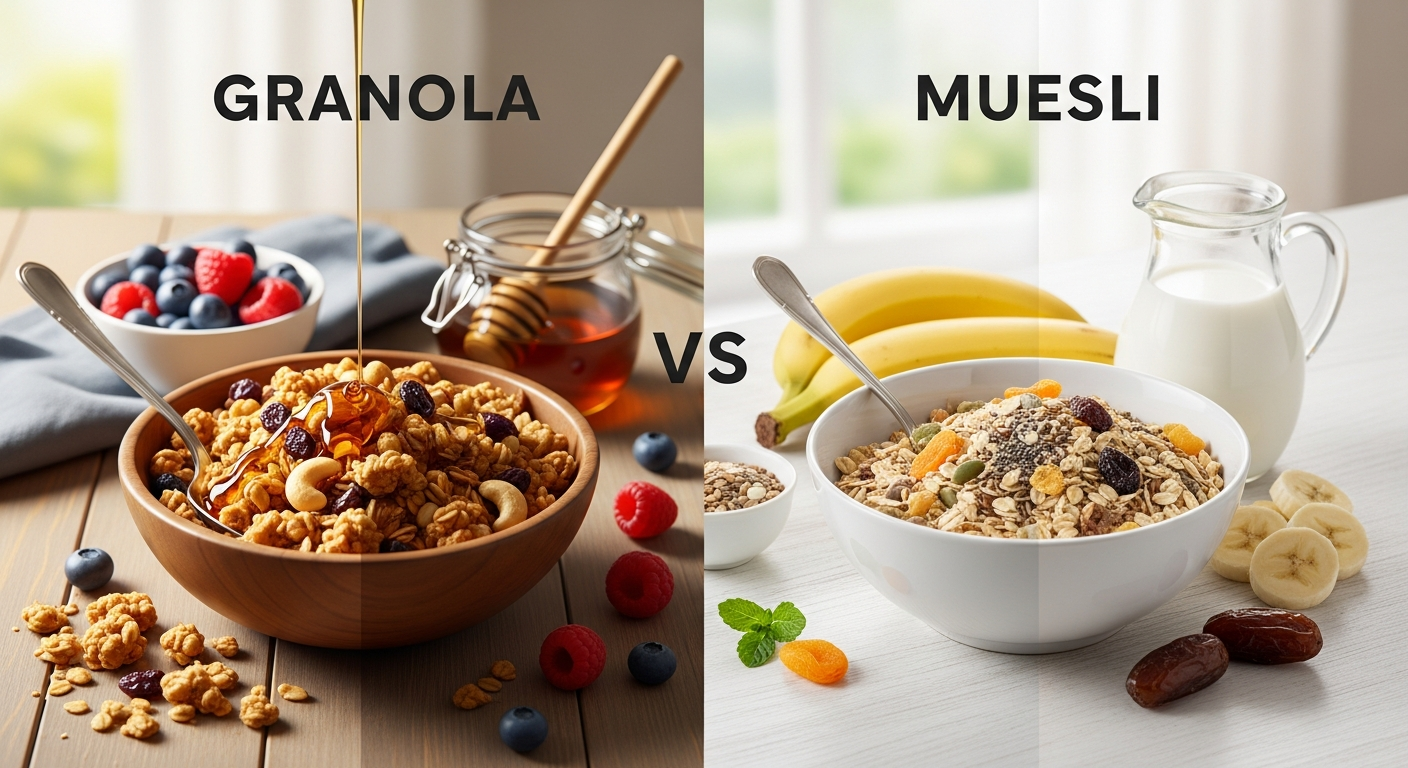
Granola and muesli are both excellent sources of nutrition because they consist primarily of oats (whole grains), added fats & oils/nut butter, nuts & seeds, and dried fruit; however, granola and muesli are very different foods. Their differences come from the way each food is prepared and consumed. When making granola, the goal is usually to make it crispy by baking with some type of unhealthy fat and sweeteners added; therefore, it has a strong flavour. Muesli is typically eaten raw, which means that it has not been processed or changed from its natural state. It does not have an oily/greasy consistency, nor is it sweetened artificially with sugar.
Nutrition and lifestyle factors should also be considered when comparing granola and muesli. Depending on whether or not someone requires sustained energy for their athletic performance (active person), granola provides more calories than muesli does due to the additional sugars and fats; however, granola will tend to have more vitamins/minerals than muesli because of the higher levels of nutrients found in these two groups of foods.
In regards to whether granola and muesli are similar or different? The answer is that although both are considered to be "breakfast" products, they are two distinct products with different processing methods, taste profiles and nutritional benefits. Therefore, the decision as to whether to eat one type of breakfast cereal over the other depends on your specific health/dietary objectives, what flavours interest you in breakfast time and how you want to enjoy your breakfast (i.e. crunchy/delicious vs light/nutritious).
Introduction: Why Knowing the Difference Between Granola and Muesli Matters
Because granola and muesli are usually placed together in supermarkets and restaurants, most consumers believe that they are the same product. In actuality, the differences between granola and muesli have significant implications for dieting, clean-eating, nutrition requirements, caloric intake, sugar consumption, fibre and digestion, long-term lifestyle goals, and more.
Individuals who are working to manage their weight through clean eating, or those with fitness goals, should have a clear understanding of how these two breakfast food choices differ so that they can make the most intelligent decisions possible. Knowing what is in your food will make a significant difference in your overall health and fitness level, regardless of whether you prefer to eat a crunchy, sugar-laden breakfast or a less processed, high-fibre breakfast.
Granola vs. Muesli: A Common Breakfast Confusion
Both Granola and Muesli can be confusing for consumers as they contain similar ingredients including oats (oatmeal), plus various nuts/seeds and dried fruits.
The biggest difference between the two products comes down to the way in which they were made.
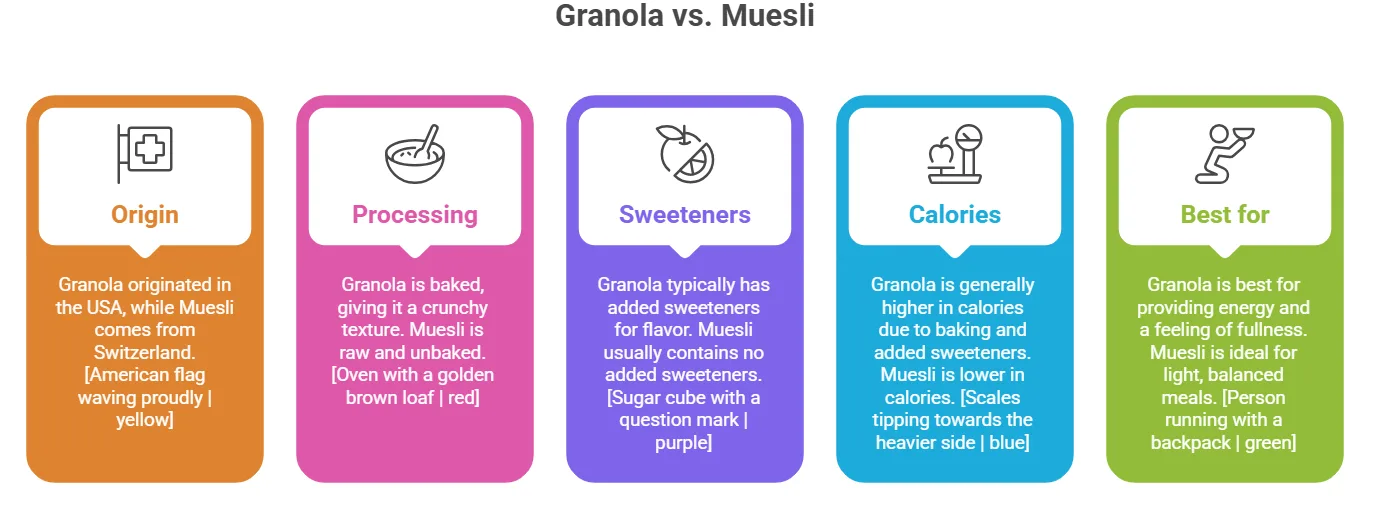
- Granola is produced by baking and sweetening the individual components with Oil and/or Sweeteners (Honey or Jaggery) thus creating a Crunchy, Flavored Product.
- Muesli is produced whereby the individual components remain Raw and Unbaked, resulting in a more Natural Product.
The use of sugars in Granola adds additional sweetness, while Muesli is naturally flavored and has a more subtle flavor profile.

How the Right Choice Impacts Health & Lifestyle
Granola and Muesli have different nutritional qualities for different types of people, and understanding how to balance those qualities with your personal health and nutritional needs may help enhance your daily routine.
Granola may be better for you if:
- You want something that provides a quick shot of energy and long-lasting energy
- You live an active lifestyle or lead an athletic lifestyle
- You like to eat big and satisfying breakfasts.
Muesli is better for you if:
- You want to eat fewer calories and sugars
- You're trying to control your weight
- You prefer to eat foods that are as natural and minimally processed as possible.
Both Granola and Muesli provide energy density for physical activities; however, Muesli provides the opportunity for improved digestion and provides you with the ability to consume a steady-source of nutrients. Your choice could positively influence your energy, digestion, and overall health.
Is Granola and Muesli the Same? Clearing the Myth
The question a lot of people have is whether granola and muesli are the same product. This is not an accurate statement, as although both products contain many of the same ingredients, their nutritional values, processing methods, and the way they affect your body are quite different.
Myth vs. Truth:
- Myth: Granola and muesli can be used interchangeably.
- Truth: Granola is generally considered a calorie-heavy and sweet product, whereas muesli is typically considered to be more natural and lighter than granola.
Final Understanding:
- Granola = Baked, crunchy, high in calories/energy
- Muesli = Raw, light, easy to digest
Having clarity about this myth can help you make better breakfast choices that fit with your health goals. Once you have a better understanding of the real difference between granola and muesli, it will be easier and more deliberate for you to choose which one to eat.
What Are Granola and Muesli? A Quick Introduction
Granola and Muesli are two cookies made from oats, nuts and seeds, and fruit, which have become popular options for breakfast. Granola became widespread during the last several decades, whereas Muesli has been around for hundreds of years. Despite their countless similarities, these two cereals differ quite a bit. By learning about their unique characteristics, you can be more informed about what to look for in either cereal before including either cereal into your diet.
Although granola and muesli share many of the same nutrients and benefits (nutrient-dense), they differ greatly in terms of how they are prepared, their flavours, and their calorie amounts. Because of these differences, the debate surrounding granola versus muesli is influenced by not only personal taste but also by the individual’s lifestyle and health goals.
Granola Definition and Its Origins
Granola is a cereal created by mixing rolled oats with nuts, seeds, and a sweetener (honey or syrup), cooking them together until they form a crispy texture. The word "granola" was first used in the United States in the late 1800s as a term to describe a healthy food designed for an active lifestyle.
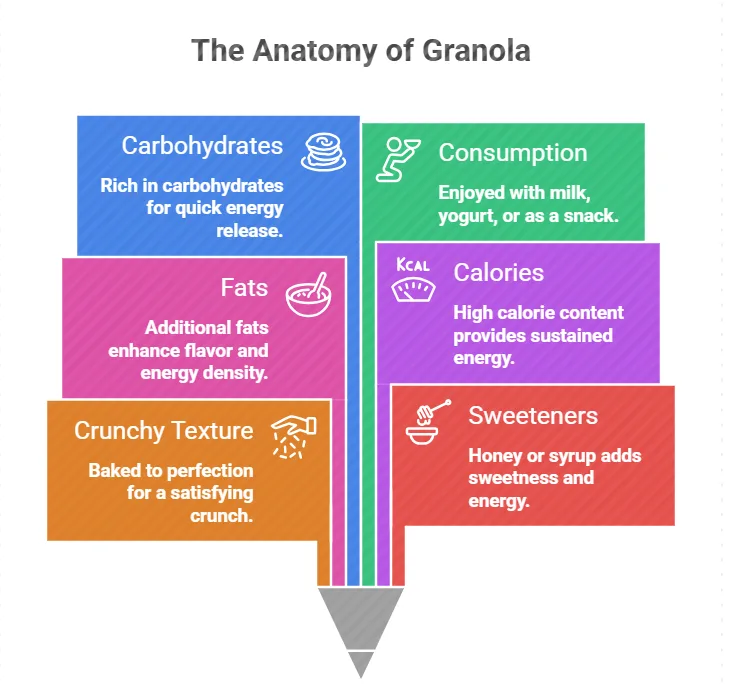
Granola provides sustained energy, which is why athletes often choose it over other cereals, particularly if they are having a busy morning. The higher caloric density of granola is one stat which distinguishes granola from muesli.
Muesli Meaning and Swiss Roots
Muesli is a Swiss wheat cereal introduced by an early Swiss doctor to provide patients with healthy, light meals. Unlike granola, which has been cooked, muesli is not baked, so all of its natural components remain intact.
Here are some facts about muesli:
- Muesli is raw/cooked (not processed) wheat breakfast cereal,
- Muesli does not contain any additional oils or sugar.
- Muesli has very few calories and also has very low sugar content
- Muesli is typically soaked overnight in either yogurt or milk.
The simplicity of muesli aids digestion as well as maintains weight control. Therefore, the question: Are granola and muesli apples to apples? Simply put, they are not.
How Both Became Popular Breakfast Cereals
Granola and muesli both became increasingly popular across the world because of people becoming more aware of the benefits of eating healthy. Granola appeals to individuals who want something that tastes good and gives them energy. Muesli appeals to those who are looking for something that is healthy and has a lot of nutrients but is also very simple in ingredient makeup.
The Popularity of Granola vs. Muesli
- The popularity of granola increased because of the energy and fitness-focused diets that became popularized.
- The popularity of muesli increased because of the clean eating and weight-loss trends.
- Both cereals have been adapted to meet the demands of modern diets by incorporating fruit, superfoods, and plant-based ingredients.
H2- Main Ingredients: Comparing What Goes into Granola vs. Muesli
Granola and Muesli may seem to be similar at first glance due to their similar oat-based cereal compositions containing nuts, seeds, and dried fruits; however, it is not until you take a closer look at the types of fruits, nuts and seeds, and how these ingredients are processed that you will see the true differences among the different types of granolas and muselis. The amount/type of nuts, seeds, and fruit can directly influence calorie counts, sweetness, and texture; therefore, the question of whether or not they can be treated identically in terms of health benefits can be answered by considering what the actual density of the grain is.
By knowing how many tree nuts, seeds and fruit types are in the mixture, you will have a better idea as to which one of these is healthier for you, and therefore which one to purchase.
Common Ingredients in Granola
Granola is designed for taste, crunch, and the quick burst of energy that it provides through carbohydrates and other ingredients that are baked into a cereal.
Most often the following are Found in Granola:
- Rolled Oats as a Framework
- Nuts (e.g., Almonds, Cashews, Peanuts)
- Seeds (e.g., Pumpkin, Sunflower, Flax)
- Natural Sweeteners (honey, maple syrup, jaggery)
- Oils (e.g., Coconut oil, vegetable oil)
- Dried fruits and occasionally chocolate chips
Granola has a Large Number of Caloric Components That Help Create a Filling Snack. This Structure Also Provides An Explanation For Why Most Active People Prefer Granola Instead Of Muesli As Their Main Source Of Energy.
Natural Ingredients Found in Muesli
Common Muesli Ingredients Include:
- Raw Rolled Oats
- Dried Fruits (RAISINS, APPLES, DATES, ETC)
- Small Quantities of Nuts & Seeds
- No Oil or Refined Sweeteners
Muesli uses the natural sweetness of fruit; whereas, granolas usually contain additional sugars. The ability to have a 'clean' ingredient list is one reason that Muesli is an excellent choice for light breakfast, and diets that focus on weight loss.
Sweeteners, Oils, and Add-Ins Compared
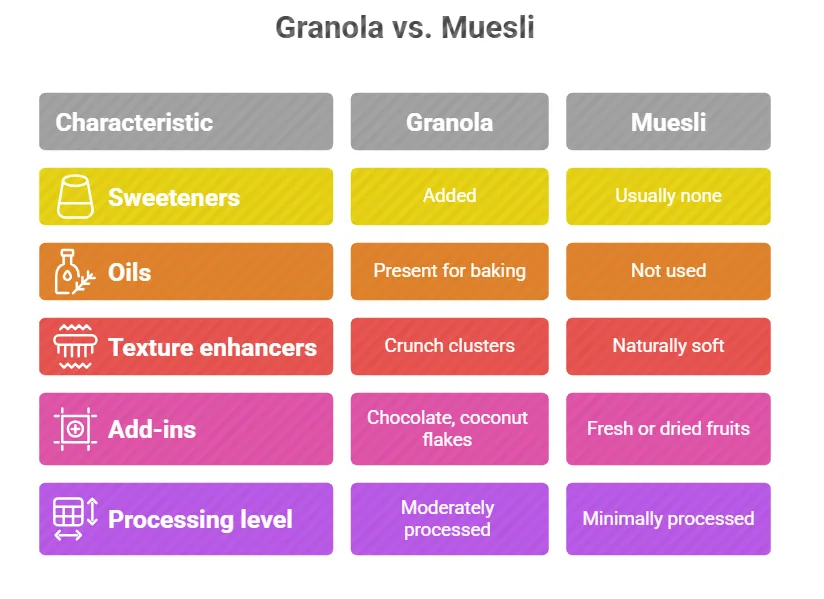
The difference between granola vs. muesli is the most apparent when it comes to the use (or lack thereof) of sweeteners and oils, which greatly affect the product's nutritional content and flavor.
The Preparation Process: How Granola and Muesli Are Made
How you make your breakfast cereal affects how it tastes, feels, and its health benefits. While there are many similarities between granola and muesli, when you learn how they are made, it becomes clear to see the differences between the two products. Making breakfast cereals is what defines granola vs muesli in the average person's eating habits.
The baking, soaking or other preparation methods will change how many calories they have and how crunchy they will be. So, the answer to “Are granola and muesli the same?” is definitely NO.
Granola: Baked and Crunchy
Oat, nut, and seed ingredients are combined into a mixture that includes oil (and natural sweeteners) and baked into granola after being combined.
The production of granola involves:
1. The combination of oil and natural sweeteners with the other ingredients and coating them all.
2. After mixing the ingredients, evenly distributed heat causes the ingredients to coalesce into one mass as they are heated up.
3. The ingredients are stirred periodically during baking, causing the nuts and oats to clump together.
4. Once baked, the granola is then cooled to maintain its crunch.
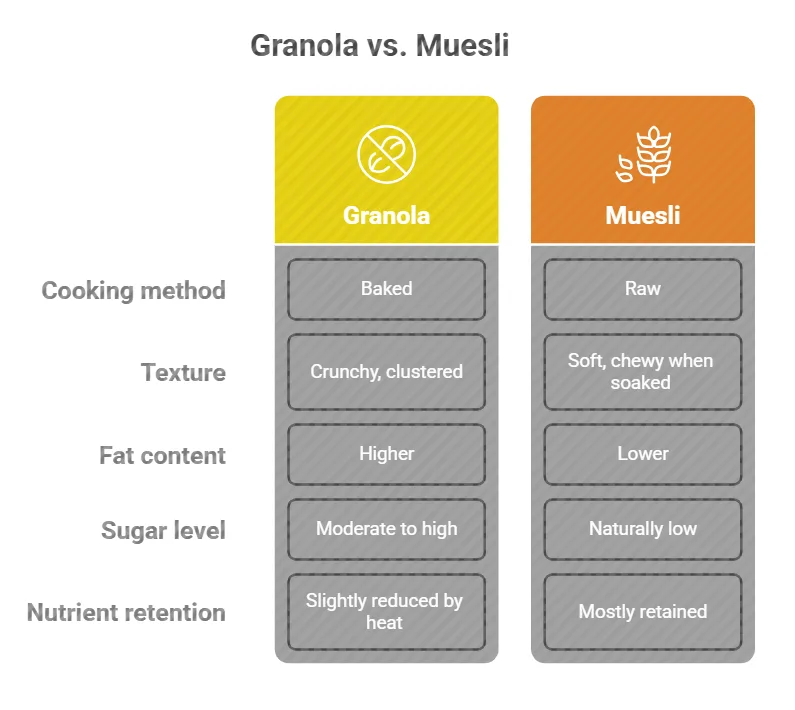
Nutritionally, the impact of this preparation style results in increased caloric counts due to additional sugars and fats. The shelf life is considerably longer when prepared in this manner. Granola will provide the consumer with both an immediate burst of energy and a sustained level of energy.
Muesli: Raw and Unbaked
Muesli (pronounced "moose-lee") is prepared differently than granola because it does not involve cooking or baking, and therefore retains the whole foods in their raw state.
A simple explanation of how muesli is prepared is as follows:
- Rolled oats are mixed with dried fruit, nuts, and seeds.
- No oil or sweetener has been added to the product.
- It can be eaten straight out of the package or soaked overnight before being consumed.
Muesli also has a higher fiber content than granola, while having a lower calorie and fat content.
Because muesli is prepared with minimal processing, the majority of nutrition lost during the cooking process is retained in muesli. Therefore, many people prefer to eat muesli as a means of improving health and losing weight.
How Preparation Affects Texture and Nutrition
The preparation method directly influences both texture and nutritional quality, clearly showing the difference between granola and muesli.
Enjoying this read? Get more like it.
Get fresh snack inspiration and updates from our team.
Nutritional Differences: Which Is Healthier?
Many people will base their decision when selecting a healthy breakfast on the nutrition of the product. The key difference between the two products, granola, and muesli, is their caloric content, the sugar in the products, and the overall balance of nutrients in each option. Knowing what they differ in allows individuals to determine the best options for their personal health goals with respect to muesli vs. granola.
By comparing the nutritional profiles of each option, you can choose the healthiest choice based on what you intend to accomplish or how each product matches up with your nutritional needs rather than determining which one is the best or worst.
Calories in Granola vs. Muesli
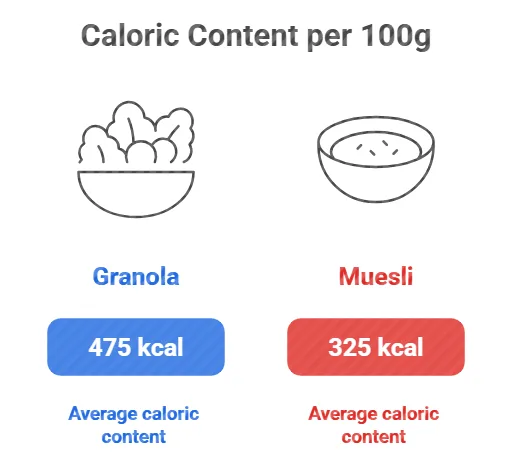
The major difference in nutrition between muesli and granola lies in their respective calorie content. While granola is typically higher in calories because it contains baking oils and sweeteners, muesli has lower calories than granola because it is made from raw, unsweetened ingredients.
- Granola will contain MORE calories than muesli because of the use of baking oils and sweetener.
- Muesli is less calorie dense than granola because it is not baked/roasted/processed and is therefore raw and has no added sweetener.
Sugar and Fat Content Comparison
Granola and muesli have very different levels of Sugar/Fat, which in turn will affect how something tastes, fills you up, and affects your health long term.
Granola's:
- Granola has been sweetened with additional sweeteners, i.e. honey or syrup.
- Granola uses oils/fats for baking.
- Granola has a much richer flavour and is crispy.
Muesli's:
- Muesli uses only the natural sugars from dried fruits.
- Muesli doesn't use any added fat or oil.
- Muesli maintains a very pure, but very mild flavour.

Fiber, Protein, and Whole-Grain Benefits
Although they are different products, they both offer vital nutrients, when eaten in moderation.
Both offer:
- Whole-grain oats that help support digestion
- Nuts & seeds, which are a source of plant-based protein
- Fiber that keeps you full longer
Difference in nutritional value :
- Muesli has a higher amount of natural fiber because it is only minimally processed
- Granola has a higher amount of protein and energy from additional nuts and seeds
Total Summary:
- Granola is the best option for getting energy and feeling full
- Muesli is the best for supporting digestion and overall balanced nutrition.
When looking at the differences between granola and muesli, it becomes apparent that which of the two is the healthier choice is reliant on an individual’s lifestyle, dietary objectives, and amount of energy a person is needing on a daily basis - not if granola and muesli are the same. Enjoy!
Taste & Texture: What to Expect from Each Cereal
When deciding between breakfast cereals, taste and texture are typically the most important considerations. Therefore, even if granola or muesli may appear to be visually similar, their respective eating experiences will vary dramatically because of these differences, which reflects the unique appeal of granola and muesli to different taste preferences.
From the crunchiness and sweetness to the gentleness and mild flavourings, each type of cereal will provide you with a different mouthfeel and thus influence how you will enjoy the breakfast experience every day.
Crunchy and Sweet Flavor Profile of Granola
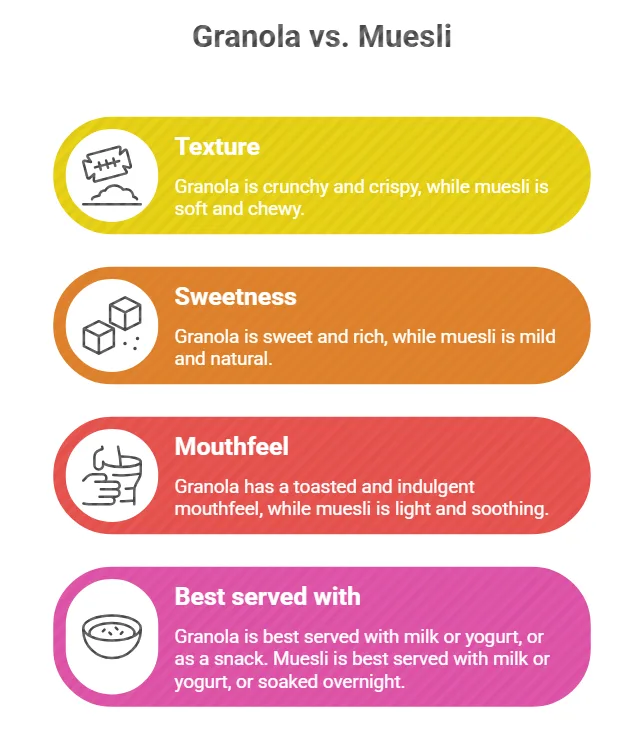
Granola has a distinct aroma and taste due to the way it was cooked. By caramelizing the sugar and fats during the baking process, granola has an intense cluster of ingredients with their aromas, as well as the sweetness and toasty character that result from this cooking process.
The taste and texture of granola are as follows:
- A Crunchy (crispy) texture
- A Sweet (slightly toasty) flavour
- A Nutty (indulgent) mouthfeel
- Granola maintains its crunchy nature for a short time when mixed in milk.
Due to these characteristics, granolas are often perceived as treats (rather than just breakfast). These characteristics also contribute to the difference between Granola and Muesli and why granola is often marketed as a breakfast and snack food.
Soft, Chewy, and Mild Taste of Muesli
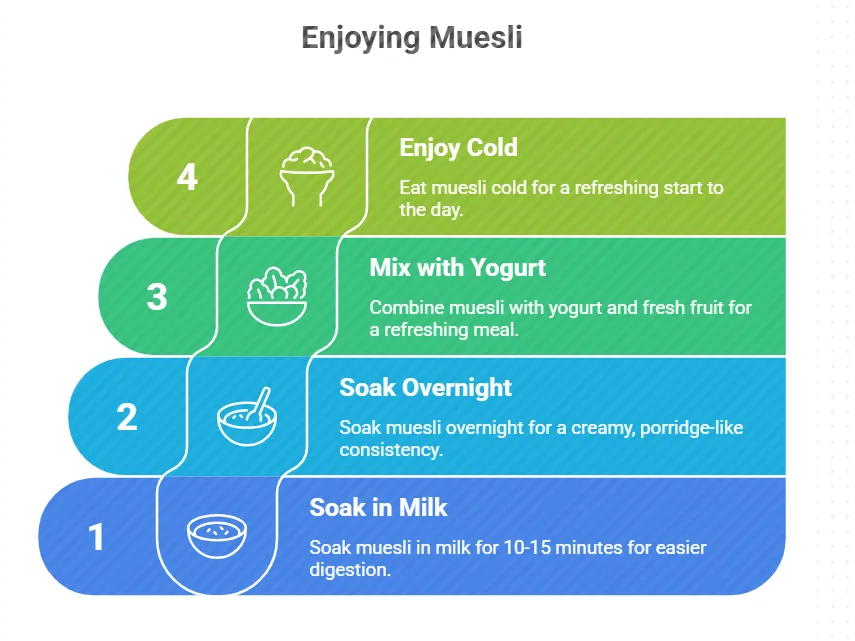
The fact that it is not baked means that muesli can be served in many different ways. Depending upon the method used for preparing muesli, it can be dry, soaked overnight in milk (such as with yogurt), or mixed together with yogurt.
Here's how muesli feels and tastes when eaten:
- When you soak muesli in water or milk, it becomes very easy to chew.
- When muesli is mixed with yogurt, you get the natural sweetness from dried fruits.
- The base of muesli contains oats, which provide a light, nutty taste.
- When you drink muesli, it won't upset your stomach.
This subtle flavor combination has led to a growing number of people choosing to eat muesli for breakfast as a way to start their day off on a peaceful note. Additionally, it has helped to dispel the rumor that "granola" has the same feel and flavor as muesli.
Which Texture Suits Your Preference?
Choosing between granola vs. muesli often comes down to personal texture preference rather than nutrition alone.
The Best Ways to Enjoy Granola and Muesli
Serving methods for breakfast cereals can greatly influence their taste, texture and nutritional value. Granola and Muesli are similar in their ingredient profile however, both cereals can be served differently enough to show some contrast with regard to everyday consumption. The different methods for preparing and serving granola vs. muesli therefore help with choosing one or the other based on ease of use, digestion, and personal preference.
Cereals offer many different ways to consume them, whether you prefer a quick crunchy bowl or a soft, wet breakfast, so you will not get tired of the same serving method over time!
How to Eat Granola with Milk or Yogurt
Granola should always be enjoyed where its crunch remains intact, while maintaining its rich sweet flavor profile.
Common ways to eat granola include:
- Using cold or hot milk as your go-to breakfast option.
- Incorporating granola into thick yogurt for an added crunchy contrast.
- Garnishing smoothie bowls with granola.
- Eating granola dry as a snack on-the-go.
Tips for serving granola include:
- Begin with smaller portions as granola is calorie dense.
- Pair granola with plain (unflavored) yogurt to help balance the high sugar content of granola.
- Top granola with fresh fruits for added sweetness coming from nature.
Using any of these types of servings adds to the flavor of granola and explains why many consumers prefer to eat granola versus muesli for the flavors and greater energy granola provides.
How to Serve Muesli (Cold, Soaked, or Overnight)
Muesli is much healthier than granola because it has time to soak into your body, making it easier to break down (digestion) and tastier (taste).
Thus, the answer to your question is "no, granola and muesli are not the same as they have different methods of preparation."
Creative Toppings and Bowl Ideas
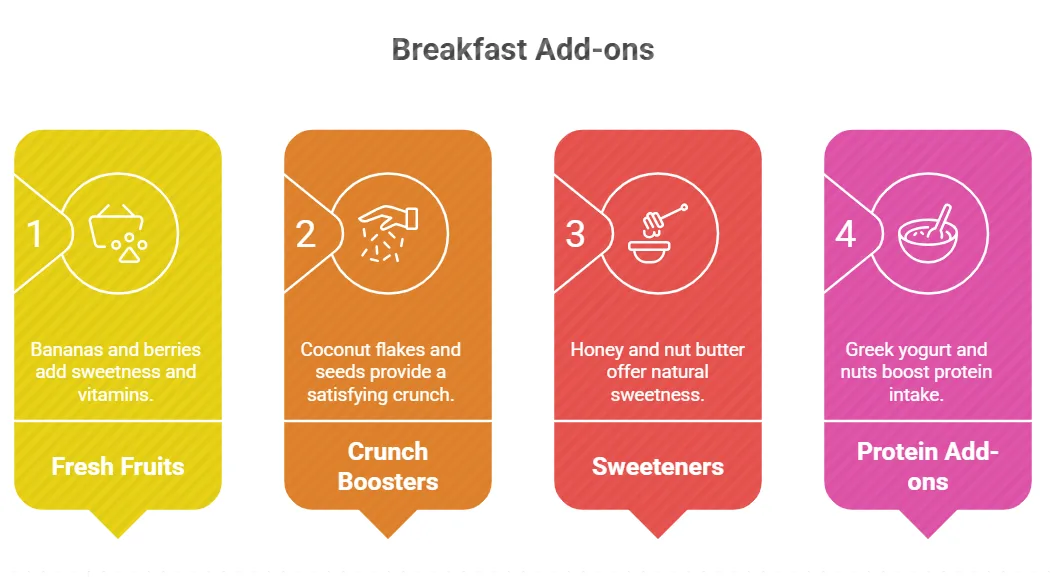
Topping your cereal with different things is a great way to add the custom touch to cereal and keeps in mind the differences between granola and muesli.
Creative Bowl Ideas:
- Granola, Yogurt, Berries, Honey Drizzle
- Muesli (Soaked) Oats, Apples, Cinnamon
- Granola Smoothie Bowl Topping
- Overnight Muesli Cereal with Nuts and Seeds
FAQs
Q1. What is the main difference between granola and muesli?
The main difference between granola and muesli is preparation—granola is baked with sweeteners and oils, while muesli is raw and unbaked.
Q2. Is granola and muesli the same?
No, is granola and muesli the same is a common myth; they share ingredients but differ in processing, calories, and taste.
Q3. Which is healthier: granola or muesli?
Both are healthy, but muesli is lower in calories and sugar, while granola provides more energy—healthier depends on your goals.
Q4. Is granola vs. muesli better for weight loss?
For weight loss, granola vs. muesli usually favors muesli due to its lower calorie and fat content.
Q5. Can both granola and muesli be eaten daily?
Yes, both can be eaten daily in moderation, with portion control especially important for granola.
Conclusion: Make an Informed Choice Between Granola and Muesli for a Healthier Breakfast Routine
When it comes to making an educated decision about granola or muesli as part of your daily breakfast routine, it is valuable to first understand how they differ. Granola is made by baking rolled oats, honey, nuts, dried fruits, seeds, and sweeteners (such as sugar) until they form a crunchy texture. Muesli, on the other hand, is an unbaked cereal mix that contains many of the same ingredient types as granola, but has a lighter texture due to less added fat and sugar. Granola is generally considered to be a "quick" source of energy due to its crispiness and sweetness.
Therefore, it can be a good option for people with busy schedules who want to eat something quick and filling in the morning. Muesli is the less processed option of the two and usually contains no added sweeteners or preservatives. Because of the difference in the way they are made, granola and muesli each serve a specific purpose as breakfast foods.
As you consider your breakfast options, consider your lifestyle as well. Granola is ideal if you lead an active lifestyle or if you are looking for something that will sustain your energy levels throughout the day. If you want something that is healthy, doesn't require refrigeration, supports healthy digestion, and is easy to digest, then muesli is probably the better choice. Thus, understanding how Muesli and Granola differ will help to answer the most common question: are they the same? While they have a similar appearance, they serve completely different purposes.
The best breakfast for you is one that meets your health goals. It is important to make informed choices when selecting between granola and muesli to ensure you are eating a healthy breakfast that will support your daily routine.