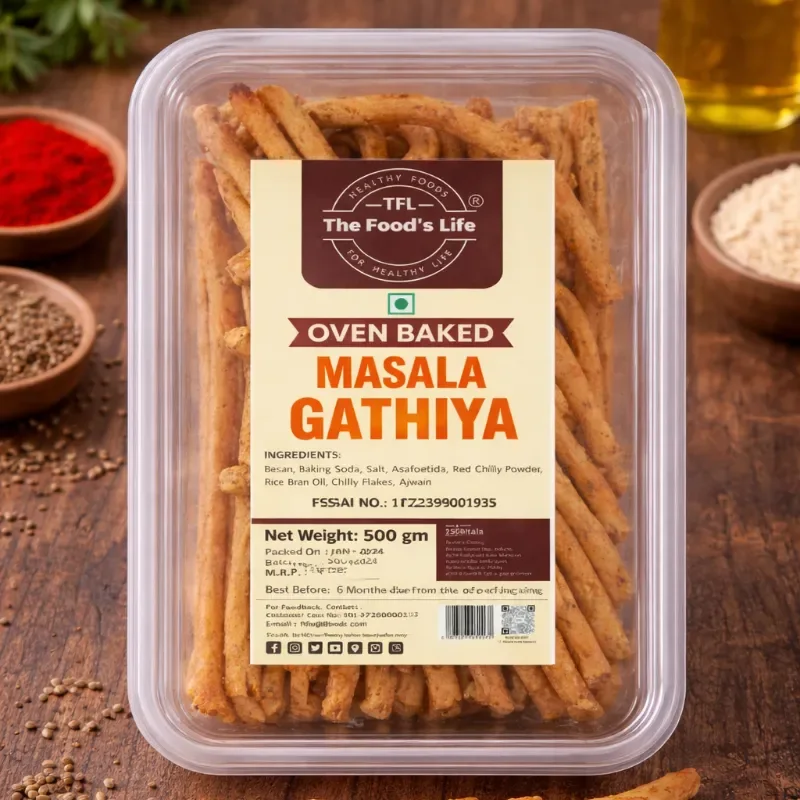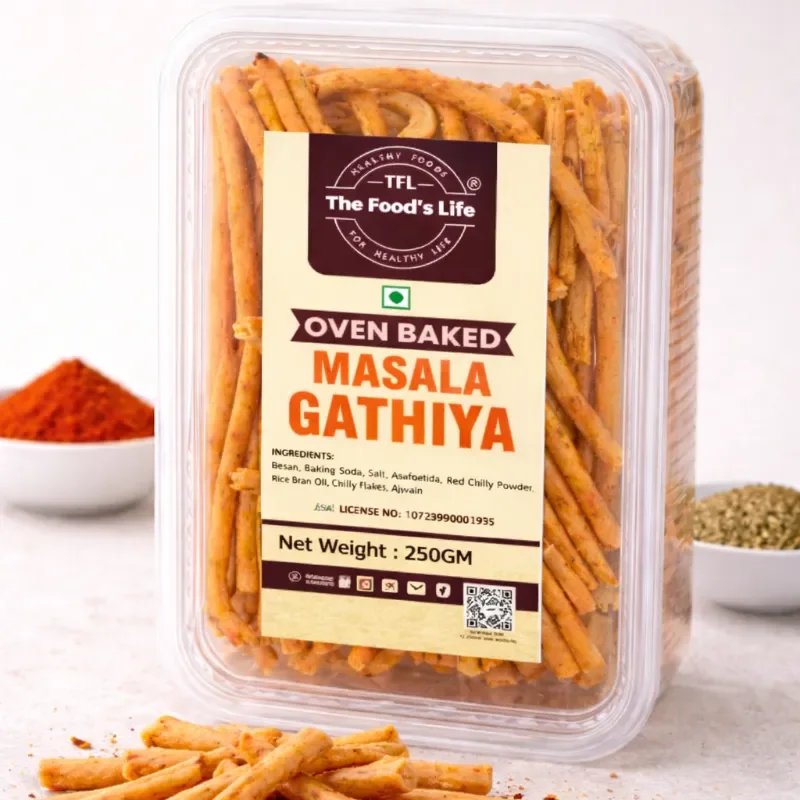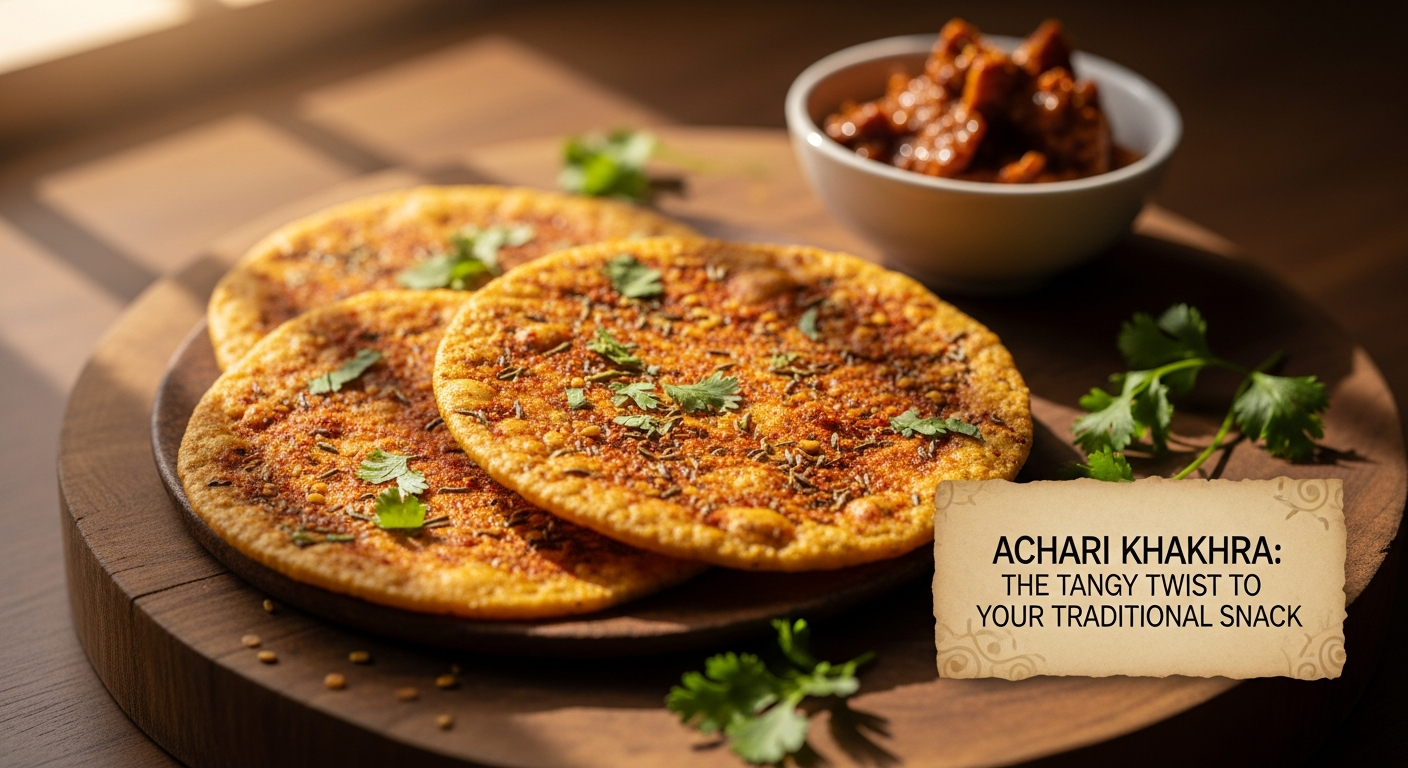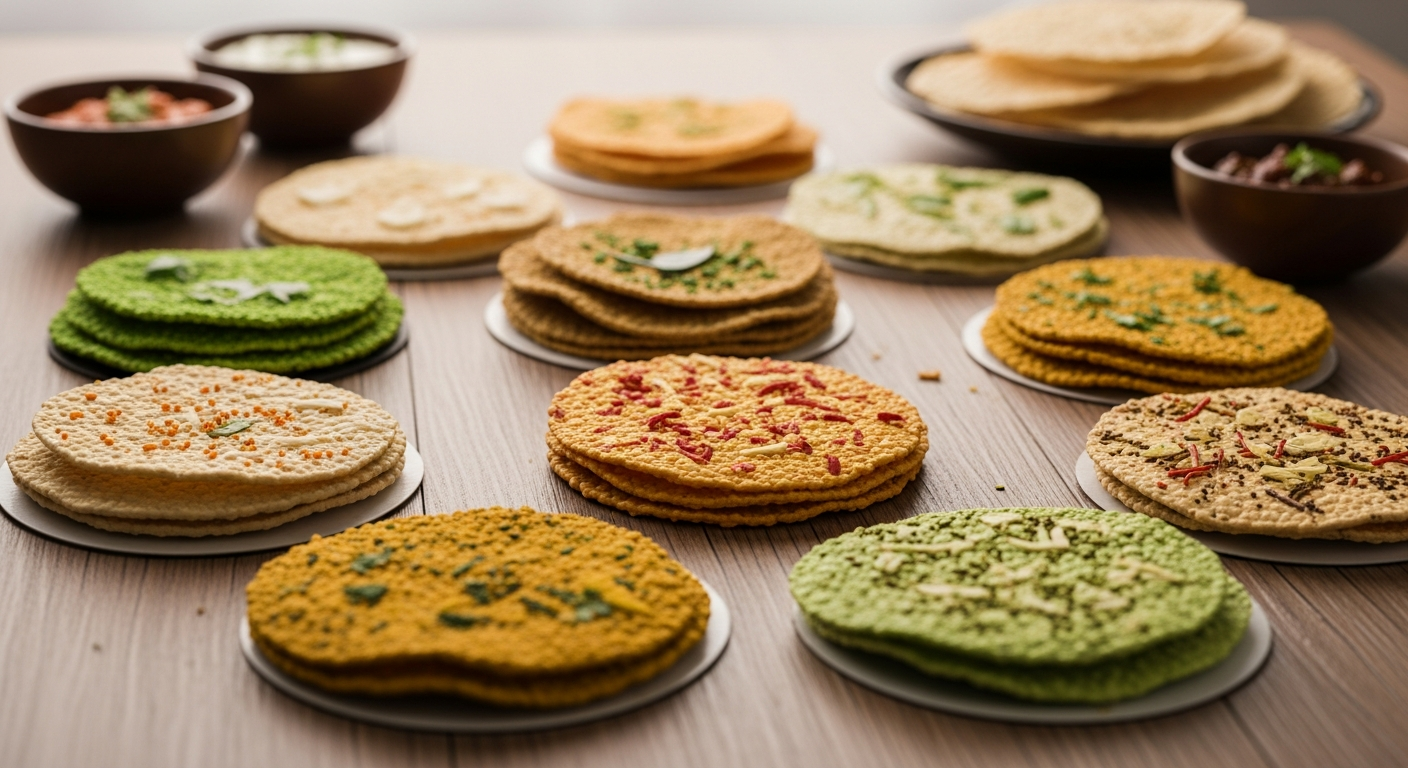
Khakhra, which is made with whole wheat flour, has been in Indian kitchens for centuries. Because khakhra is created from natural grains, all khakhra contains carbohydrates, and thus can be used as a daily source of energy.
Not only do they contain carbohydrates, but khakhra also provides much-needed dietary fibers, proteins, and vitamins to support gut health.
Bring on the crunch! Whatever type of flavour or type you desire—plain whole wheat khakhra; multigrain; millet—khakhras deliver on both flavour and nutrition in each bite!
What is Khakhra and How is it Made?
Khakhra, being a traditional Indian snack, is made with whole grains that are rich in carbohydrates.
Because of its wholesome ingredients and how it is prepared by roasting instead of frying, it is a healthier alternative to the fried snacks.
What is Khakhra and Its Popularity as a Snack
Khakhra is a thin flatbread made from wheat flour or a combination of flours that originates from Gujarat but has become a French staple throughout India. This flatbread is one of the most popular snacks for India`s health-conscious consumers because of its light, crunchy and portable nature.
Important Points (Balanced Style)
- Whole wheat or multigrain (wheat and millet flour) are used to make khakhras
- Known as one of the most popular tea time and travel snacks across the country
- Highly regarded for their long shelf life and convenience
- Available in a variety of flavors with many health-conscious choices
This is one of the main reasons why people now ask the question: "Does khakhra have carbohydrates?
Khakhra Ingredients and Traditional Khakhra Recipe
Ingredients have a direct impact on khakhra’s overall nutritional density, or its amount of carbs. Traditional recipes emphasize using natural and basic recipes.
Summary:
- Whole wheat flour is the main ingredient.
- Only water and minimal oil is used in making the dough
- spices such as methi, jeera, or ajwain are added for flavour
- Salt adds taste without adding any calories
- Multigrain varieties of khakhra have added oats or millet or other seeds.
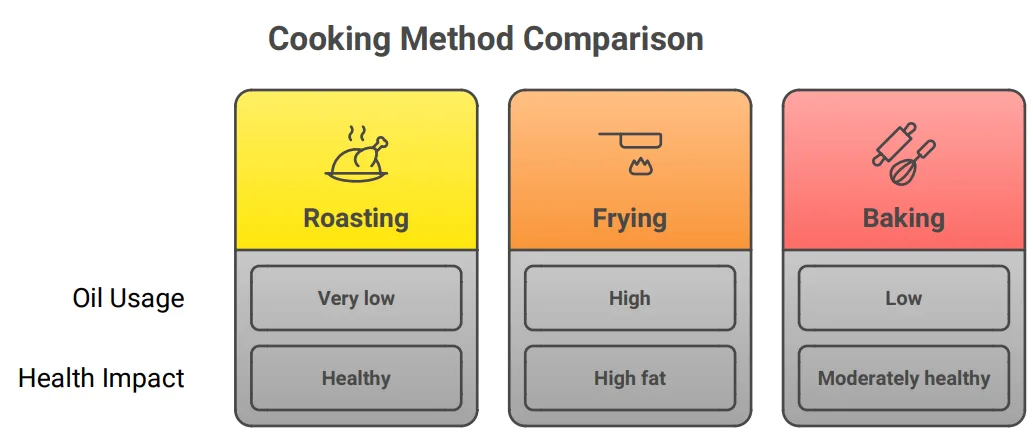
How Khakhra is Made – Roasting vs Frying
Khakhra is traditionally cooked by being roasted instead of deep-fried, which gives you the benefit of keeping the carbohydrates in the khakhra while eliminating excess fat.
Advantages of this method:
- The khakhra is rolled thin and flattened out on a tawa (a flat cooking surface).
- They are then cooked at a low temperature until they are fully dry and crispy.
- Khakhra contains very little oil compared with similar snacks cooked using deep frying techniques.
- All of the natural plant nutrients, especially carbohydrates, in the grains remain intact.
- This technique provides another choice for healthy cooking compared to deep frying.
The Carbohydrate Content in Khakhra Explained
If you’re asking, “Does khakhra contain carbs?” It's important to know what’s in khakhra nutritionally. Most khakhras are made primarily from whole wheat flour (or other types of flour); therefore, they’re naturally going to contain carbohydrates.
In fact, khakhra has been proven as a source of complex carbohydrates, meaning that they provide long-lasting energy and are a healthier option than many other snack foods that contain refined carbohydrates.
How Many Carbs Are in Khakhra Per Serving
Khakhra carbohydrate levels are contingent on composition and serving size.
A serving of khakhra, which is an average-sized serving, provides moderate levels of carbohydrate for basic daily energy requirements.
Balanced Style Points:
- 20g to 25g of khakhra will yield 12g - 15g of carbohydrates per piece;
- Whole Wheat Versions Contain Complex Carbohydrates;
- Depending on the combination of grains used to make them, multigrain khakhra provides a range of carbohydrate levels;
- Carbohydrates are released from the body at a steady rate;
- Serving size has a large influence on the amount of carbohydrates eaten.
Nutritional Facts of Khakhra
Khakhra has a complete nutritional profile in addition to being a carbohydrate food; this means that there are other nutrients (besides carbon) included in khakhra, including fibre, protein and others, as well.
(Well Balanced; Same Overall Message)
- Contains FIBRE to Promote Healthy Digestion
- Moderate Amounts of PROTEIN From Whole Wheat Flour
- Lower Amounts Of FAT Than Fried Snack Foods
- Provides Important VITAMINS AND MINERALS
- A HEALTHIER SNACK TO EAT EVERY DAY
Understanding Khakhra Carbs in Daily Diet
When you eat khakhra every day, it’s good for you if you control your portion size. Pair khakhra carbohydrates with other carbohydrates and fats to achieve a balanced diet over the course of the day.
Balanced and Practical
- Steady source of energy all day long.
- Good choice for a breakfast or an evening snack.
- Healthier snack option than refined carbohydrate snacks.
- Help you create a balanced diet when eaten in moderation.
- Can be combined with a source(s) of protein to help you create a more balanced diet.
Types of Khakhra and Their Impact on Carb Levels
The amount of carbohydrate in khakhra is dependent upon the type of flour and other ingredients used to prepare it; therefore, varying amounts of carbohydrates will be found in each variety of khakhra (i.e., wheat khakhra, multigrain khakhra, millet khakhra). To select the most appropriate khakhra for your dietary and health goals, you should be able to understand the differences between the various types of khakhra.
Wheat Khakhra vs Multigrain Khakhra Carbs
Multigrain khakhra and traditional wheat khakhra differ in terms of nutritional content and carbohydrate structure.
Both types have khakhra carbohydrates; however each has a distinct quality and impact on the body.
Points (Balanced style):
- Wheat khakhra consists of complex carbohydrates which provide energy consistently over time
- Multigrain khakhra contains multiple different types of grains which provide a greater diversity of nutrients
- Multigrain khakhra has more fibre compared to wheat-based alternatives
- Multigrain khakhra digests more slowly than wheat alone. Therefore it will keep you fuller longer
- Wheat khakhra is traditionally based with a less complex or diverse make up than multigrains.
Millet and Alternative Flour Khakhra Options
Khakhra made with millet is an alternative to wheat khakhra that is healthy and has different carbohydrate profiles. Therefore, khakhra made with millet will be a better option for those concerned about the carbohydrate content of khakhra.
Balanced and informative point
- Contains complex carbohydrates with low glycemic index
- Usually gluten-free and suitable for people with special dietary restrictions
- High in dietary fiber to help with digestion and weight management
- Made from jowar khakhra, bajra khakhra, ragi khakhra, etc.
- Helps to regulate blood sugar levels
Flavored Khakhra and Carb Differences
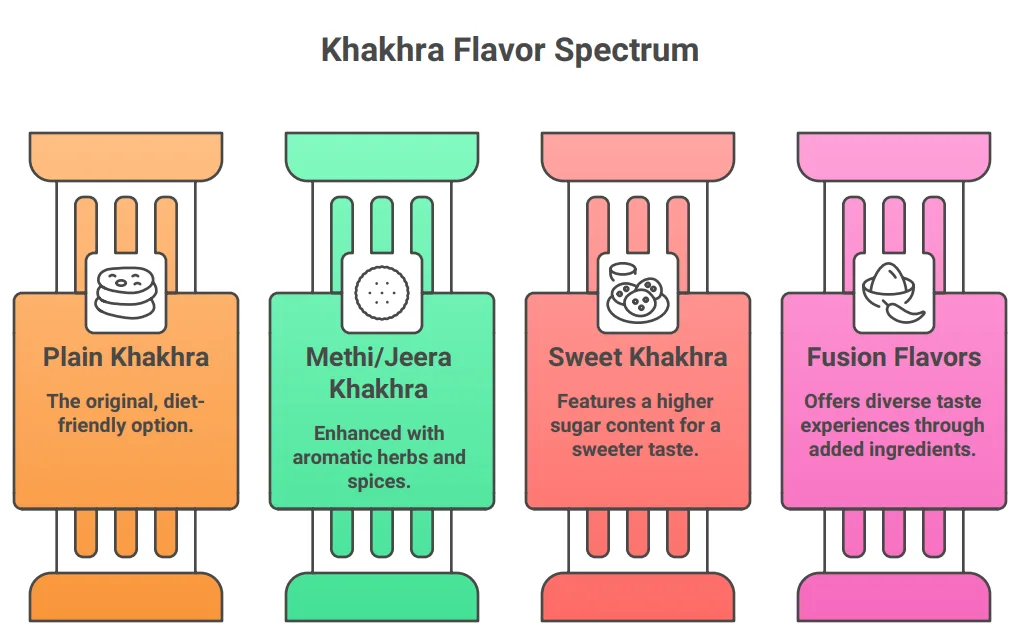
Carbohydrate levels in khakharas of different flavors may vary due to other ingredients used in their preparation.
The carbohydrate levels of standard khakharas are relatively standard regardless of their flavor; however, the additional calories from certain flavored varieties can cause varying degrees of nutrient variation from the standard khakhra.
Key points:
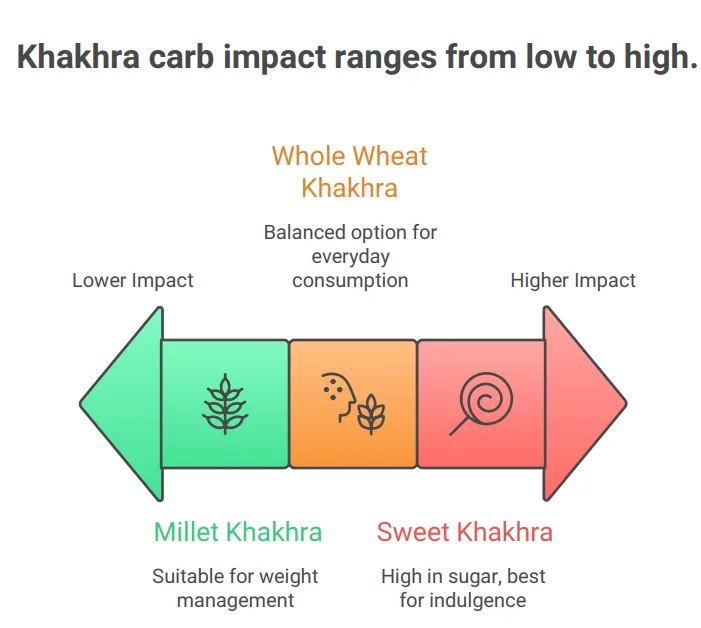
- Plain khakhra has the most stable carbohydrate level.
- Spice-flavored khakhra (spice or seasoned khakhra) would be the least variable.
- Sweet khakhra has an increased carbohydrate level due to the addition of sugar.
- Fusion-style khakhra (pizza-flavored khakhra, cheese-flavored khakhra, etc.) may have some added fat.
- Always verify the carbohydrate levels of packaged khakhra when purchasing.
Comparing Khakhra’s Carbs to Other Common Snacks
There is an equivalently important side to evaluating the nutrients found in khakhra as well as its grains: the comparison between khakhra versus other snacks. The grains (as opposed to starchy processed snacks such as potato chips or cookies) that comprise khakhra are higher in carbohydrate content than many types of processed snacks.
Therefore, khakhra represents a better option for everyday consumption of carbohydrates than many highly processed snacks.
Khakhra vs Chips and Biscuits – Carb Comparison
Value is not just based on how much you eat but also by the quality of food consumed — no matter what kind it is.
Some examples include fried & processed foods, which have little nutritional value compared to complex carbs like khakhra!
Balanced style tips:
- Khakhra has slow-digesting complex carbohydrates & is much healthier than fried/processed snacks such as chips or biscuits (chips are made up of refined carbohydrates & unhealthy fats).
- Most biscuits & chips are made up of added sugar & refined flour with little to no fibre present in them;
- while khakhra provides a good source of dietary fibre along with its relatively lower fat content (i.e., fewer calories).
Is Khakhra a Low-Carb Snack Option?
While khakhra isn't an entirely carb-free snack, it can be part of a healthy diet when eaten in moderation. If you're unsure about how many carbohydrates are in khakhra (and yes, there are carbs in khakhra), they are lower than most snacks that include added sugars and/or fats.
Khakhra provides adequate energy to sustain you during your day without creating a quick increase followed by a sudden decrease (or crash) after consumption.
Because khakhra is lower in carbs than many processed snacks, it is a more favorable option for those following a low-carb or keto diet.
Overall, khakhra is a snack that if consumed properly can fit into almost anyone's day-to-day routine.
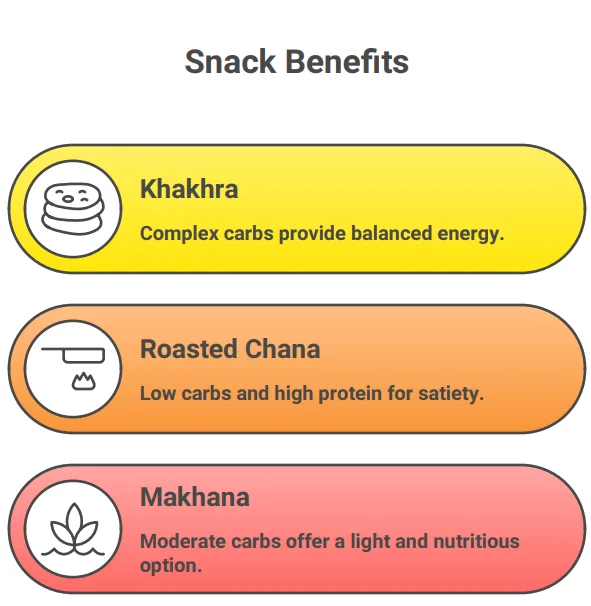
Healthy Indian Snacks and Carb Awareness
It is important to note that choosing the best snack is a matter of combining knowledge of carbohydrates with nutrition.
Savvy snacking of khakhra is compatible with a balanced and nutritional diet.
Notes (Balanced + Informational):
- Whole ingredients are used in traditional snacks such as khakhra
- Compared to junk food that comes in a package, khakhra is made from high-quality carbohydrate sources
- Khakhra can easily be combined with protein-rich foods such as yogurt or chutney
- They have a great ability to provide adequate amounts of energy without providing the same amount of empty calories
- Eating khakhra with mindfulness will encourage consumers to develop healthy snacking habits
Enjoying this read? Get more like it.
Get fresh snack inspiration and updates from our team.
The Impact of Carbs in Khakhra on Diet and Blood Sugar Levels
The answer to the question "Are Khakhra's carbs?" is yes, but how they impact your body changes based on the type of carb it is and whether you've eaten them or not.
Khakhra is generally made from whole grains and therefore has healthier carbs than most other refined snack foods, especially if you consume khakhra in moderation and together with a healthy, balanced diet
Carbohydrates and Blood Sugar Response
How your body will respond with carbohydrates will depend on the type and how fast it digests. In general most of the complex carbohydrates of khakhra release energy over a longer period of time.
To combine the above Points into a balanced paragraph:
- The digestion of complex carbohydrates in khakhra is a slower steady process compared to the digestion of simple carbohydrates.
- Prevents sudden rises in blood sugar.
- The presence of fibre will improve glucose absorption control.
- Khakhra is better than simple carbohydrate snacks like biscuits.
- The size of the portion also makes a difference.
Glycemic Index of Khakhra
The glycemic index (GI) of a food is a measure of how fast it raises a person's blood glucose level (sugar level).
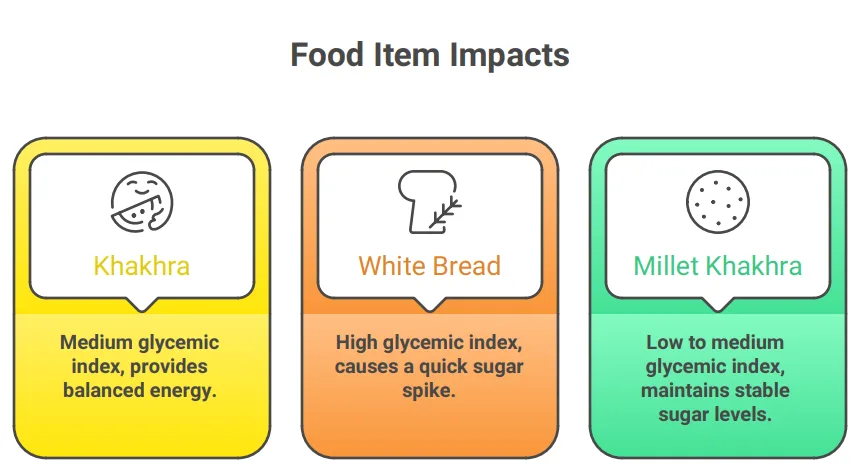
For those with interest, khakhra is a moderately good carbohydrate source, so has a relatively lower GI.
- When selecting whole wheat (the more common variety today),
- khakhra will have a moderate glycemic index. However, multigrain or millet khakhra will likely be lower.
- The amount of fibre present slows glucose absorption into your body.
- Therefore, having a lower GI is helpful for keeping a person at a stable energy level.
- Khakhra is therefore generally a better option than highly processed snacks, which usually have a high GI.
Is Khakhra Suitable for Diabetics?
Khakhras can fit into a diabetic (or restricted) diet if consumed in moderation.
A diabetic more closely watching their carbohydrate intake will find that even with khakhras (due to the nature of the carb) it is still very much within the area's parameters.
Tips (practical and balanced):
- Select those made from whole wheat flour (or millet).
- Avoid those that are sweetened or have added sugars in their flavoring.
- Have small portions.
- Balance your portion of khakhra with your portion of protein or fiber.
- Always check your individual medical needs and follow your physician's recommendations.
Tips for Enjoying Khakhra While Managing Carb Intake
Are you thinking about whether khakhra has carbohydrates? Yes, khakhra does contain carbohydrates, but the good news is you can still eat khakhra while being able to adhere to your diet.
Smart food selections and portion control make it very possible for both people who follow a healthy lifestyle and people who are trying to lose weight to include khakhra carbohydrates in their daily meals.
Portion Control for Balanced Snacking
Managing the amount of food consumed is the most important part of having an effective control of khakhra carbs. Healthy snacks such as khakhra should also be treated with care regarding size and quantity.
Balanced Style Points:
- For controlling the amount of carbs eaten from khakhra, limit serving sizes to 1–2 khakhras.
- Avoid excessive consumption of khakhra when eating small amounts of food often.
- Balance the effects of khakhra with other meals you eat during the day.
- Smaller serving sizes will help keep energy levels constant throughout the day.
- Khakhra may be used more as snacks instead of full meals.
Pairing Khakhra with Protein or Fiber
Khakhra nutrition combined with other foods will lower the amount of carbs you get from khakhra. This will improve the balance of carbohydrates from khakhra and improve your overall nutrition.
Reason (Balanced + Practical):
- Works well with curd/yoghurt and protein. So, you can eat khakhra with curd/yoghurt to make it more filling.
- Works well with chutney or vegetables to give you more fibre.
- Works well with sprouts/paneer to make a more balanced snack.
- Slows down digestion so you won't have spikes in sugar levels.
- Helps you feel full longer after eating khakhra.
Low-Carb Alternatives and Smart Choices
If you're following a low carb diet, you can continue to consume khakhra if you choose the correct khakhra type. By selecting which type of khakhra you buy, you will be able to keep your total carbs within your target.
Helpful tips:
1. Select a multi-grain or millet khakhra
2. Look for low oil, high fibre khakhra
3. Do not buy any sweetened or sugary khakhra
4. Smaller or thinner khakhra means less for you to eat
5. Alternate with other healthy snacks like roasted chickpeas.
FAQs
Q1-Does khakhra have carbs?
Yes, khakhra contains carbohydrates as it is made from grains like wheat or millet.
Q2-How many khakhra carbs are there per serving?
On average, one khakhra contains around 12–15 grams of carbohydrates.
Q3-Is khakhra good for low-carb diets?
Khakhra is not ideal for strict low-carb diets but can be included in moderation.
Q4-Are multigrain khakhras lower in carbs?
Multigrain khakhras may have slightly varied carbs but offer better fiber and nutrition.
Q5-Can diabetics eat khakhra?
Yes, diabetics can eat khakhra in controlled portions, preferably whole wheat or millet-based options.
Conclusion: Does Khakhra Have Carbs? Making Informed Dietary Choices with Confidence
Although khakhra contains carbohydrates, the type of carbohydrate you choose is the key. Karakhra is typically composed of whole grains like millet or wheat which have complex carbohydrates that supply slow-burning energy and satisfy hunger; however, most processed snack foods use refined sugars and provide simple carbohydrates which can result in high blood glucose levels. Therefore, khakhra can be a healthier alternative to other processed snack foods (many of which are high in sugar) that can affect your blood glucose level.
When consumed mindfully as part of a healthy lifestyle, khakhra is acceptable. Try to eat it along with protein or fibre-rich foods, to balance your carbohydrate intake. Aim for whole wheat or multigrain varieties, and manage your portions. Rather than eliminate all carbohydrates from your diet, focus on the quality of your carbohydrate intake and the balance of your food options; this way you can enjoy khakhra without the guilt!
Making informed decisions about what you eat means understanding what your body requires and choosing foods that provide you with both nourishment and satisfaction. Choosing wisely regarding both the quantity and quality of the khakhra you consume will give you a convenient, nutritious, tasty, and satisfying snack while still allowing you to maintain effective control over your total carbohydrate consumption.