
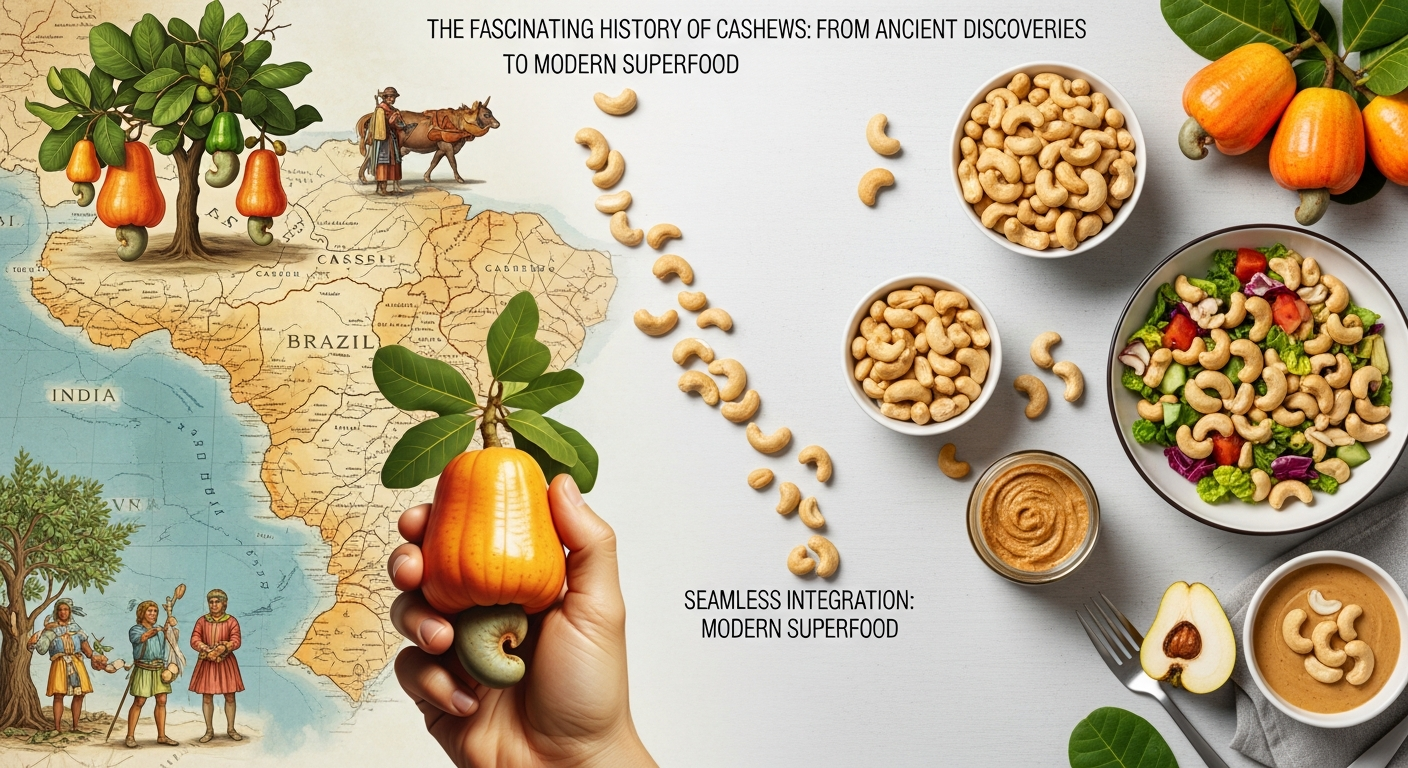
The story of the cashew begins with the discovery of the cashew by the peoples of Northeastern Brazil thousands of years ago, when that part of South America had vast stretches of rainforest and an extensive tropical environment in comparison to today. Native peoples recognized early on that the cashew had many uses : as food, using the nut for making beverages and for traditional medicinal preparations. In fact, the origins of the cashew reflect the deep cultural significance of this tree in ancient cultures and the ecosystems in which they were created.
With the progression of world trade in the early 16th century, the Portuguese colonizers brought cashews from South America to Africa and to India. Over time, cashews adapted very well to the tropical regions of Africa and Asia and quickly became an important food source and staple crop in the areas of the world where the cashew was introduced. The growth and establishment of the cashew in these tropics had a significant impact on the history and global spread of cashews as they changed from a locally grown product of Northeastern Brazil to a product that was grown and harvested all over the world and one that has become very important because of its nutritional and economic value.
Today, cashew nuts are considered a modern day superfood. They are consumed in many different types of food product forms : in addition to their role as ingredients in the preparation of ethnic foods, they are also used in the preparation of plant-based dairy alternatives and are marketed and sold as healthy snack options. Thus the history and the evolution of the nutty treat perfectly complements the rich cultural background of the cashew nut.
Tracing the Roots of Cashews Across Continents
Cashews have a long and interesting journey from their original location in South America to the places we have them today. Cashews became popular all around the world, and in large quantities we see them every day; however they started as a regional crop in South America.
Learning about the journey of the cashew nut helps provide insight into its original roots and the changes that turned this regional food into a product that is consumed worldwide today.
The Origin of Cashews – Where Do Cashews Come From?
The cashew plant has been grown in Eastern Brazil since antiquity as a natural aspect of the Tropical Coastal environment. The natives of the area were among many early cultures that used most of their natural resources for food and alcoholic products.
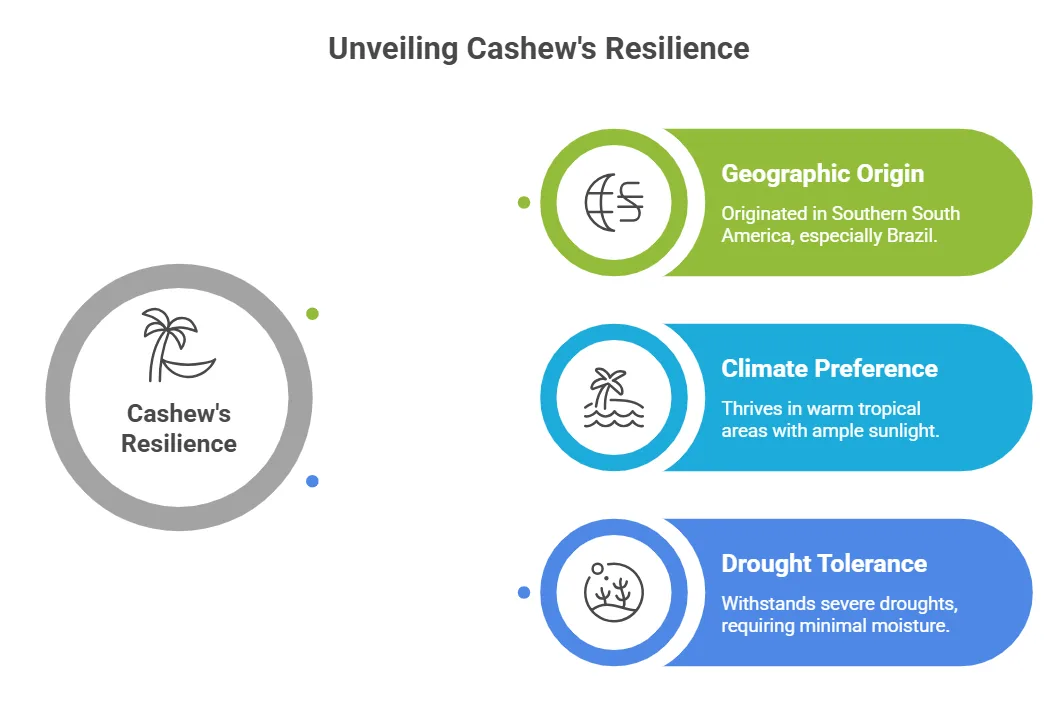
Because of the ability to cultivate and cook with cashews in the beginning of Eastern Brazil's history they became an important part of the culture of Brazil for many years after.
The Discovery and Early Cultivation of Cashew Nuts
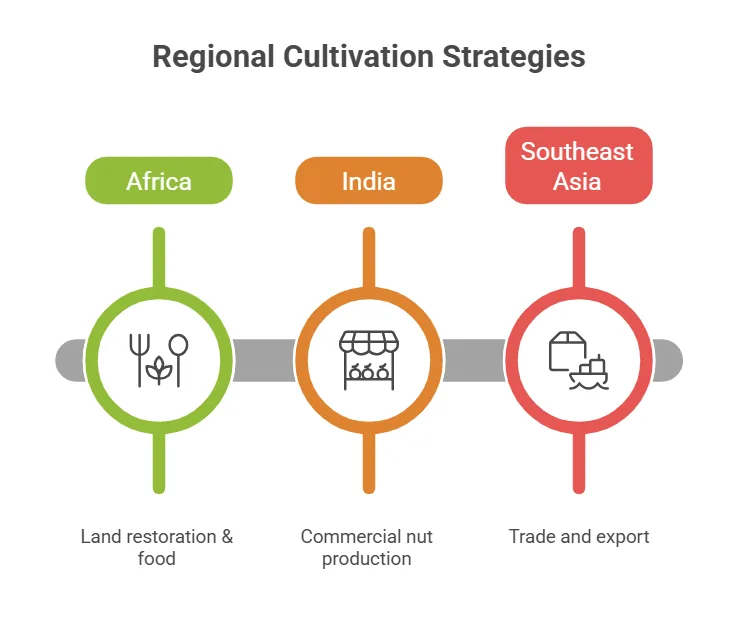
In the 1500s, European travelers (most notably, Portuguese) started realizing that cashew trees could be grown for commercial purposes. Portuguese traders brought cashew nuts from South America to Africa and India through trade routes established during colonialism.
Factors Behind the Rapid Spread of Cashews
- Cashew trees are well-adapted to growing in tropical soil.
- Cashew trees help prevent soil erosion.
- Cashew trees use less water than most other crops.
Early Uses of Cashews in Brazil and Beyond
During the early days of its usage, the cashew was much more than just a snack. The indigenous peoples of Brazil made use of almost every part of the cashew tree.
The common uses for cashew during this time included:
- Roasting the cashew nut and eating it as a snack
- Using the cashew apples as an ingredient for making juices and fermented drinks
- Using the tree bark and leaves for medicinal purposes.
As the cashew began to be introduced to new places, the use of the cashew in cooking grew—from what would have been a part of traditional cooking to including the use of cashew in sweet dishes and curries. As the cashew became popularised and its culinary applications grew, the cashew became, to an even greater extent, part of the way of life across cultures around the world.
The Journey of Cashews: How They Spread Across the Globe
The rise of cashews globally can be traced back many centuries to the exploration, trade, and subsequent agricultural development of cashew nuts. Initially grown in South America, they quickly spread throughout the world as a result of these processes.
Learning about this process provides us with another important aspect of the cashew's long and varied history and illustrates what the geographical areas (where cashews originally came from) and colonial trade have done to what we now know as cashew nuts.
Portuguese Explorers and the Global Spread of Cashews
The history of cashew nuts began in the 16th Century, when Portuguese Navigators started trading along the South American coasts and found the first cashew trees in Brazil, and realized they could produce valuable agricultural goods.
The Reasons for Expanding Cashew Trees across the Globe by the Portuguese:
- The way the cashew tree helps prevent soil erosion.
- It thrives in tropical, coastal regions of the world.
- It requires very little water, and care, to grow.
Portuguese traders brought cashew seeds to their colonies in India and Africa, which began the cashew tree process of becoming a worldwide production outside of its native region.
Cashew Cultivation in India, Africa, and Vietnam
Cashews adapted quickly and easily to their new surroundings when introduced to tropical and subtropical areas.
Major cashew growing areas today include:
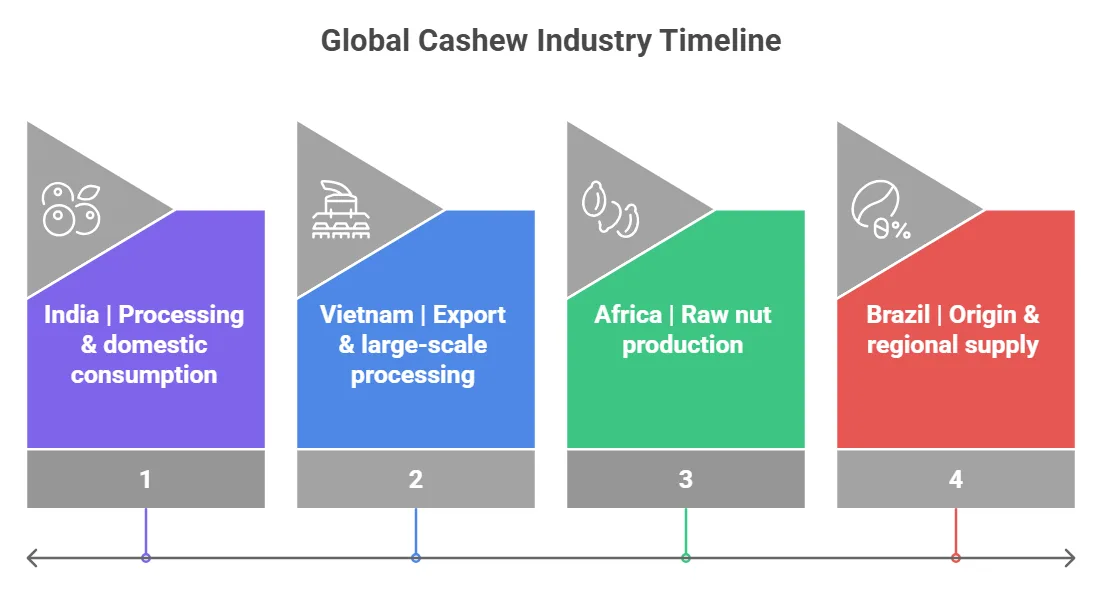
- India – Became the primary consumer and processor of cashew nuts
- Vietnam – Became the largest exporter of cashew nuts in the world
- Nigeria and Ivory Coast – Major producers of unprocessed cashew nuts.
Colonial Influence and Cashew’s Commercial Growth
The cashew's role changed from protecting soil to cash crop during the time of colonization. As a result of the colonization, colonial governments supported the establishment of extensive cashew farming for revenue and land stabilization.
Examples of How Colonialism Affected the Cashew
- Creation of large scale plantation operation
- The establishment of industrial processing plants
- The expansion of worldwide commerce of cashew nuts
As a result, cashew nuts have shifted from being considered a less desirable product 100 years ago to being accepted today as premium nuts in many global markets. They are also valued today not only for their flavor and overall health benefits but for their sustainable nature and economic viability, marking their place in our current/career history of cashew nuts.
The Unique Growth Process: Why Cashews Are Different from Other Nuts
Compared to walnuts and almonds, cashew nuts grow and get processed very differently than the other two types. Cashew nuts are unique because of their unusual fruit structure and long maturation times and the way cashew nuts are processed; thus the unique process shaped the way that cashews have been viewed throughout history and continue to be viewed in the global food supply system from the time that cashews originated in South America.
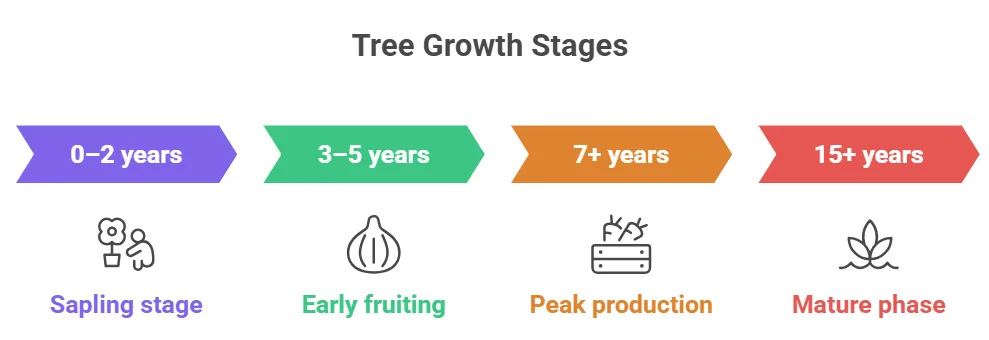
Cashew Tree Anatomy and Growth Cycle
The cashew plant is an evergreen, broadleaf species found in the tropics that has a very broad canopy and a complex fruit production process.
Here are the key points regarding the growth potential of the cashew tree.
- The cashew fruiting process will begin producing fruits approximately 3 to 5 years post-planting
- Peak productivity generally occurs 7 to 10 years after planting
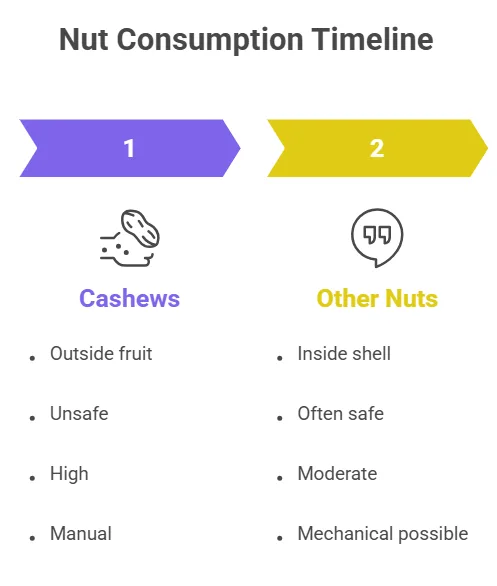
- Cashew fruits (which are also called cashew apples) contain the nut on the outside of the fruit.
- Under appropriate growing conditions, the cashew will produce fruit for many years.
How Cashews Are Harvested and Processed
Unlike other tree nuts, cashews do not drop down and are not harvested using mechanical means (i.e., they don't utilize shaking or pruning). The cashew nut is collected once it has matured.
The harvesting and processing process is unique:
- Cashew apples will fall naturally when ready for harvesting.
- The nuts must be picked up by hand from the ground.
- The nuts are separated from the apples manually.
- Once the nut is removed from the apple, the nut will be enclosed in a toxic shell. This must be neutralized before shelling to prevent any health concerns.
Thus, cashews require more human labor compared to most other tree nuts, creating a premium value for them in cultures worldwide since they were discovered.
The Role of Cashew Apples and Unique Processing Methods
Most other nuts only use the nut itself. The cashew apple is more than just a fruit, it is also essential for how the nut matures and how we process the nut.
Importance of the cashew apple
- Nuts are ready to be harvested when the apple falls off the tree
- Cashew apples are processed into juice and fermented beverages everywhere in the world
- To harvest the nut, the apple must be picked off without damaging the nut.
What makes the processing of cashew nuts different from other nuts
- Because of the toxicity of the oil from the shells, it must be removed safely before processing begins.
- After harvesting, cashew nuts are roasted or steamed before removing the outer shell.
- Cashew nut kernels are carefully peeled, graded and dried.
Enjoying this read? Get more like it.
Get fresh snack inspiration and updates from our team.
Cultural Significance and Culinary Uses Throughout History
Cashew nuts, from their earliest days back in the days of pre-colonial history, have been very important around the world for many reasons: cultural, food-related, nutritional and in terms of their global economic impact.
In this respect, the relationship between food and the use of cashew nuts is an integral part of many different cultures and societies, which tells us that the history of these nuts goes way beyond what one might think of when they think of 'snack'.
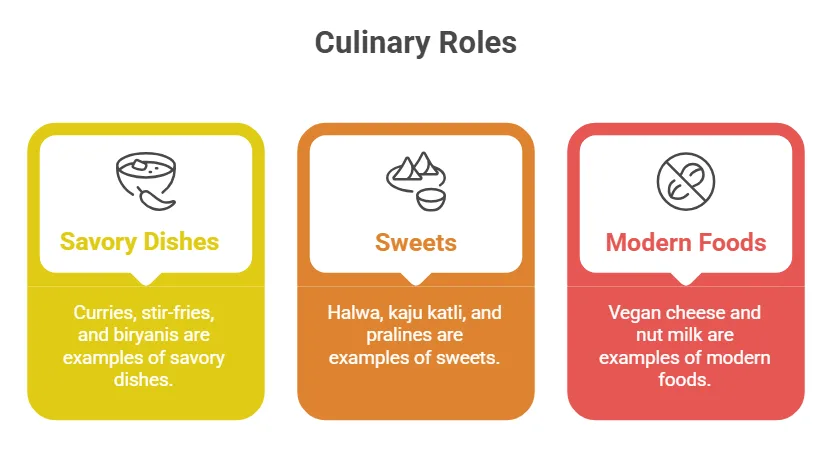
Traditional and Modern Culinary Uses of Cashews
The indigenous people of South America began roasting and eating cashews long ago, and this spread throughout the world and became commonly used in many different types of cuisine.
Traditional Cashew Uses:
- Cashews were used as a thickening agent in curries & gravies.
- Ground-up, heck, they were also used for sauces and stews.
- And as a sweet and festive dessert.
Modern Culinary Uses:
- Essentially, we see cashews used as an alternative for milk/cheese/cream.
- Snack on cashew protein/nut butter or anything that falls into this category.
- As an ingredient in Fusion Global Cuisines and Global Cuisine.
Cultural Importance and Symbolism of Cashews
The Cashew has traditionally represented abundance, feast and prosperity in different cultures around the world. The cultural significance of cashews is evidenced by their use during festive times and family gatherings.
Examples of Cultural Significance of the Cashew Nut:
- Common forms of use for ceremonial or special events.
- Symbolism of wealth/money and hospitality.
- Frequently utilized in desserts or sweets during festival celebrations (E.G., birthdays, weddings).
The fact that, in many African nations, and in India, cashew nuts are often reserved only for special occasions, demonstrates how culturally significant they have become within those cultures and how deeply they are integrated into local traditions. This (deeply embedded cultural importance) goes back to the beginning when cashew trees were established and their exportation via trade began.
Economic and Nutritional Value in Local Communities
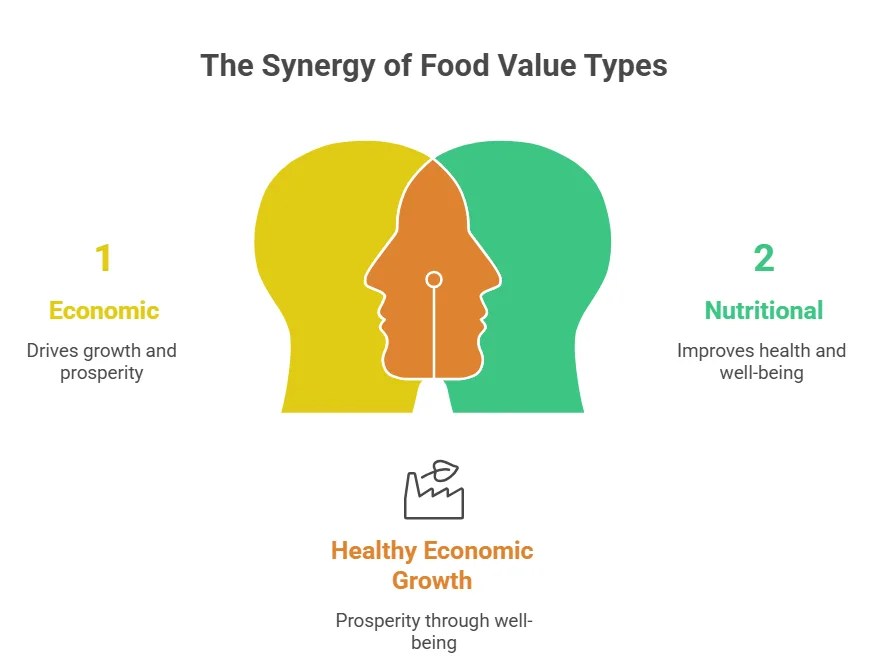
Cashews have many economic and nutritional benefits, extending well beyond the areas of culture and cooking.
Economically, cashews:
- Provide income to small farmers
- Create rural employment opportunities in processing plants
- Many countries rely on cashews as a significant export.
Nutritional value of cashews:
- Contains healthy fats and plant protein
- Contains large amounts of magnesium, iron and zinc
- Support energy and overall health
The Rise of Cashews as a Global Superfood in the Modern Era
From the time that cashews were first discovered until their present-day status as a wellness food, they have been through many changes and adaptations throughout history.
The more recent part of this history shows how nutrition research and Dietary Changes over time along with world-wide commerce gave cashews such a high value as one of the popular superfoods.
The Modern Popularity of Cashews
Over the past few decades, cashews have grown to become an important component of many diets around the world. Because of their creaminess and blandness, cashews are what make them so desirable for many new and classic dishes around the globe.
Below are a few of the factors driving the increased consumption of cashews:
- Ideal for plant-based/Vegan Diets
- Adaptable in both sweet and savory applications
- Naturally gluten-free and easy to digest
The use of cashew nuts now includes snack foods, dairy alternatives, gourmet foods, and other high-end food products, thereby securing their place in today's culture.
Health Benefits and Nutritional Value of Cashews Today
Research in modern nutrition continues to highlight cashew nuts as one of the most nutrient-rich whole foods for overall wellness.
Key Nutritional Benefits of Cashew Nuts:
- Excellent source of healthy Monounsaturated fatty acids;
- Excellent source of plant-based protein;
- Contains magnesium (Mg), Iron (Fe), Zinc (Zn) & Copper (Cu);
- Promote Heart Health and Energy Levels.

Commercial Cashew Cultivation and Industry Impact
Around the world, there is a growing demand for cashew nuts, which has changed the face of agriculture and trade in many countries. Starting from Brazil as the birthplace of cashew nuts, the cashew nut industry has grown into a multi-billion-dollar business.
Impact of cashew nut production on the industry:
- Many millions of farm laborers and workers are employed by this industry;
- It provides a major source of income for many rural areas throughout Asia and Africa.
- It stimulates innovation by introducing new methods for processing and packaging.

FAQs
Q1. Where do cashews come from originally?
Cashews originated in northeastern Brazil, where they were first used by indigenous communities.
Q2. How did cashews spread globally?
Cashews spread globally through Portuguese traders in the 16th century, who introduced them to India, Africa, and Southeast Asia.
Q3. What are the traditional uses of cashews in native cultures?
Traditionally, cashews were roasted for food, while cashew apples were used to make juices, fermented drinks, and local remedies.
Q4. How are cashews processed after harvesting?
After harvesting, cashews are dried, roasted or steamed to remove toxic shell oil, then shelled, peeled, graded, and packed.
Q5. Why are cashews considered a superfood today?
Cashews are considered a superfood because they are rich in healthy fats, plant protein, minerals, and antioxidants that support overall health.
Conclusion: Why Understanding the History of Cashews Matters for Today’s Consumers
The historical significance of the cashew tree and nut over time allows us the opportunity to have a greater understanding of how we utilize this nut today; therefore, when making food decisions, we will have a different view of this food source than we do when we simply consider cashews as a snack item. Cashew trees and nuts have been propagated globally, including South America, Asia, and Africa, indicating our ingenuity as a species and connecting us worldwide both by trade and by respecting our environment. By being aware of these historical facts about the cashew tree and nut, we will not only have additional meanings added to our food decisions, but we will also learn about the historical context of the foods we consume.
Also, understanding the historical journey of cashews will communicate what it takes to bring cashews to the marketplace. These trees have been cultivated over generations, and cashews require specific harvesting and processing techniques to maintain the quality of the nut and the surrounding trees. Millions of families worldwide rely on these processes to support their annual incomes. Accordingly, when consumers are aware of the history behind cashews, they will value the ethical sourcing of products and support fair trade and sustainable farming practices that protect farmers and their environments.
Ultimately, understanding the history of cashews gives consumers the information they need to make better-informed and more equitable choices when purchasing food. By viewing the cashew nut as a product of tradition, nutrition, and global collaboration, modern consumers can develop a greater understanding of how cashews contribute to their overall health and well-being as part of a nutritious, balanced diet and to a sustainable food system.