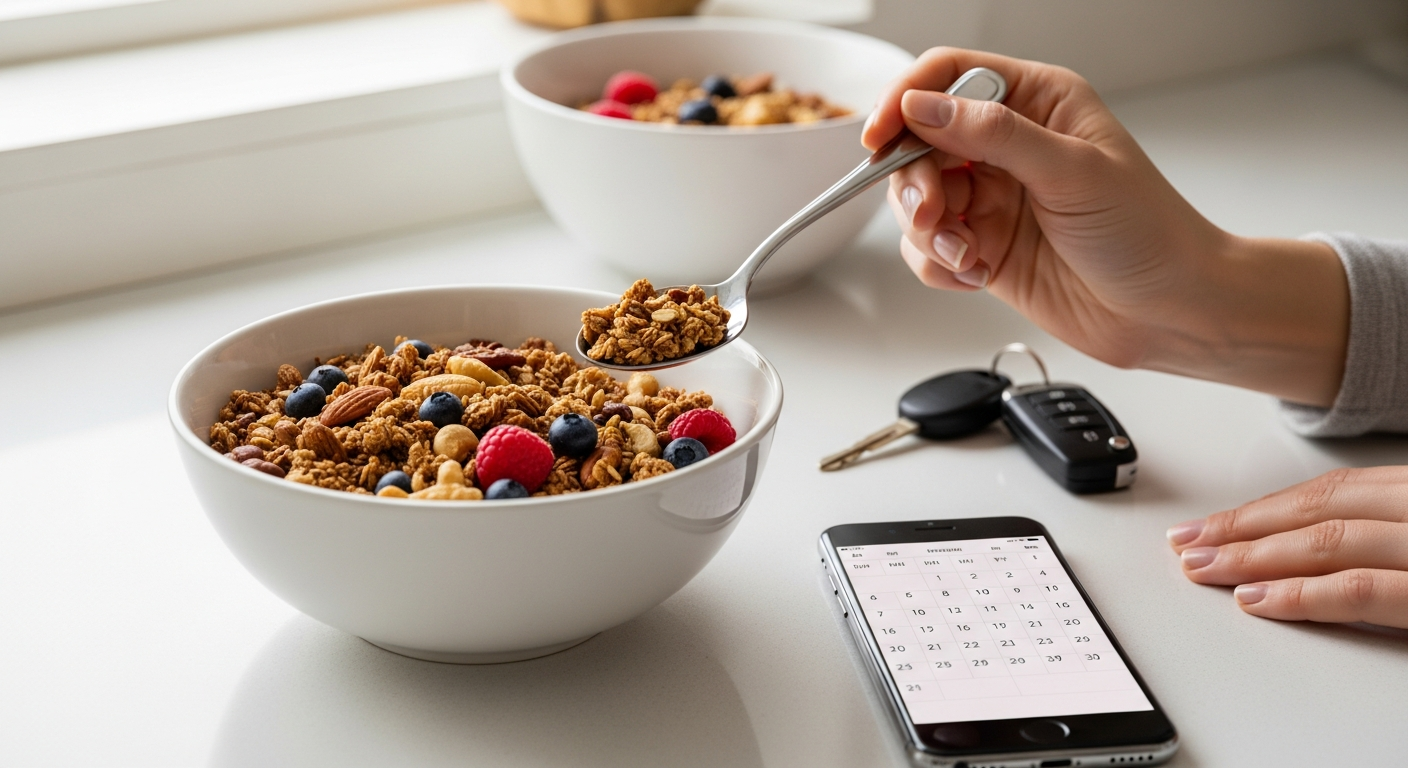
Granola is a unique combination of different types of grains (such as oats and wheat), nuts, fruit, and sweeteners. Granola’s nutritional value comes from the wide range of nutrients that can be derived from these ingredients, along with their high energy content. As a result, granola originally served as a means of digestion and overall health support during the early history of granola preparation.
Granola became popular among fitness enthusiasts and health-conscious consumers in the late 19th and throughout the 20th centuries because of its connection to a natural food movement that supported the consumption of healthy, whole foods. Over time this small niche of granola gave way to a much larger market that included all types of athletic consumers and families looking for nutritious, easy-to-make meals.
Granola provides an incredibly diverse range of flavors, forms, and styles while still maintaining its original intent to support the health of individuals who consume it. The popularity of granola has remained strong over the years, and it continues to provide an excellent source of nutrition for all people—whether enjoyed as an addition to cereal, yogurt, or fruit salad.
Origins of Granola: Early Beginnings in the 19th Century
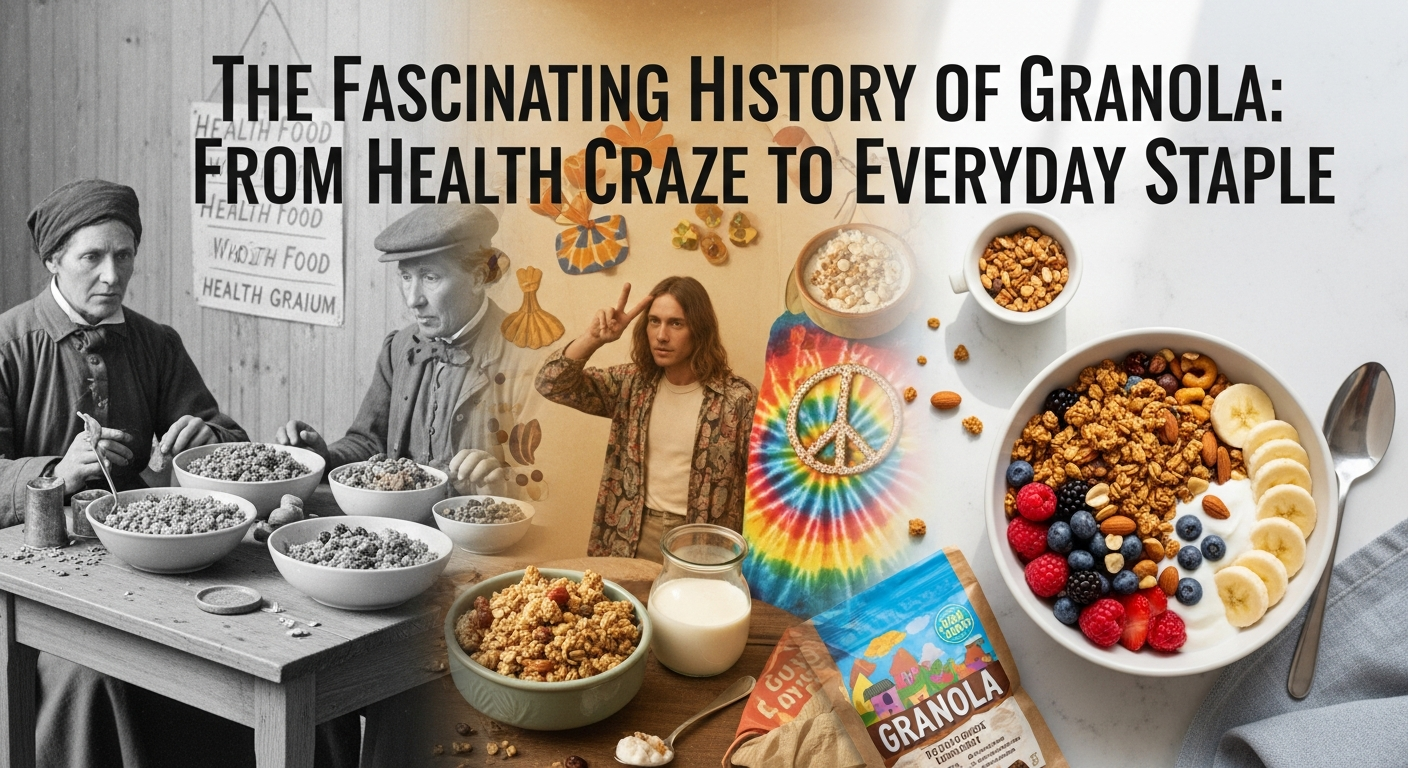
The 19th Century saw the beginning of the Granola story. During this time, people began to take notice of how their diets and Natural Health relate to each other and began developing a series of Natural Health products that would lead to the Granola we know today.
As a result, granola was not initially created as a Breakfast Cereal or a snack food; the first use of Granola was to promote Digestion and overall nutrition. The creation of Granola came from the Health Reform Movement, an early example of Health-related Education through Healthy Eating.
Granula: The First Form of Granola
Granula is the name of the first form of Granola. Granula consisted of a mixture of baked Whole Wheat dough that was broken apart. It was very tough and difficult to eat unless soaked in liquid before consumption. This creates the beginning of the functional health food that we consider Granola today.
Characteristics of Granula:
- Whole Wheat
- Very Tough
- Used for Digestion Support
- A Soaked Food
Health Reform and Early Nutrition Movements
The health reform movements of the 19th century led to the development of granola. Health reformers promoted a diet consisting mostly of whole grains, simple meals that were easy to digest, and plant-based foods as a way to improve overall health. In this way, granola would have fit perfectly into these principles at the time and thus helped to solidify granola's place in granola's early history.
The key beliefs of early nutrition reformers were:
- That whole foods are superior to refined foods.
- Simple meals are more easily digested.
- That eating with discipline is important
- That natural ingredients were the best way to promote well-being.
Sanitariums and Dietary Discipline
Granola became popular in health sanitariums where patients followed very strict dietary guidelines. The people involved in the development of these sanitariums believed that what you eat affects both your physical and mental state. Granola was provided to these patients as a controlled nourishing meal that promoted both good digestion and good structure.
There were several reasons why granola was used in sanitariums:
- Granola could be easily apportioned out in servings.
- Granola was made with whole grains.
- Granola promoted good digestive health.
- Granola supported dietary discipline in wellness.

Granola’s Evolution: The Kellogg Influence and Growth
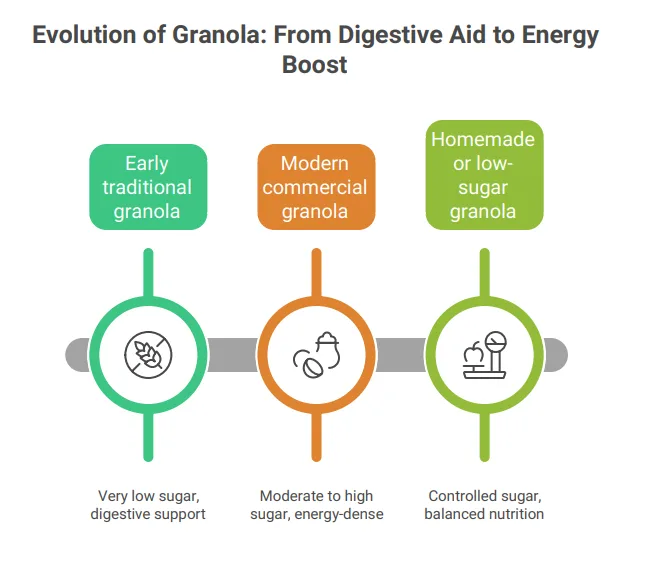
The modern version of granola was created around the 1890s and early 20th Century when health advocates were experimenting with whole-grain foods. The turning point for granola occurred when Dr. John Harvey Kellogg became involved with the product; through his involvement, Dr. Kellogg refined granola and promoted it as a nutritious food that supported digestion and good health.
Granola has evolved from a simple baked mixture of cereals (grains) to an important ingredient in many households.
Recipe Improvements and Renaming
Original granola recipes had a hard, dense, and chewy texture; as a result, Dr. Kellogg modified the original formula to bake the cereal grains twice for better digestibility and softness while simultaneously maintaining the nutritional benefits. During this transition period, the name of the product changed from "Granula" to granola; this change helped to provide an overall identity for granola as we know it today.
Changes made to Early Granola recipes:
- More pliable granola texture
- More digestible
- Better flavor and shelf stability
From Medical Food to Household Breakfast
Granola was first used as a health food and prescribed for patients who had digestive problems. As time progressed, recipes improved and it eventually became a popular breakfast item in many households.
How Granola Became Part of EVERY Day
- It was served with milk and fruit.
- Families started eating granola for breakfast.
- It was valued for being nutritious, healthy, and convenient.
- The shift of granola from clinics to everyday kitchens.
Early Commercialization of Granola
Growing interest in health foods led to the early commercial production of granola. Through this development, granola was able to reach a broader audience than just those associated with health food institutions.
The effects of early granola commercialization include:
- The mass production of granola made it more readily available.
- Packaged granola was distributed and sold within grocery stores.
- The consistency of quality in packaged granola was established, creating greater consumer confidence.
- Granola became an accepted category of food.
Through these developments, granola has been firmly established as a staple in the food culture of the modern day.

The Counterculture Movement: Granola’s Comeback
Granola, which had been primarily marketed as a health-oriented food item since its early inception, saw a resurgence when the counterculture movements of the 1960s and 1970s began to emerge. During this period, individuals began to question their reliance on processed foods and the prevailing modern-day industrialized lifestyles, and began to seek after more natural, homemade, and wholesome forms of nutrition.
The Counterculture Movement's influence was quite significant as granola became a symbol of being conscious about one’s lifestyle; therefore, it was an important moment in the historical timeline of granola, as it also created opportunities for the creation of healthier granola products.
Granola and the Natural Foods Revival
Granola became once again a popular food item as part of the natural food and wellness movement Granola met the demand for whole grain, minimally processed foods.
How Granola Fit the Natural Foods Movement
- Whole grain and natural ingredients used in making granola
- Granola is minimally processed
- Granola is beneficial for the digestive system
- Granola represents a return to traditional food preparation methods
The Counterculture Movement had a significant impact on the modern-day history of granola.
Homemade Granola and Organic Living
Homemade granola has been trending over the past few years as people are becoming increasingly conscious about their eating habits and more interested in preparing their own food from scratch. It quickly transitioned from being a popular food item to becoming a household staple for many homes that are dedicated to living an organic and chemical-free lifestyle.
Characteristics of the Homemade Granola Trend:
- Use of organic oats and honey
- Baked in small batches
- Did not contain refined sugar and preservatives
- Customization of ingredients based on the individual's specific health needs.
As a result, this trend has helped solidify granola's place as a significant part of an individual's everyday natural lifestyle.
Granola as a Cultural Identity
While granola is still an edible product, it has grown into an important cultural symbol. Granola represents a commitment to being environmentally conscious, simplicity of lifestyle, and a commitment to living mindfully.
Identity of Granola:
- Represents being environmentally aware
- Represents being sustainable and ethically responsible
- Represented within lifestyle groups and labels
As such, the evolution of granola's cultural identity as a food choice to a cultural identity for a group is an important marker in the history of granola.
Modern Granola: Commercialization and Innovation
Throughout the last 30 years there has been extensive change and development regarding how granola is viewed and used. Once considered a health food item, Granolas now fall under many different categories as a result of the commercialisation and increased variety of use. Increasingly active lifestyles, increased focus on health, and the demand for a convenient form of healthy food translated into the mass marketing of granola.
Once used to be eaten in a bowl or mixed with milk; granola can now be purchased in a variety of ways including bars, snacks, and custom-made mixtures.
Rise of Granola Bars
Granola bars are a portable and easy-to-use form of traditional granola that became increasing spun upon by many consumers (especially those leading busy lifestyles) including athletes and school children, who quickly began to utilize this new product as part of their nutrition needs.
The main reasons that drove these bar's rapid acceptance;
- They can easily be carried in a bag and consumed while travelling
- They are very long-lasting; therefore, they are an inexpensive alternative.
- They are formulated with an optimal ratio of carbohydrates, fats and proteins.
- They are heavily marketed as being a healthy snack option.
Granola bars have also significantly fostered the habit of using granola in everyday snacks.
Specialty and Dietary Granolas
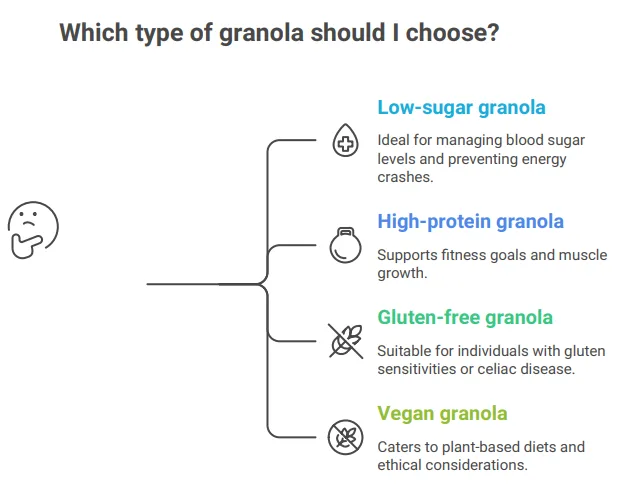
Specialty and Dietary Granola: As more people become aware of nutrition, granola started offering options that catered to their specific needs. Companies developed granola specifically for health consumers.
Common Types of Specialty Granola
- Low Sugar Granola
- High Protein Granola
- Gluten Free Granola
- Vegan and Keto-friendly Granola
All of these support the movement toward the modern history of granola and increase its diversity and accessibility to many different lifestyles.
Artisan and Small-Batch Granola
Artisan and Small-Batch Granola: With the rise of mass-produced granolas, so came the rise of artisan granola that focuses on quality, craft. Typically produced in small batches, artisan granolas have a great focus on flavour, using natural ingredients and prepared using traditional methods of making granola.
What Sets Artisan Granola Apart
- The product has been handcrafted in small quantities
- The granola is unprocessed except for being baked dry
- The granola is created using organic and locally grown ingredients
- Artisan granola has unique flavour combinations
Artisan granola is a return to the basics while being creative, which adds to its history.
Enjoying this read? Get more like it.
Get fresh snack inspiration and updates from our team.
Nutritional Impact and Ongoing Debates
With the increasing visibility of granola across multiple cultures (for example, the growing use of granola in communities of color), more attention has been paid to the nutritional qualifications of granola. When granola was first established, it was considered as a wholesome food that was simple, grain-based, and minimally processed. As granola has progressed over time and been modified commercially, it has undergone several variations in terms of nutritional qualifications, which has created much debate about granola's health and grain and/or sugar content.
Health Benefits Through the Years
Granola is identified with long-term nourishment and energy. Early granola versions contained mainly whole grains and natural ingredients, which both provided a balance of energy as well as promoting the healthful function of digestion.
Historically Throughout the Years, Health Benefits of Granola Have Included the Following:
- Complex carbohydrate source
- Contains fiber for digestive health
- Provides long-term energy
- Promotes balanced protein consumption.
Sugar and Calorie Concerns
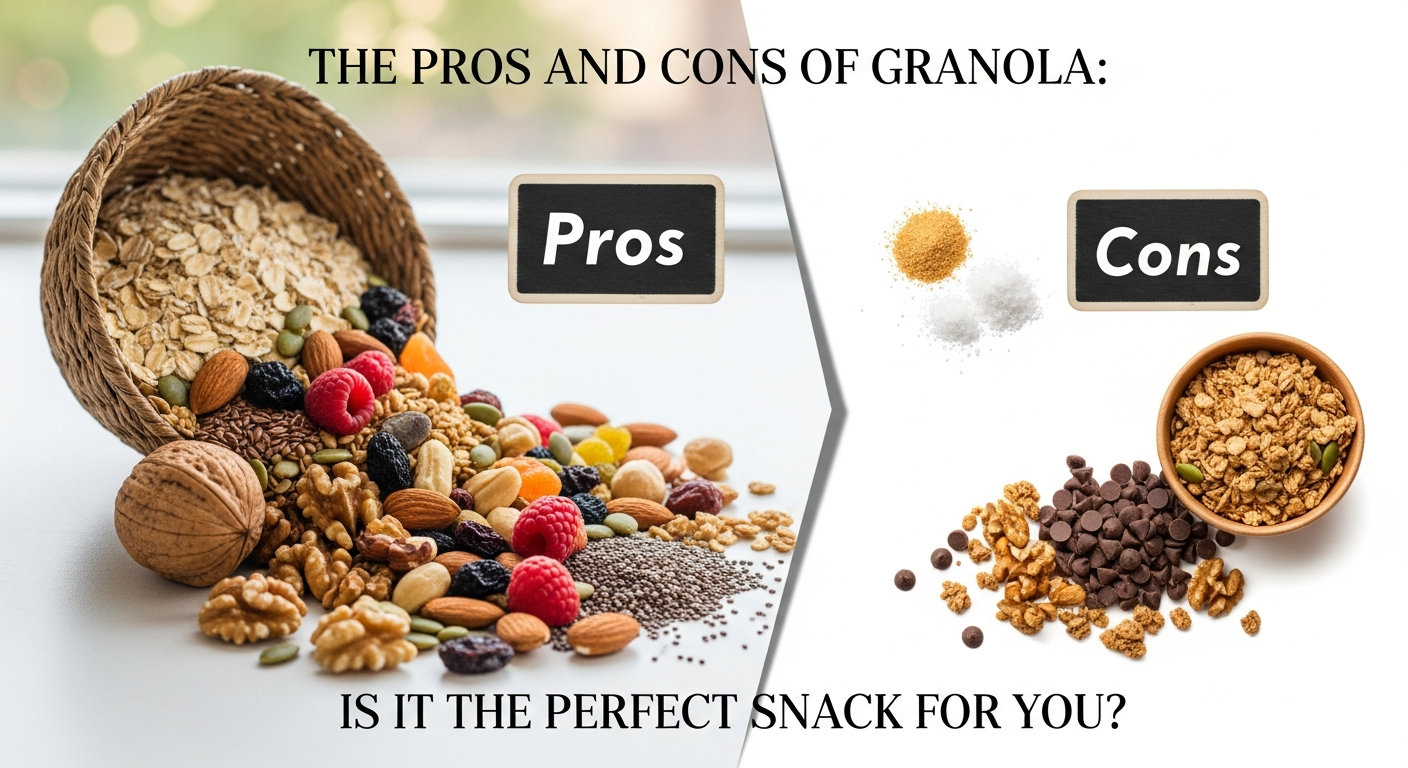
With the growth of commercial production of granola, the additives used in many granola products have increased the amount of sugars and fats present in them. Because of this addition of sugars and fats to granola products, many companies have produced granola products with a higher caloric density compared to the original granola product.
- Common Nutritional Concerns Associated with Granola Products
- High amounts of Added Sugar found in Flavored Granolas
- More Calories per Serving
- Larger Container Sizes Due to Industry Standards.
Balancing Tradition and Nutrition
Today’s Modern Consumer wants to enjoy Granola just as it was intended, to eat for health reasons and as a snack, while at the same time, to maintain their health with the current daily standards of nutrition. The way Granola will continue to evolve throughout the years.
Tips for Balancing the Consumption of Granola:
- Select Whole Grain Low Sugar Granola
- Be Mindful of Portion Sizes
- Eat with Fresh Fruit or Greek Yogurt
- Eat Homemade or Clean Granola.
Granola Around the World: A Global Breakfast Staple
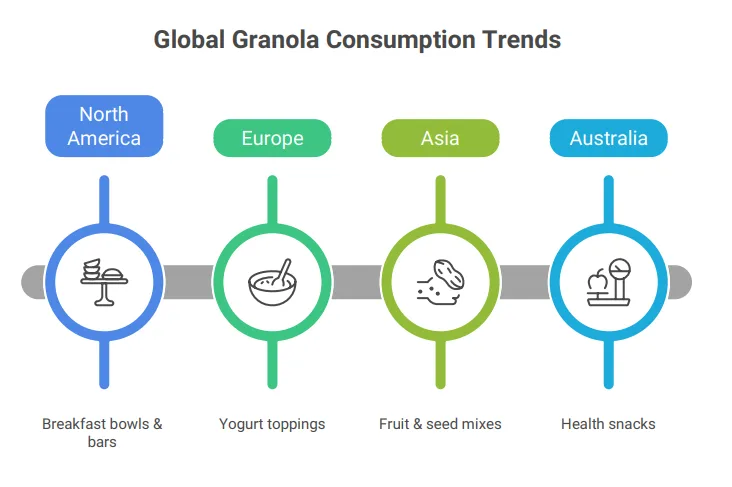
Once purely a product of health, granola now offers something for everyone! Granola has gone beyond early healthy food and reached all around the world through cultures that have adapted granola for their own unique preferences. Today, people from all over the globe eat granola! People from every continent consume granola. Granola has been adapted by every country to fit into their own diet and lifestyle preferences.
As a popular breakfast and snack food, granola continues to evolve to fit within various food cultures. The success of granola's global acceptance represents an evolution of granola from a niche-market product into a product enjoyed by virtually every household in the world.
International Adaptations of Granola
Granola is being included as part of breakfast options as consumers continue to make health-conscious choices for breakfast.
Granola is an ideal breakfast cereal because of the following reasons:
- Quick and easy preparation
- Can be enjoyed with a variety of dairy, non-dairy, and soy alternatives such as yogurt and almond milk.
- Granola is ideal for those who have very active and busy lives
- Granola fits in with the wellness and clean-eating movements.
Granola's versatility allows it to remain relevant for future generations.
Granola in Global Breakfast Trends
lifestyle changes across many countries have been the driving force in consumers' choice to eat granola for breakfast.
- Fast and Easy, Nutritious Breakfast Option for Busy People.
- Popular Among Health Conscious Consumers and Individuals Interested in Fitness.
- Many Will Eat Granola With Yogurt, Milk, or Plant-Based Milk Alternatives.
- Balancing Nutrition With Convenience.
This Increased Demand for Granola Has Made It A Key Part of Today's Modern Breakfast.
Worldwide Market Growth
Granola has become increasingly popular throughout the global market in recent years. The following trends have contributed to the growth of this product.
- Increased interest in healthy food.
- Increase in Ready-to-eat Breakfast Options.
- Organic and Low Sugar Granola is becoming more available
- Increased Distribution through Grocery Stores and Online.
These trends indicate that granola is a continually evolving food and will likely be around for many more years to come.
FAQs
Q1. What is the origin of granola?
Granola originated in the late 19th century in the United States as a health food made from baked whole grains.
Q2. Why was granola originally created?
Granola was originally created to support digestion and promote healthy eating as part of early wellness movements.
Q3. How did granola become popular again in the 1970s?
Granola regained popularity in the 1970s due to the natural food and health-conscious movement that favored whole, unprocessed foods.
Q4. Is modern granola different from original granola?
Yes, modern granola is softer, tastier, and includes a wider variety of ingredients compared to the hard, plain original versions.
Q5. Is granola considered healthy today?
Yes, granola is considered healthy when made with whole grains, nuts, and limited added sugars, and eaten in moderation.
Conclusion: Why the History of Granola Still Matters Today
Granola's story is about more than breakfast, it is also a reflection of how we view Healthy Eating and Nutrition, from its origins as a Healthy Meal, to the Rise of Granola to a Global Breakfast Food, and Beyond. Granola is still relevant today because of its Connection to Healthy, Whole Food and sustained through its Tradition and Simple Ingredients.
As granolas artfully adapt to food trends, people's wants, and ways of life, they continue to promote the same three core qualities that they have always been known for: Healthy Grains and Organic ingredients, Healthy Eating, and Mindfulness towards one's Food. Granola is such a Category-Breaking Food Area, the recent Health Movement (early 2000's) and the trend of Introducing Traditional Foods Back into Global Diets Sent Indicators that the beliefs about Food, Nutrition, and Health can and do remain within the framework of Modern Society.
Granola's Historical Roots can remind all of us that we must learn to be Informed Consumers by Reading Labels for the Quality of Ingredients and added sugars, as well as Enjoy Granola in Moderation. When we have a better sense of what Granola has been Like throughout its History and what Granola Represents to Us Today, There Are Many Ways We Can Continue to Select Granola and to Appreciate What Granola is to Us In Our Lives With Connections To Tradition and to Wellness.