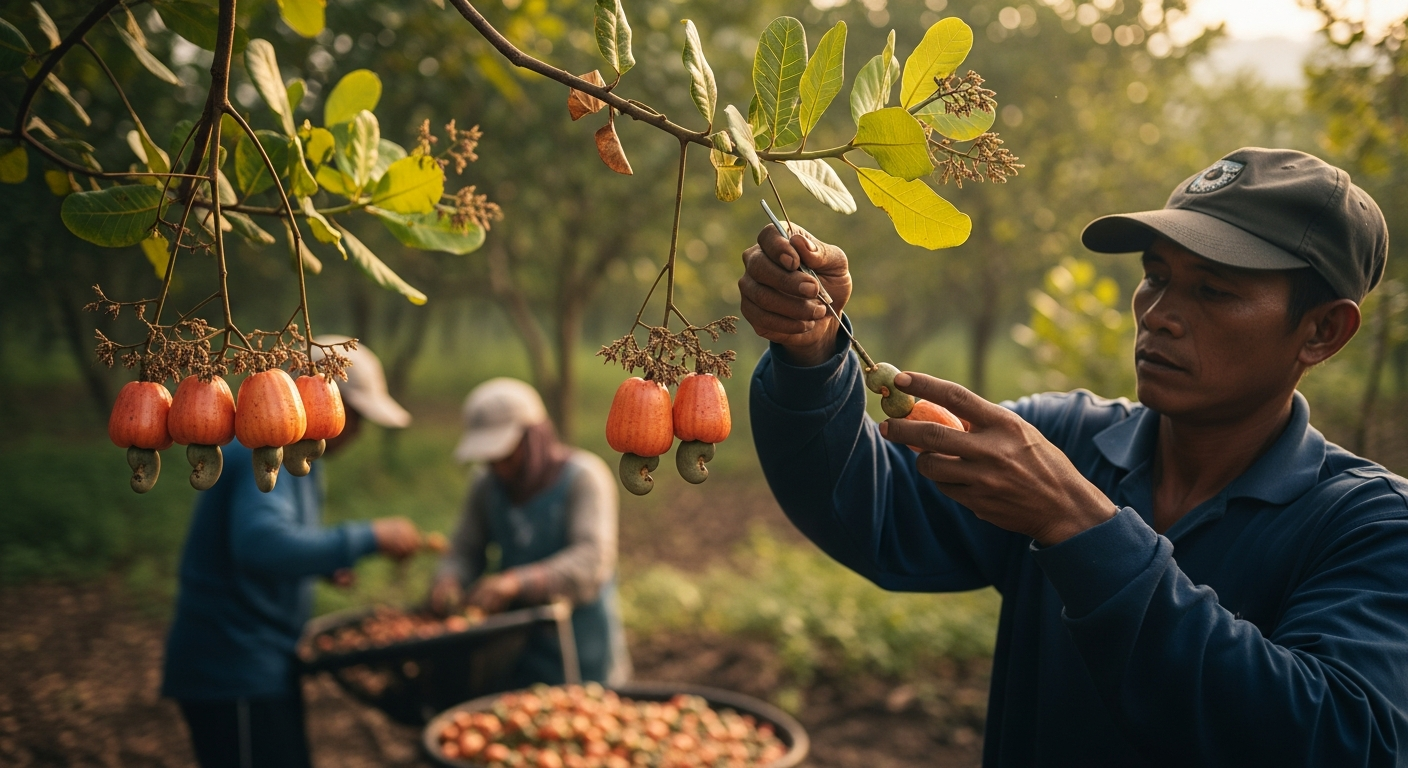
It is fascinating to learn how cashews are harvested, considering that they come from evergreen cashew trees in tropical, warm areas and are unique because, unlike other types of nuts, the cashew grows outside of the fruit (attached to the bottom of a colorful cashew apple). Once the apple has fallen naturally to the ground after it has matured, the nut will be ready to harvest.
Most people wonder if harvesting cashew nuts is difficult; this is not true. While harvesting cashew nuts involves lots of manual work (as opposed to mechanical), farmers typically pick the cashew apples by hand while being cautious with the nuts to ensure that they do not come into contact with ls as the caustic oil can cause skin irritation.
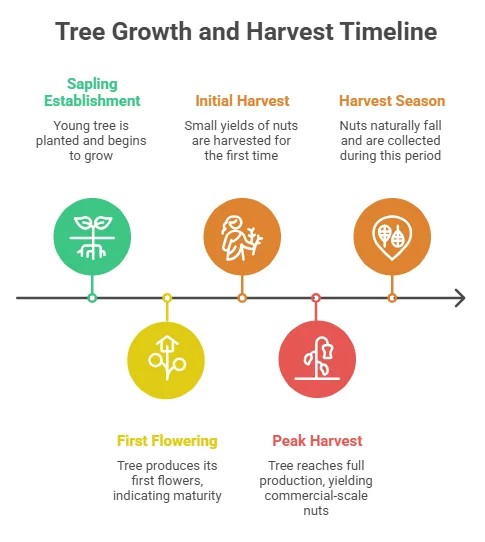
Cashew trees take approximately three to five years after planting until they start producing nuts; these trees have their greatest production during this period and the average length of harvest time occurs during these months. Following harvesting, cashew nuts are typically either roasted (in bags or spoons) or dried (in preparation for the consumer).
Understanding the Cashew Tree and Fruit
To fully comprehend the process of harvesting cashews, you must first learn about the cashew tree itself and its fruit structure and growth cycle.
The harvesting of cashew nuts is very different from grains or other nut producers because of the biological nature of cashew trees; harvesting is time-sensitive and mainly requires manual labor, thus raising the question that many ask: are cashew nuts difficult to harvest? The answer to this question is determined by the growth cycle of the cashew tree.
The Cashew Tree – Where It All Begins
The cashew tree is always green and is located in hot regions closer to the sea with sandy soil (for tree roots to expand).The cashew tree will grow from a small seedling to a full-sized tree which has a large diameter trunk and tall branches.
Cashew Tree Characteristics:
- The cashew tree starts to produce nuts about 3-5 years after it has been planted (the time it takes for the blooming to occur).
- With proper care, a cashew tree will produce nuts to the maximum potential from 7-10 years after being planted.
- If nurtured well, the cashew tree will remain productive for 20-30 years.
- The cashew tree does not need a lot of water in order to produce but it will need plenty of sunlight.
Because of the long period of time it takes for a cashew tree to produce commercially sized nuts, farmers must wait for several years to know how long until they are able to harvest them. This is one reason why cashew production is considered to be a long-term, patient investment.
The Cashew Apple and Nut Anatomy
Learning about how cashew nuts are harvested provides valuable insight into what the fruits look like and how they grow differently compared to most other types of nuts. The way in which the cashew apple grows is the most interesting of all cashew harvesting processes.
Instructions on How to Identify Cashew Fruit
- The cashew apple is actually the swollen, pear shape of the cashew fruit; it is not the nut that grows on the outside.
- The cashew nut itself grows on the exteriors of the apple.
- The shell of the cashew nut contains a caustic oily liquid inside; if handled improperly, this caustic oil can cause burns to your skin.
Is it Difficult to Harvest Cashews?
Due to the way cashews are processed, they are much more difficult and labor-intensive to harvest. The cashew nuts must be harvested by hand with protective gloves and the nuts shell cannot be processed until they have been dried.
Cashew Growth Cycle and Maturity Timeline
The process by which cashews are harvested is as follows:
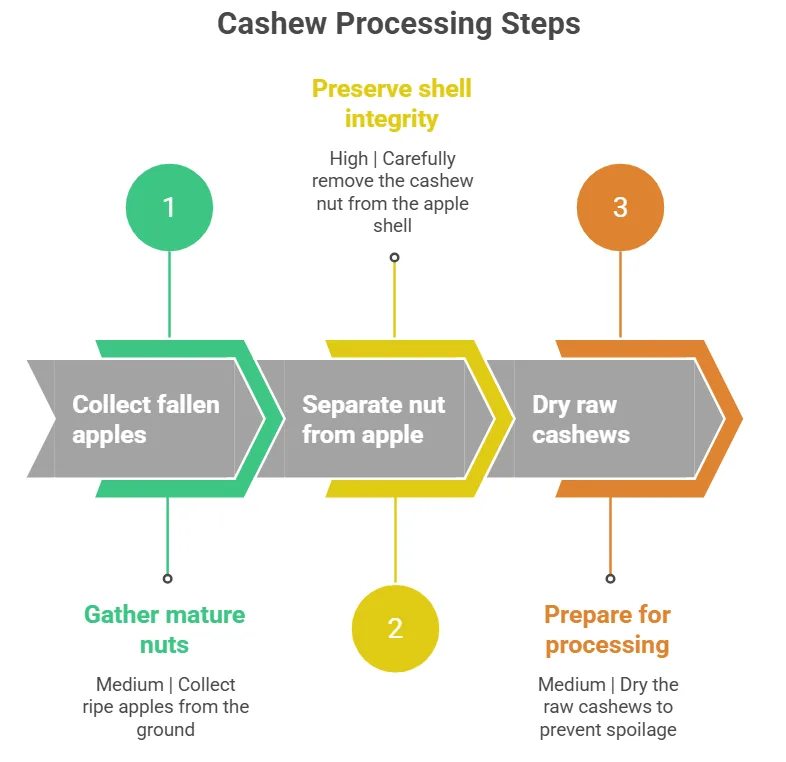
- Ripe cashew apples detach from the tree naturally.
- Cashew nuts are retrieved from the ground
- Picking them from the branches is not done.
- The nuts must be removed from the apples manually
- The nuts are dried in the sun prior to any processing.
The use of the natural drop method is essential to how cashews are to be harvested; the fact that it guarantees ripeness, results in increased labor intensity.
Understanding how long does cashew take to harvest requires looking at the full growth cycle, from flowering to final collection.
The Step-by-Step Process of Harvesting Cashews
There is a lot of work involved in producing cashew nuts (and this means the cost of production is higher than for other types of almonds, walnuts, pecans, hazelnuts, etc.). When you look at the time it takes to harvest a cashew as well as the care that goes into it, you see how important it is for people to take time with their products and be patient in order to create a quality product safely.
Also at every point in the process, you can see why many people ask if the cashew is difficult to harvest-since there are difficulties throughout the whole journey as well.
When and How Cashews Are Harvested
On the contrary to most crops, the harvest of cashew nuts is accomplished only when fully matured.
There are several ways to determine maturity for the harvesting process:
- Change in colour of the cashew apples to either yellow, red, or orange
- Dedicated natural removal from tree through spontaneous detachment or dropping of fruit when ready
- Completely matured nuts attached to the base of the cashew apple.
The harvest season for cashew nuts:
- One harvest each year
- Approximate length of harvest season is 2 to 3 months
- Changes in length of harvest season from region to region and climatic conditions.
Nature's Way of harvesting provides the highest level of quality, as well as explains the length of time it takes for a cashew tree to be harvested fully. Farmers must wait several years for a cashew tree to mature, after which time they monitor their trees daily for ripeness during the harvesting season.
Manual Harvesting – Traditional and Most Common Method
Most cashews are still collected manually because of the inherent fragility of the structure of the fruit and the fact that they do not all ripen at once, therefore machinery has very little use in this area.
Why Manual Harvesting Is Best:
- It decreases the likelihood of damage to the nut as well as the shell.
- It enables only mature cashews to be harvested.
- It reduces waste and improves quality.
Are Cashews Difficult To Harvest?
Yes—because:
- Workers must constantly bend over and pick up fallen apples every day.
- The harvesting season is short.
- They need to take care when working due to the toxic oils in the shells.
Manual harvesting does increase labour costs; however, it ensures that the quality of nuts harvested is higher and that they are safer for consumers.
Separating Cashew Nuts from the Cashew Apple
After farmers harvest cashew nuts, the next important step towards collecting cashew nuts is to separate them from their apples.
The Method for Separating Nuts From Cashew Apples Consists of The Following Steps:
- The nut is twisted or cut from the cashew apple.
- Care must be taken when twisting or cutting the nut so the shell doesn't break.
- The cashew apples can be either discarded or processed into juice.
Safety Requirements While Harvesting Cashew Nuts
- Cashew shells produce an oil similar to urushiol which can irritate or burn skin upon contact.
- Many workers wear gloves and use tools to perform this action safely.
Processing Cashew Nuts After Harvesting
The next step is to process cashews into edible products after they have been removed from the tree. Freshly picked cashews have a toxic oil (called urushiol) inside of the outer shell that makes them unsafe for consumption.
Thus, processing cashews involves several steps and can only be done by trained individuals. Safety procedures are critical for this process, which is why the public often asks whether cashews are difficult to harvest or not. The answer is, the difficulty comes from both harvesting and processing.
Drying the Raw Cashew Nuts
After collecting & separating the cashew nut from the cashew apple, drying is an important first step in order to prepare the nut for safe handling and storage.
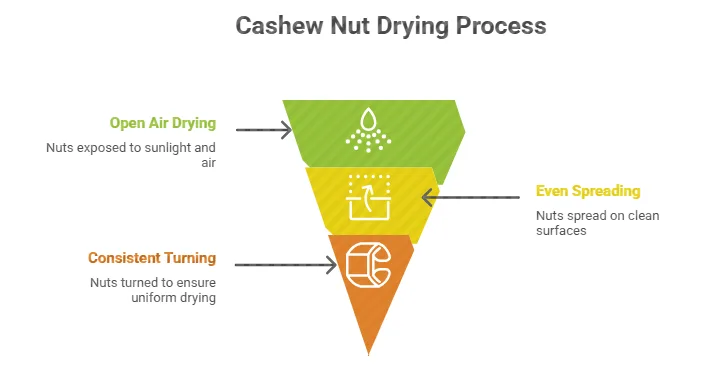
This phase plays an essential part in determining how long it takes for cashew production to occur since processing can add a few more days even after the actual harvesting of cashew nuts has been performed.
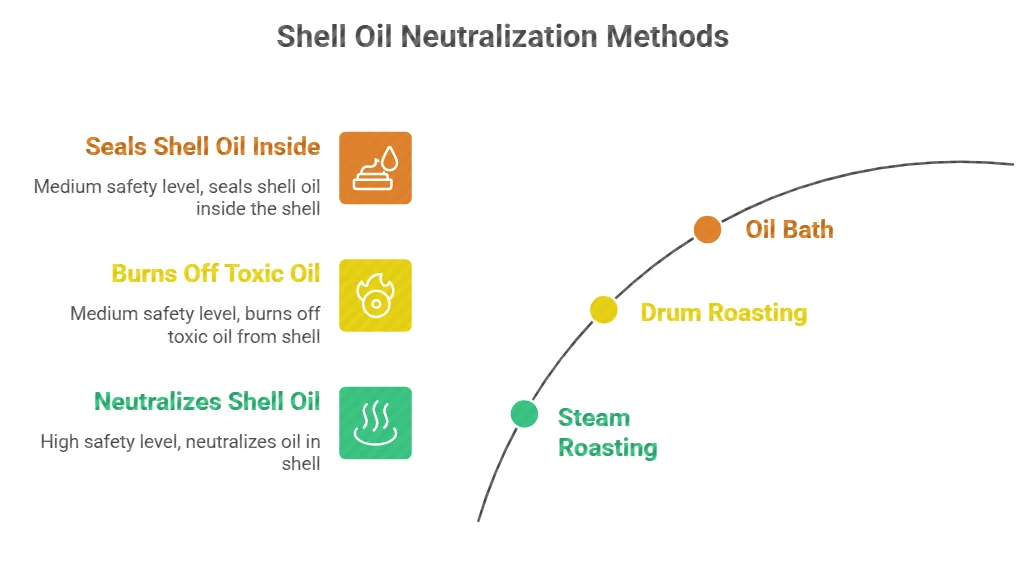
Removing the Toxic Shell Oil Safely
The fluids contained in cashew nuts, including their cashew oil, can cause skin irritation burns, making this one of the most challenging parts of processing.
The following are the reasons that it is crucial that the cashew oils be safely removed.
- Skin contact with raw shell oil is dangerous
- The cashew nut must be neutralized prior to shelling
- Compliance with food safety regulations
Example techniques include:
-Lemon Juice
-Heat
-Olive oil
Roasting, Shelling, and Final Processing
Roasting the nut, removing the shell and final processing of the nut are three distinct stages for cashews to be transformed from raw cashew into the final product.
The final processes of cashew processing include:
- Cracking of shells, either manually or mechanically
- Removal of the nut kernel (the edible part) from the shell
- Removal of the thin, brown inner skin (testa) from the nut
- Size and quality grading of the nuts
Final processing includes:
- Light roasting the nuts to add flavor to the nuts
- Packaging of the nuts and sorting into sizes
- Inspection of the nuts for quality
Enjoying this read? Get more like it.
Get fresh snack inspiration and updates from our team.
Sustainability and Challenges in Cashew Harvesting
Knowing more about how cashews are harvested allows us to learn more about the environment and people involved with each nut. Harvesting cashews is influenced by factors such as weather, how much manual labor is involved with growing cashew trees, and where the trees are grown on a long-term basis.
Understanding these factors will help you answer common questions related to harvesting cashews, including whether cashews are difficult to harvest and the amount of time and effort necessary to harvest cashews.
Why Cashews Are Hard to Harvest
Compared to other nut varieties, harvesting cashew nuts is harder than most nuts because of the high labor costs associated with their harvest and production, which is due to a combination of the growing characteristics of cashew fruit and the health hazards associated with harvesting the cashew nut.
The primary reasons it is difficult to harvest cashew nuts include:
1. Irregular fruit fall patterns mean that daily collection is necessary.
2. The unnecessary oil (which can cause skin burns) found with the cashew nut needs to be harvested and processed manually.
3. Daily collection is affected by seasonal conditions.
4. There is a wait of approximately 3 to 5 years for cashew trees to produce nuts and a longer wait time for peak cashew production returns.
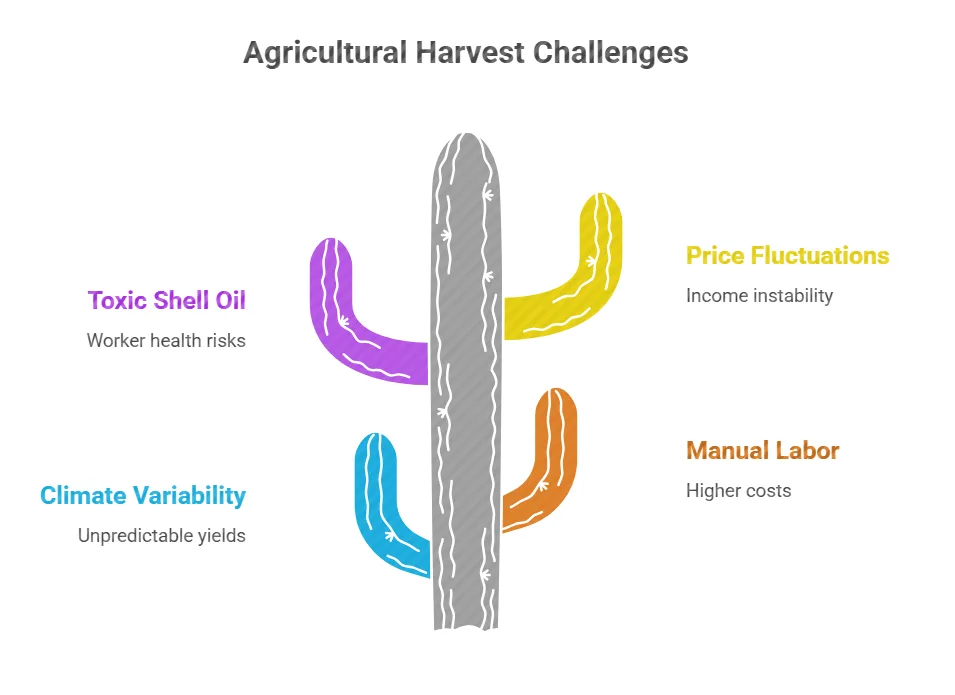
Challenges Faced by Cashew Farmers
Cashew farmers face both agricultural and market-related challenges throughout the entire period between planting and harvesting.
The main challenges facing these farmers include:
- A Long Time to Wait for the First Harvest
- Relying on Seasonal Workers
- Climate Change Effects—Irregular and Extreme Rainfall, Droughts, etc.
- Little or No Access to Safe Processing Facilities.
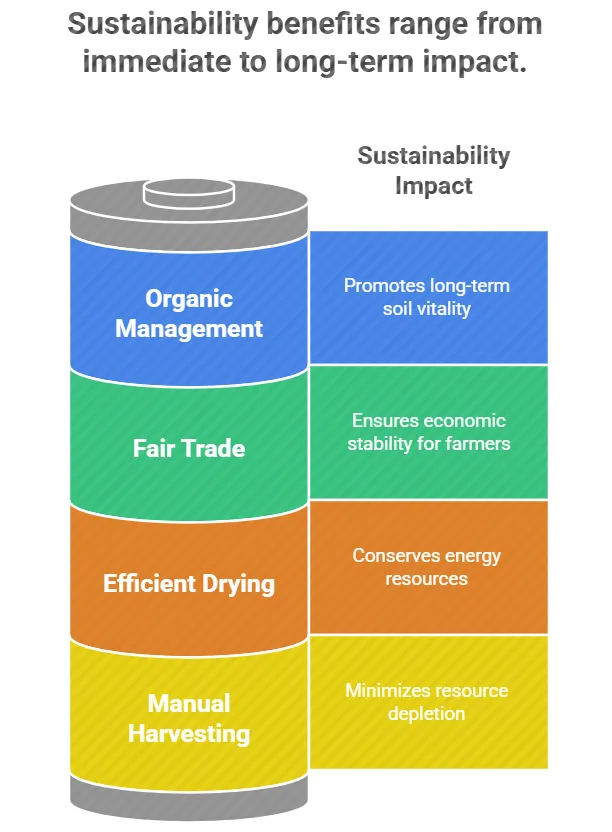
Sustainable and Ethical Cashew Farming Practices
Many farmers are implementing sustainable and ethical farming methods to help alleviate many of the challenges they face.
Here are some examples of sustainable farming practices:
- Safety Training for Employees
- Personal Protective Equipment (PPE) for workers who process the nut shells.
- Paying Fair Wages and Supporting Ethical Labor Practices
- Using Organic Fertilizers to Maintain Healthy Soil
The Environment Will Benefit from Sustainable Cashew Production:
- Cashew Trees Help to Prevent Soil Erosion.
- They require less water(high water usage is the leading cause of lower quality products).
- They Support Biodiversity in Tropical Areas.
Quality Control in the Cashew Supply Chain
Quality Assurance is the last and most integral stage of understanding how Cashews are produced to find their way into the global marketplace. There will be rigorous checks along the journey of a nut from its origin to its ultimate destination to ensure that proper safety, taste, and shelf life have been verified.
Because Cashew Nuts take years to grow, and it takes every effort to maintain a quality product, many ask if Cashew Nuts are hard to collect; thus, quality assurance further supports harvesting techniques which directly impact final products.
Sorting and Grading Cashew Nuts
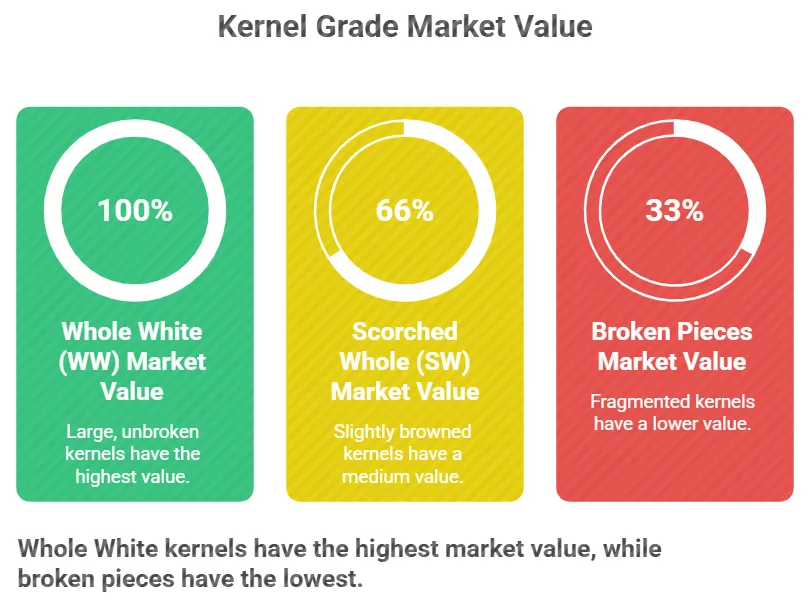
The cashew nut is sorted and graded after it has been shelled and peeled based on its size, colour and quality. This ensures that all nuts are the same quality and have a fair price.
Some of the main things used to grade cashew nuts are:
- Kernel size/weight.
- Whole versus broken nuts.
- Kernel colour and smoothness.
- Moisture level.
Packaging and Exporting Cashews
Cashew nuts are packaged to keep them fresh, clean, and from becoming contaminated during transport after being graded.
The following packagings need to be used:
- Vacuum-sealed or nitrogen-flushed
- Use of food-safe moisture-resistant containers
- Batch labeling for traceability.
The exporting quality requirements include:
- Must be compliant with the international food safety regulations.
- Must be tested for moisture and aflatoxin.
- Must have clear labels indicating the country of origin.
Packaging protects the quality of the cashew nuts that were originally achieved by carefully harvesting and processing them.
Why Harvesting Methods Affect Cashew Quality
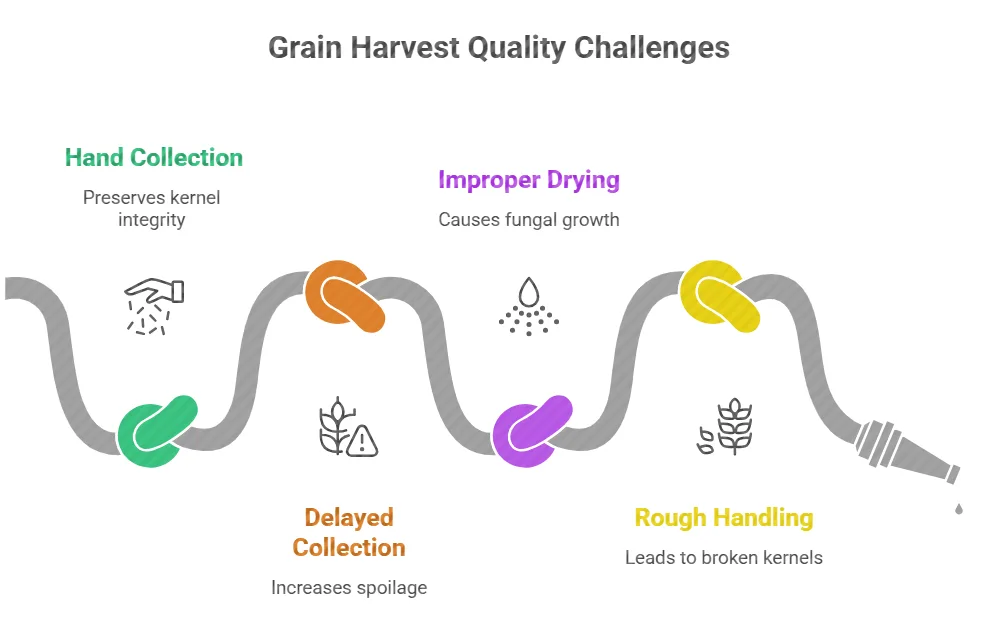
The inherent relationship between how cashew nuts are harvested and their overall quality is obvious.
The Effect of Harvesting Methods:
- Natural dropping of the fruit (mature) has many benefits
- Collection by hand (manual method) safeguards nut shell integrity
- Timely drying can help avoid mold infestation
- Properly handled nuts will be less likely to be discolored in the kernel.
FAQs
Q1. How cashews are harvested step by step?
Cashew apples fall naturally when ripe, the nuts are hand-collected, separated from the apple, dried, and then processed safely.
Q2. Are cashews hard to harvest?
Yes, cashews are hard to harvest because they require manual collection, careful handling, and protection from toxic shell oil.
Q3. How long does cashew take to harvest after planting?
Cashew trees usually start producing nuts in 3–5 years, with full commercial harvests after 7–10 years.
Q4. Why are cashews not eaten raw?
Raw cashews contain toxic shell oil residues, so they must be dried, roasted, and processed before they are safe to eat.
Q5. Which countries harvest the most cashews?
Major cashew-producing countries include India, Vietnam, Ivory Coast, Brazil, and Nigeria.
Conclusion: Why Knowing How Cashews Are Harvested Matters
How cashews are harvested provides insight about the dedication, time and expertise that go into creating every handful of cashews we consume. The growing period for cashew trees can take several years before they reach maturity, and the collection of harvested, immature fruits from the ground requires precision and diligence. Additionally, knowing how long it will take until they are ready for harvest indicates why they are referred to as a premium nut as well as their inconsistency in quality is found when there is either insufficient or excessive patience and accuracy during both stages of harvesting.
When learning about the difficulties of harvesting cashews, it opens up an understanding of the difficulty level that farmers and employees experience within the industry. The combination of contaminated raw materials and the prevalence of seasonal labour makes harvesting both physically strenuous as well as highly technical. If even one step of the entire process—whether it is collecting fruit from the trees, removing the nut from its shell, cleaning or packaging the nut—is improperly completed, this could lead to compromised safety and quality. Therefore, experience level and workmanship must consistently be at an impeccable level not only at the farm but also throughout the entire supply chain.
Finally, having an awareness of the cultivation and harvesting methods used to create cashew nuts will help consumers to make better, more ethical purchasing or consumption choices and support ethical sourcing and sustainable farm practices, as well as fair trade, thus helping to create a more sustainable business model for all involved in the functionality of supplying cashew nuts from tree to table.