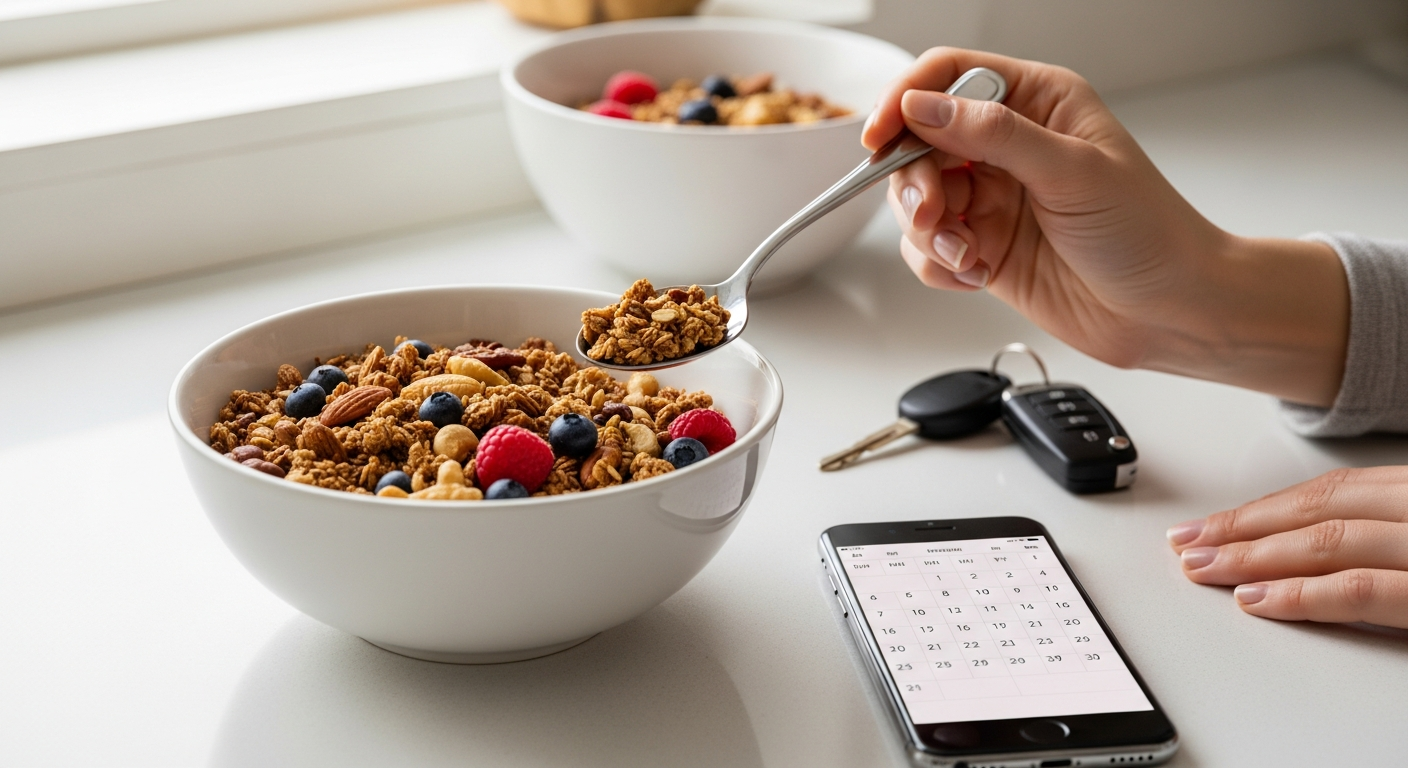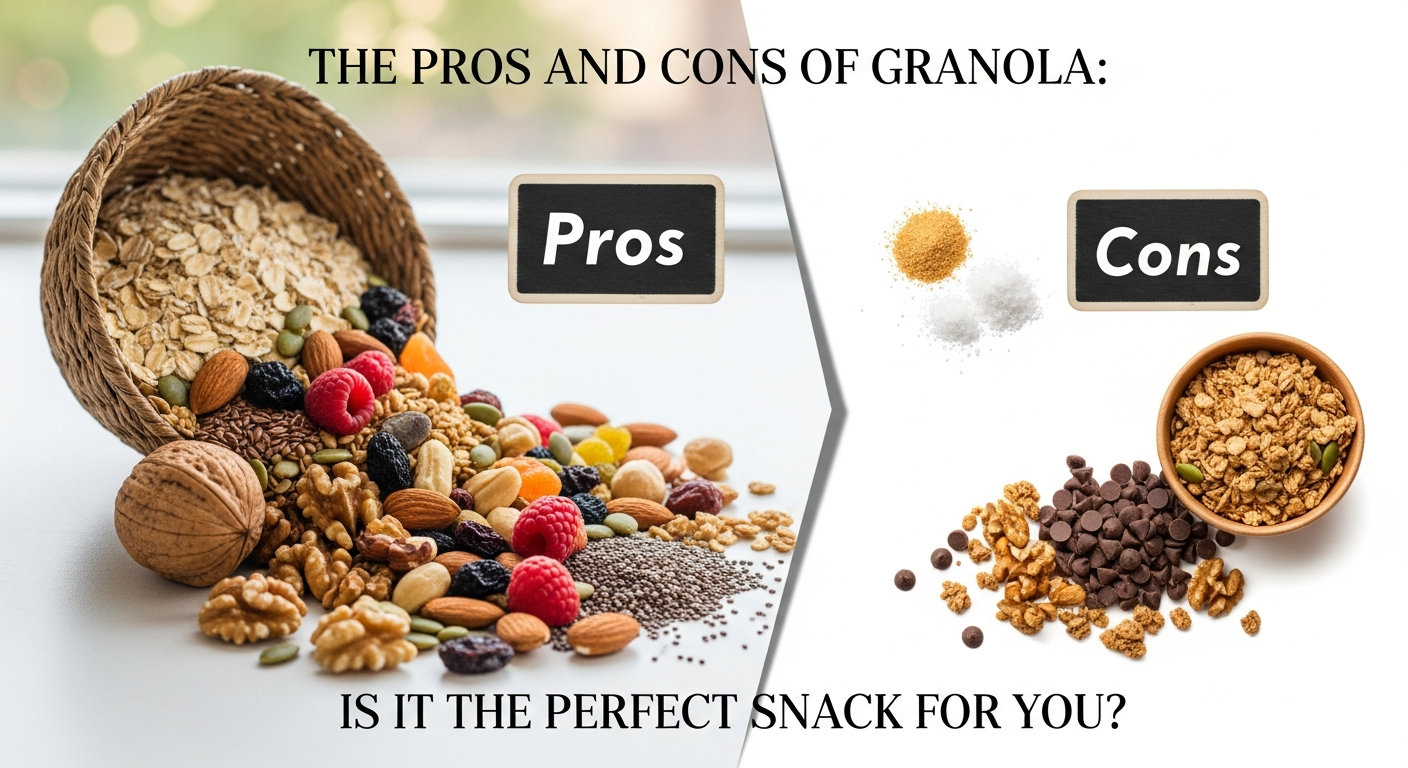
Granola is one of the most popular breakfast foods because it is made with common ingredients (oats, nuts, seeds, honey, and possibly coconut, etc.) and is therefore nutritious and tasty! To understand how granola is created, you must first understand the delicious part of the process - the crunchy texture of granola created during the baking stage of the granola-making process is what makes granola so enjoyable and nutritious.
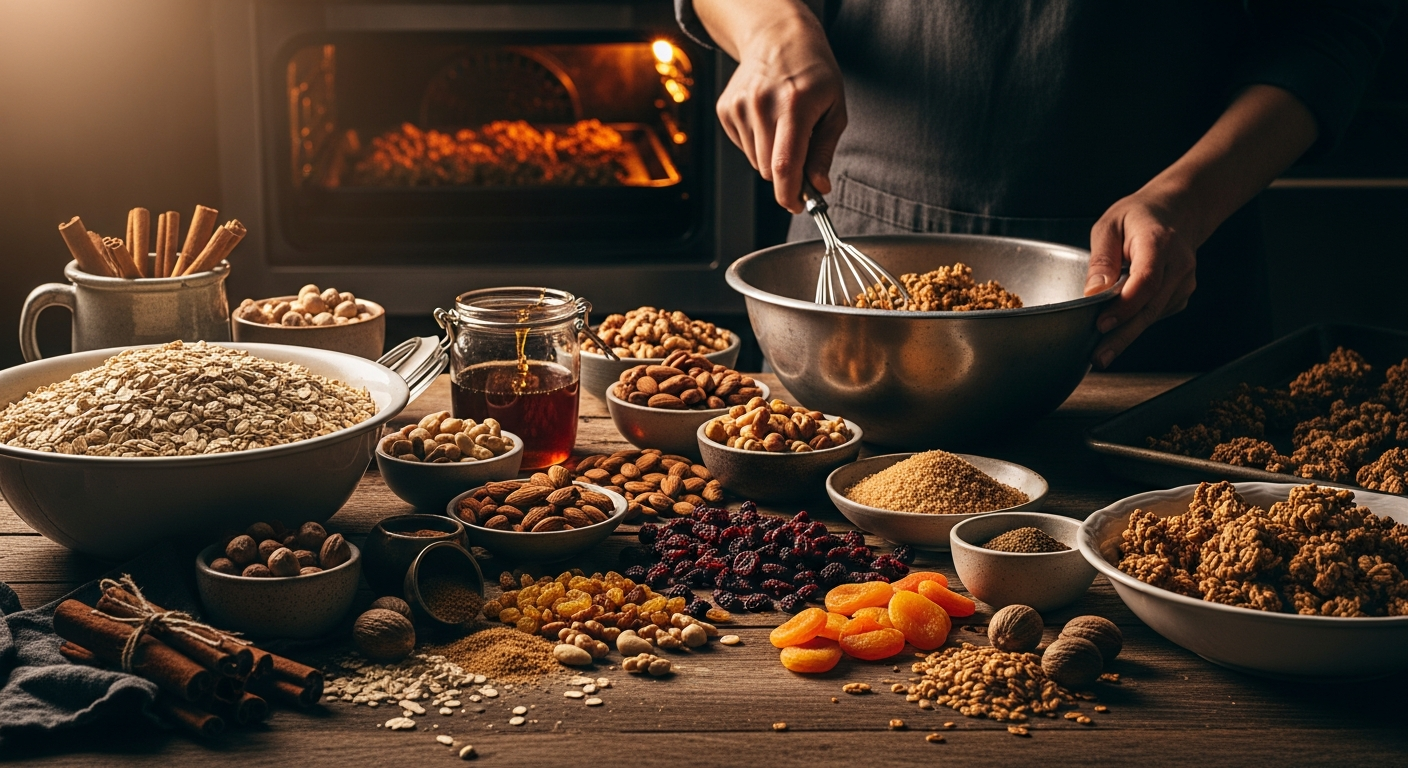
To create your granola, you will need to prepare your mixture of rolled oats, nuts, and seeds. The mixture of rolled oats, nuts, and seeds produces the nutritious foundation for your granola, providing the fibre, protein, and healthy fats you need for a healthy diet. After combining your dry ingredients, you will mix your natural sweeteners (like honey, maple syrup, or jaggery) with any oil (such as coconut or vegetable oils) of your choice and gently pour it on top of your prepared dry ingredients. The baking process to get your granola's crunch is the most important step in making your granola.
Many individuals wonder if granola is processed food. Granola does not go through any other baking processes; therefore it is considered minimally processed when created from entirely natural ingredients (those without refined sugars or preservatives). The degree of processing that occurs in the creation of your granola will depend upon the brand or recipe that you choose; for example, you may purchase granola from a store that uses "clean label" products or purchase your own homemade granola that utilizes whole food ingredients.
In summary, granola is a carefully crafted cereal product that balances its taste and nutritional content; by knowing how it is created, you are able to better appreciate and enjoy it.
The Origins of Granola: A Brief History
Although granola is often regarded as a modern-day health food, it has a long history (over 100 years) as a healthful option. Knowing where granola came from helps illuminate the purpose for which it was developed, the changes in production methods over time and why those who enjoy the health benefits of granola today often do not consider the product to be a "processed" food. Granola was initially a very simple food that was intended for healthy eating; today, it is one of the most consumed breakfast foods globally.
Granola History and Its Evolution
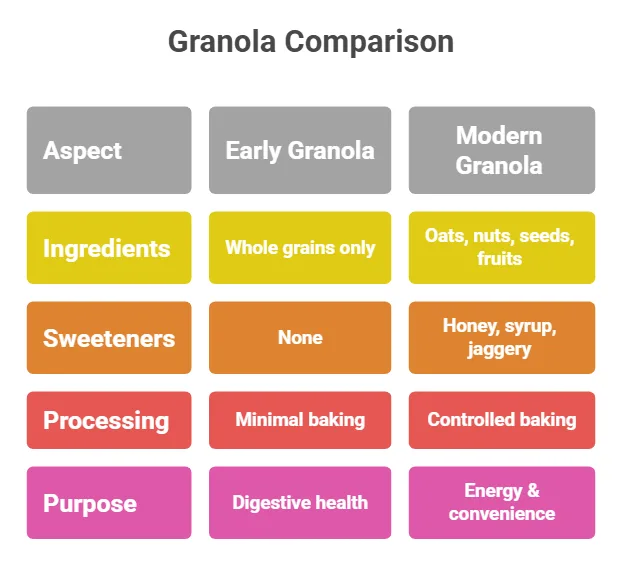
Granola's history began in the late 19th century when people began to consider their diet, digestibility, and general wellness. The first version of granola was relatively simple—just baked whole grains broken down into smaller pieces so they were easier to eat.
Granola evolved from a food that was intended to support healthy bodies into:
- A food that could help maintain good health.
- An unprocessed food made with no sugar or additives.
- A product that contained nuts, seeds, and sweeteners.
- A breakfast food that emphasized flavour, crispness, and convenience.
Granola making techniques also evolved from being made solely from raw grains to a careful combination of ingredients that emphasize nutritional value and palatability.
Who Invented Granola and Why?
Many people think of granola as a positive food created by many of the health reformers in the United States in the early 19th century, such as Dr. James C. Jackson, who believed that eating more whole grains would improve digestion and promote better overall health. Granola was developed for the purpose of being a healthier and more nutritious alternative to the traditional heavy breakfasts based on white bread, pastries, and eggs.
Original purpose of granola:
- Improve digestion
- Promote the consumption of whole grains
- Promote sustained energy from whole grains
- Provide a wholesome and filling food
At that time, granola was created with very little processing, which is why people frequently ask if granola is a processed product. This question is directly related to the difference in processing between the original granola recipes and the granola recipes that are available today.
From Health Food to Breakfast Staple
Over the decades, granola moved from health clinics to household kitchens. As lifestyles became busier, granola adapted to meet demand for quick, tasty, and nutritious meals
Main Ingredients in Granola and Their Roles
Granola contains basic components, but each one has its purpose for taste, texture, nutritional quality, or nutritional value.
Understanding how granola is created means breaking down the components that comprise it and determining how they all contribute to the resulting flavor, crunchiness, and energy of granola. Thus, the answer to whether granola is a processed food can be easily assessed.
Granola Ingredients Breakdown
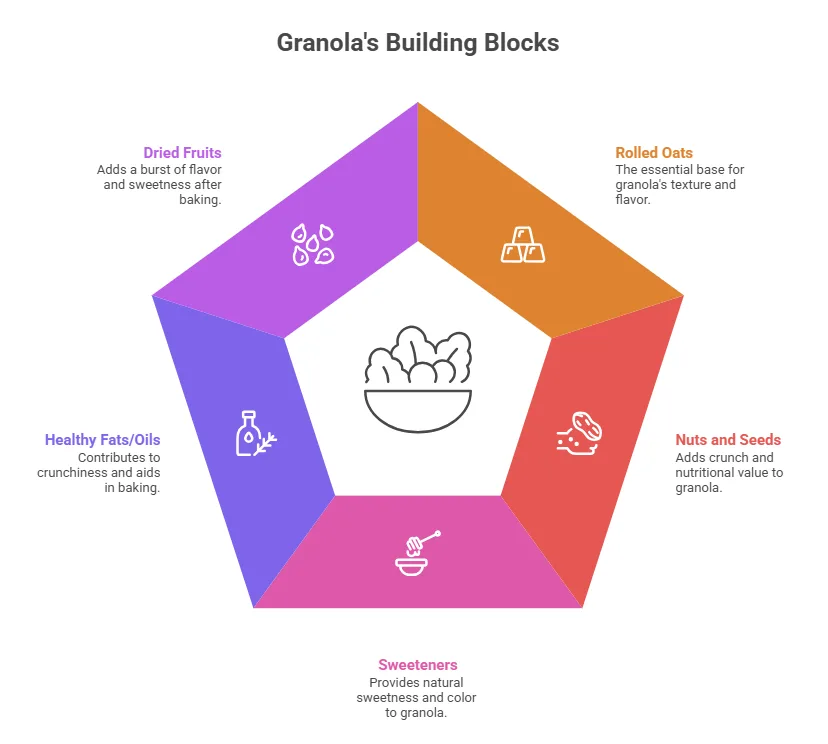
To make granola, combine dry and wet components, coat lightly with oil and sweetener then bake until the mixture reaches a golden colour, this defines how your finished product becomes granola and results in this type of granola.
The Role of Oats, Nuts, Seeds, and Dried Fruit
Oats, nuts, seeds, and dried fruits have specific uses in granola that go beyond simply providing flavour.
Description of each ingredient's purpose:
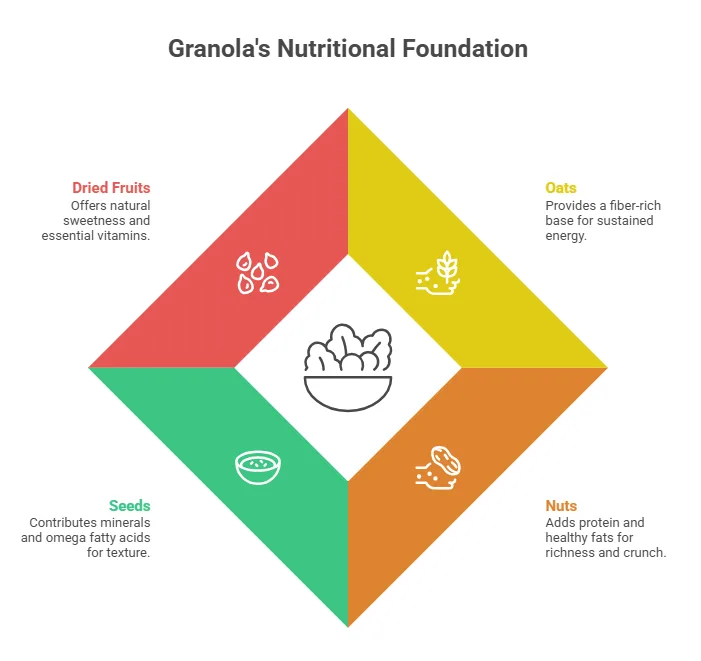
- Oats: They provide fibre, act as a structural base for the final product, and supply sustained energy.
- Nuts: They supply healthy fats and protein along with a desired crunch.
- Seeds: Like nuts, seeds add a mineral- and omega-fat-rich source of nutrition and additional texture.
- Dried fruit: Dried fruits give granolas their sweetness naturally while supplying antioxidants.
Choosing the Right Sweeteners for Granola
The choice of sweetener affects both the final flavor and how the texture develops as a result of baking. The sweetener can largely determine how healthful or less healthful a granola is for your body.
Common Granola Sweeteners Include Below:
- Honey
- Maple Syrup
- Jaggery/Coconut Sugar
Sweeteners and why they're important :
- Bind Ingredients to Each Other
- Caramelize and Provide Crunch
- Calorie & Sugar Content.
When selecting natural sweeteners that have not been highly processed, and minimally processed, you are choosing granolas that closely resemble whole food/assuming a whole food nutrition approach. Technically, granola is baked (processed),' is granola processed' all depends on the quality of the ingredients selected and methods of how to prepare. When baked, granola can be healthy and minimally processed breakfast food, which is supportive of an overall healthy balanced diet.
The Step-by-Step Process: How Granola Is Made at Home and Commercially
By learning how to make granola, you can better understand why it has a unique crunchy texture, why it can be stored for an extended period of time, and why there is a large variety of granola brands. The basic process for creating granola is the same whether you make it at home or produce it on a larger scale.
The only difference is the amount of control and the number of processing methods allowed, which are typically where the issue of granola being classified as processed comes into play.
Homemade Granola Process
Homemade granola is easy to make, very flexible and not usually highly processed. Making your own granola means you get to decide how many and what kinds of ingredients, sweeteners and how long it is baked.
The basic procedure for making granola at home:
- Combine rolled oats, seeds and nuts in a bowl.
- Heat together your preferred natural sweetener (honey or maple syrup), oil, etc.
- Evenly coat the dry ingredients with the mixture.
- Spread the combined mixture evenly onto a baking sheet.
- Bake in an oven set on low to medium heat and stir occasionally.
- When cool, break granola into crunchy pieces and store in an airtight container until needed.
- Add dried fruits to the granola after the baking process.
Why should you make granola at home over buying it pre-made?
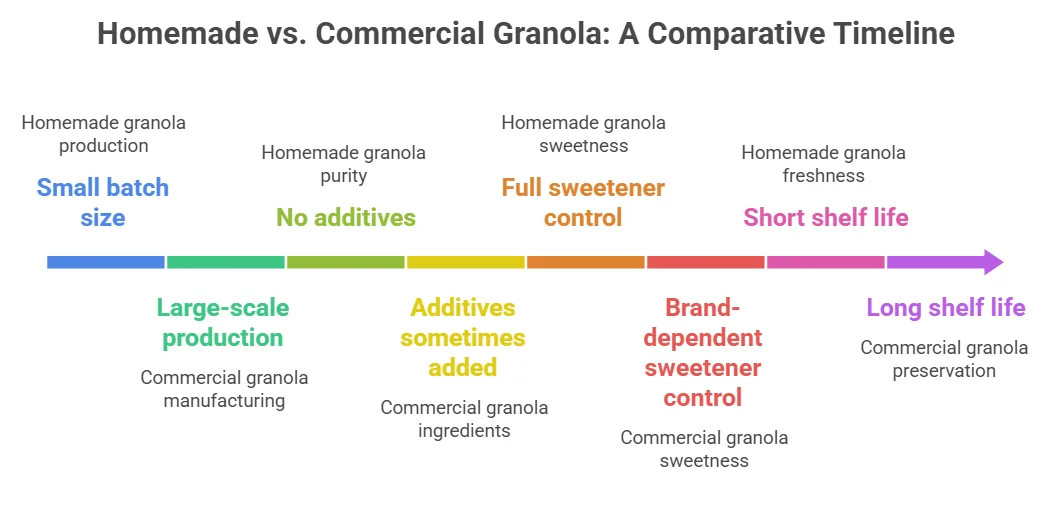
- No preservatives are added.
- You can control how much sugar and fat you are adding to your granola.
- It will taste and feel fresh when you make it yourself.
This process demonstrates that when you make granola at home, you maintain the natural goodness associated with whole food nutrition.
Industrial Granola Production
Commercially produced granola employs the same basic procedures as described above, only at a much higher scale. The difference lies in the added controls that ensure product consistency and provide a longer shelf life.
Granola production for commercial use:
- Grain, nut, seed, fat, and sugar blends produced in bulk (tray)
- Using an industrial mixture to produce uniformity in product (flaking)
- Industrial-sized ovens for controlled bake temperatures
- Clumping and drying (cooling & cluster-forming) post-baking.
- Flavoring (adding dried fruit) and taste (flavoring with spices and chocolate)
- Packaging for extended shelf life.
Baking Techniques for Crunchy Granola
Baking techniques are an important part of producing Crunchy Granola. The bake determines the crunchiness of the granola, flavours and textures of the final product.
Baking Techniques:
- Baking Granola at a Low/Medium temperature will prevent the Granola from getting burnt.
- Baking Granola evenly will ensure that every piece of Granola gets an even crunch.
- Bake the Granola with very little stirring so that the clusters will be as large as possible.
- Cooling the Granola after it has finished will keep the Granola crunchy.
Tips for Controlling the Crunchiness of Granola:
- Add More Oil for a Crunchier Granola
- The Longer the Granola Bakes, the More Flavoured it will be.
- Allow Granola to Cool before Breaking it into Clusters.
Enjoying this read? Get more like it.
Get fresh snack inspiration and updates from our team.
Flavor Variations and Customizing Your Granola Blend
Granola is easy to customize based on what you like, how you want it flavored, its texture, what you want in your granola for nutritional value, and what form of food supports your body's needs. Granola can be made at home or purchased from a retailer.
If you make your own, customizing your own granola will answer the question of whether it is processed through the added ingredient ratio. Hence, the closer it remains to whole foods, the more control you have over the composition of your homemade granola.
Add-ins for Unique Granola Flavors
Add-ins are the components of granola that enhance the flavor and also provide an additional element of texture or interest to the recipe.
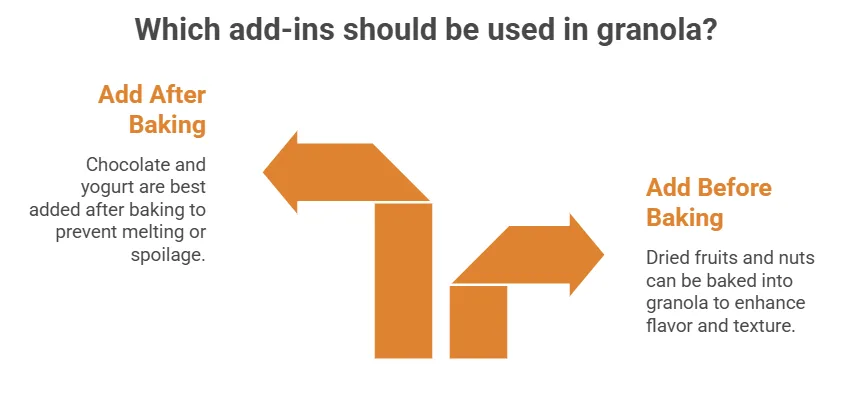
The main thing to remember is that adding in these different ingredients at the right time will help ensure that your granola stays flavorful, crunchy, and delicious.
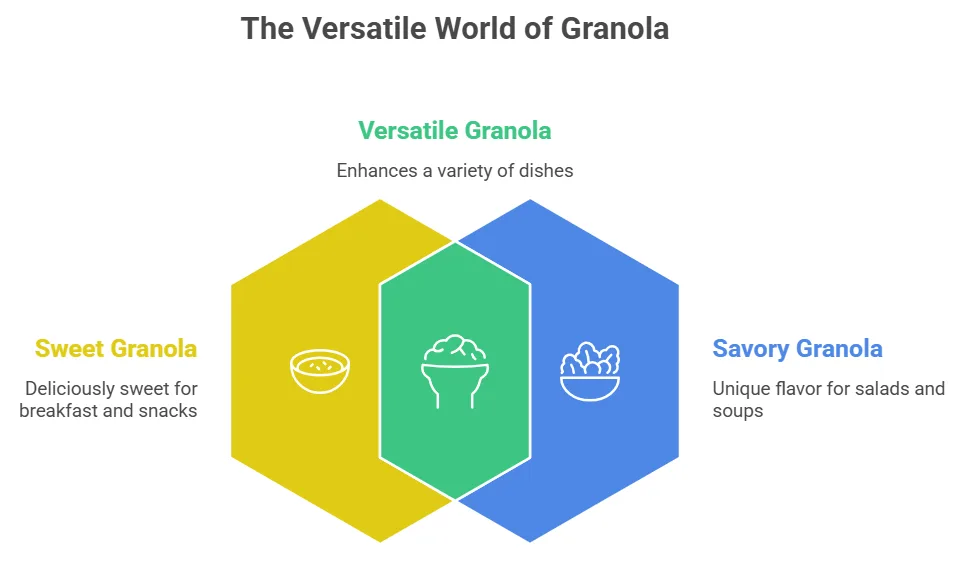
Sweet and Savory Granola Ideas
Granola is often thought of as a sweet food, but in reality, there are many different ways to create a great tasting granola that has different flavor profiles.
Sweetened Versions:
- Honey and Cinnamon with Almonds
- Maple Syrup, Pecans, and Dried Apples
- Cocoa Powder and Dark Chocolate with Coconut
Savory Versions:
- Olive oil, Herbs, and Pumpkin Seeds
- Chili Flakes and Sesame Seeds
- Salt and Roasted Seeds for Salad Garnish.
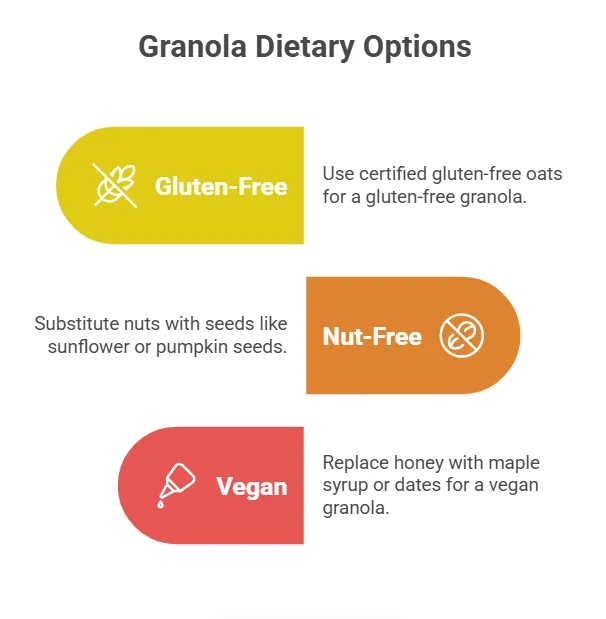
Gluten-Free, Nut-Free, and Vegan Granola Options
Granola can be easily customized to meet special dietary requirements while still providing great taste and texture using granola blends.
Why is this important?
- It supports individuals who suffer from food allergies/sensitivities and ensures that your granola will be accessible/inclusive for all.
- It reduces potential harmful additives found in granola.
If made thoughtfully, granola should be minimally processed, but there is often a misconception regarding how much processing exists with the term "granola". By customizing your blend, you can control what is in your granola and make it healthier, more delicious, and perfectly suited to your lifestyle while still adhering to the basic principles of how granola is created.
Nutritional Benefits of Homemade vs. Store-Bought Granola
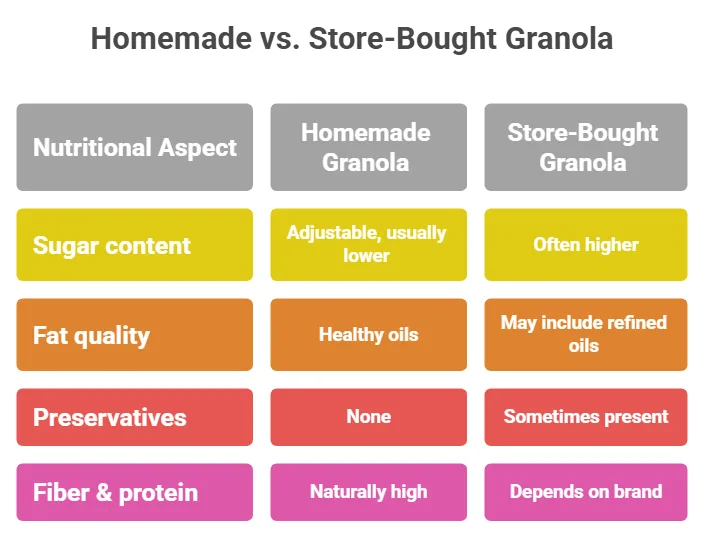
One of the most important factors when choosing granola is whether to purchase a ready-to-eat product from a store or to prepare homemade granola. In general, homemade granola tends to provide more nutritional value than its packaged counterpart because of the increased control over both ingredients and preparation methods used.
Knowing how granola is processed in each case provides insight into the different nutritional characteristics, such as "How healthy is granola?" The greater amount of control over the composition of the ingredients also results in a greater level of nutrition.
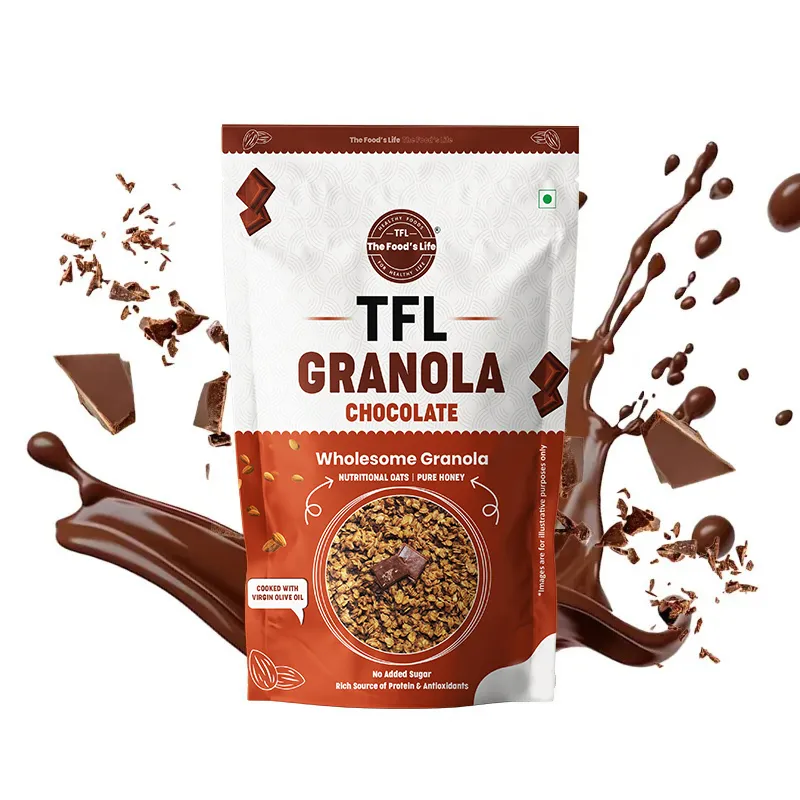
Belgian Dark Chocolate Granola 400 gm
Introducing The Food's Life Chocolate Granola, a decadent blend of wholesome oats, rich chocolate, h...
₹375.00 ₹375.00
Buy NowIs Homemade Granola Healthier?
You can typically assume homemade granola is healthier than store-bought because you can dictate what ingredients go into the recipe to make it balanced and fit your diet.
Advantages of Making Your Own Granola:
- Control the amount of oil and sugar added
- Free of artificial flavours/preservatives
- Choose only the best quality for oats/nuts/seeds
- Customize according to dietary restrictions/allergies
Since homemade granola consists of only basic ingredients and a little bit of baking, it has not been exposed to a lot of processing. Yes, all granola products are processed; however, the processing involved in creating homemade granola is much lighter and done with more thought than that found in commercial brands.
Comparing the Nutritional Value of Granola Options
Store-bought granola varies widely in nutritional quality. Some brands use wholesome ingredients, while others add excess sugar, refined oils, or additives.
How to Read Granola Labels for Better Choices
When purchasing granola at the grocery store, it is very important to read the label closely to find a granola that is better for you.
What to look for in granola labels:
- An ingredient list that is short and easy to recognize.
- Natural sweeteners such as honey or jaggery.
- Whole grains being listed first in the ingredient line.
- Low amounts of added sugars per serving.
Quick Tip: If sugar or syrup is found within the first three ingredients of a granola product, it is more than likely because the granola has gone through extensive processing.
FAQs
Q1. How is granola made?
Granola is made by mixing oats, nuts, seeds, oil, and natural sweeteners, then baking the mixture until crunchy.
Q2. Is granola processed?
Yes, granola is lightly processed through baking, but it can be minimally processed when made with natural ingredients.
Q3. Can I make granola without baking it?
Yes, granola can be made without baking by using soaked oats and dried fruits, though it won’t be crunchy.
Q4. How long does homemade granola last?
Homemade granola typically lasts 2–3 weeks when stored in an airtight container.
Q5. Can granola be considered a healthy snack?
Yes, granola can be a healthy snack when eaten in moderation and made with low sugar and wholesome ingredients.
Conclusion: Try Making Your Own Granola Today—A Tasty and Nutritious Choice!
Making your own granola is one of the easiest methods of enjoying a delicious, healthful and satisfying breakfast or snack on a daily basis. By learning how granola is prepared, you will now have full control over your choice of ingredients, allowing you to select whole grains, natural sweeteners and healthy fats that are suitable for your personal tastes and nutritional objectives. A homemade product provides you with a more authentic food experience while avoiding added, unhealthy ingredients found in packaged alternatives.
Many consumers ask if granola is a processed food. Although making granola does require the use of a baking method, it is lightly processed when done at home and can easily be adapted to create a product that contains only the ingredients that align with your personal definition of "clean" or "balanced." You can easily increase or decrease sweetness, experiment with flavor combinations, and modify textures to create a blend that best fits your lifestyle (high energy/low sugar/allergy friendly).
Granola can be enjoyed in many ways; it can be used as a breakfast food, snack, topping and as an ingredient in other meals. By making your own granola, you will create a food that combines taste, nutrition, and your sense of creativity, allowing you to enjoy a fun and healthy addition to your healthy eating pattern each day.