Makhana is an ancient Indian food source that has existed in the form of superfoods for a very long time. Makhana is a superfood that has been grown in areas with large amounts of freshwater ponds and wetlands, and was first introduced to India thousands of years ago.
Makhana plants develop seeds at the bottom of ponds, beneath a layer of water, as they grow. Seeds need warm temperatures, calm waters, and high levels of nutrients to develop.
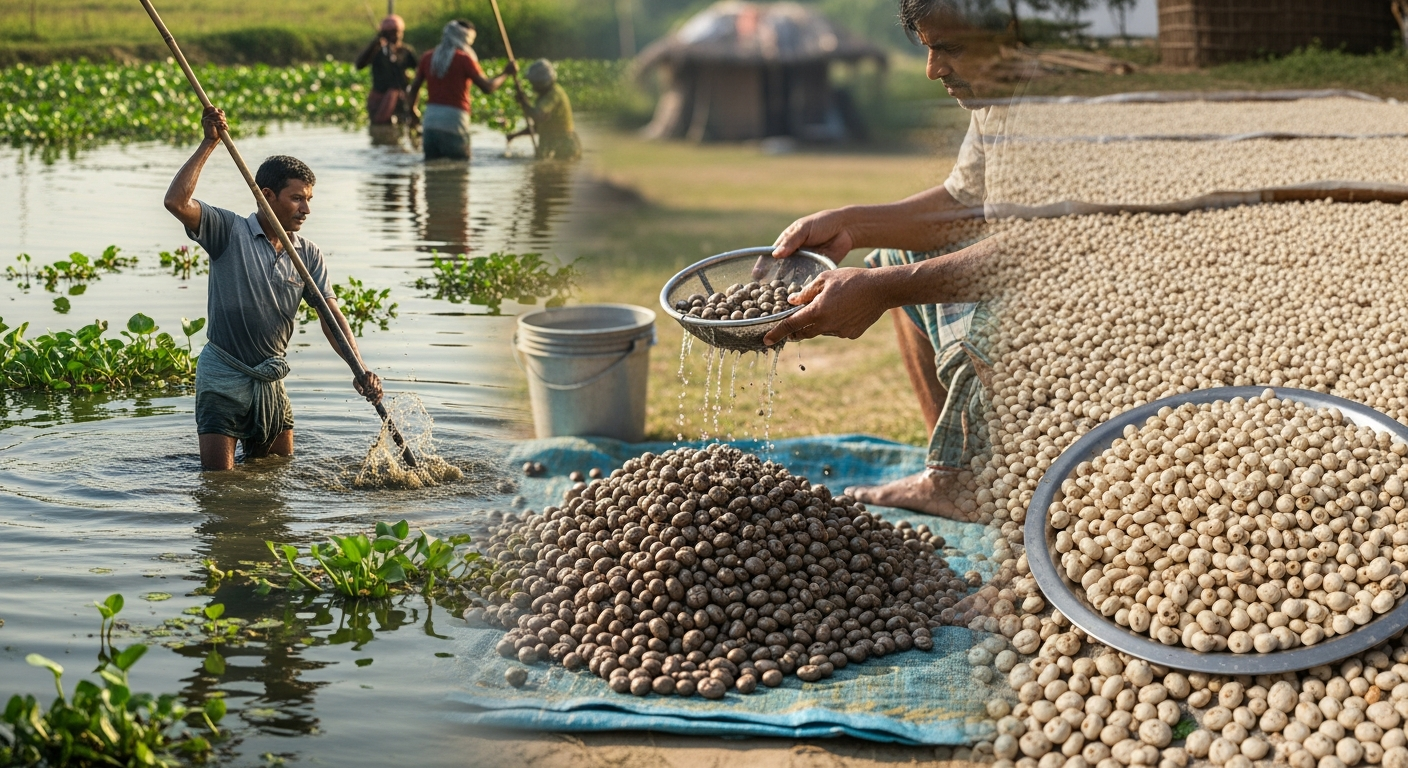
For making Makhana edible, lotus seeds must be collected and prepared for use in cooking. This process is labour-intensive and very time consuming due to the number of steps that must be taken to prepare a proper product, from seed collection to drying. The process is best carried out by people trained in traditional methods, and for the purpose of preserving both the quality of the Makhana, as well as protecting the surrounding environment.
Understanding the method of harvesting Makhana from underwater seed collection to sun-drying and then roasting and popping, will provide insight into how a raw lotus seed is transformed into a crunchy, delicious fox nut that can be served on plates around the world.
The Origins of Makhana Cultivation: How Makhana Grows Naturally
Makhana is a unique aquatic plant that grows naturally in freshwater wetland areas and ponds, so its growth conditions are very different from the cultivation of grains or any type of grain that grows on land. Understanding how Makhana plants grow requires an understanding of their relationship to Lotus Plants, The Pond Ecosystems and Water Quality; also, there is a relationship among the seasons that affect how and when Makhana will be ready to harvest.
All of these environmental factors influence seed size, quality, quantity and ultimately how and when Makhana will be harvested. Since Makhana is not grown as an industrial crop but rather relies exclusively on the equilibrium of Nature, Makhana does not use chemicals in the cultivation phase.
Aquatic Farming Explained: How Makhana Grows in Ponds
Makhana is grown in a lot of aquatic farming practices that rely heavily on Still Water Ecosystems.
- Makhana grows on Lotus plants that grow in shallow freshwater ponds
- Underwater, inside the Lotus Seed Pod, Makhana Seeds are Formed.
- The nutrient content of the Pond provides the healthy basis for Makhana seed formation.
Since Makhana is grown entirely in the water, there is no ploughing of soil nor planting of seeds in fields. Farmers maintain the proper water conditions in a pond, allowing the lotus plants to grow naturally. When Makhana seeds mature, the cultivation process begins.
Climate and Soil Conditions That Influence Makhana Harvest
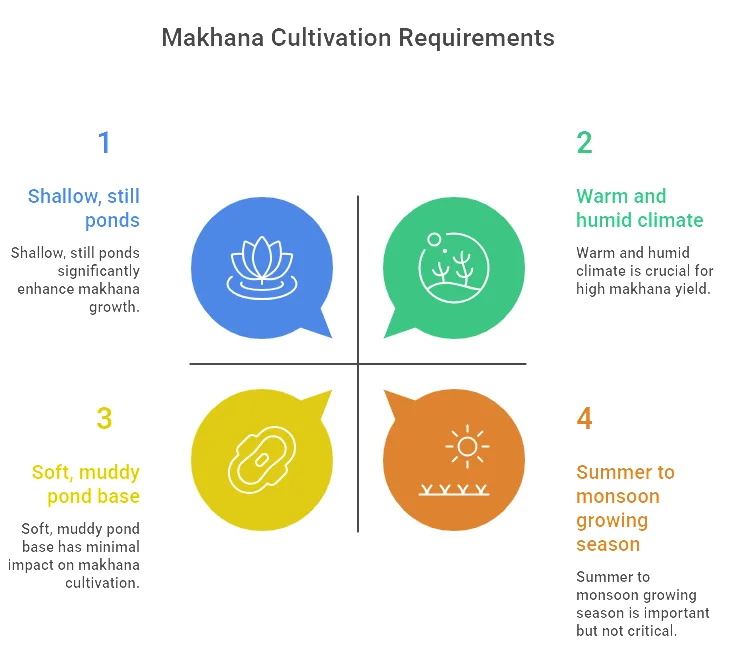
Environmental conditions have a major influence on the quality of crops and harvesting success. The following are some of the environmental factors that influence the quality and harvesting technique of makhana
- Warm humid soils support lotus plant flowering and seed growth.
- Soft muddy soils in ponds provide a secure location for lotus roots to anchor in.
- Clean slow-moving water provides the ideal environment for seed development.
Traditional Regions Known for Makhana Harvest in India
India is the top producer of makhana in the world, with a concentration of cultivation areas in select regions of the country.
- Bihar is the primary area for commercial-scale makhana harvesting.
- Parts of Uttar Pradesh and Assam are also areas that produce makhana.
- Local communities have been harvesting makhana for generations, so they have developed their own techniques for success.
The people who harvest makhana have preserved their traditional knowledge about harvesting makhana, and they still rely on highly skilled manoeuvring techniques rather than machinery. Because of their expertise in the region, they are able to harvest high-quality makhana, and at the same time use environmentally friendly farming practices in respect of how makhana grows naturally.
The Makhana Plant Lifecycle: From Flowering to Seed Formation
To examine how the Makhana plant develops through its entire lifecycle, it is necessary to track the plant from the point at which it flowers through the development of its seed to how each stage impacts the quality and yield of the makhana as well as the timing of harvest. Unlike quick-growing crops, Makhana requires stable water levels, warmth during the growing season, and some degree of patience during cultivation which makes it both unique and environmentally fragile.
Seed Development Stages That Impact Makhana Harvest
Seed development is the most important element in determining whether or not a makhana harvest will be successful, or if the popping quality will be good.
- Lotus Plants Produce Flowers that Grow Above the Water
- After the flowers are pollinated, the flowers turn into round seed pods.
- The seeds grow and develop in the water for several weeks.
- The seeds will become Hard, Dense and Fully Ripe to Harvest
If seeds are harvested before they are fully mature, they will not pop properly during processing. Therefore, understanding when a seed is ready for harvest is critical to deciding how to harvest Makhana, as well as when to begin harvesting Makhana.
Growth Timeline: Understanding How Makhana Grows Seasonally
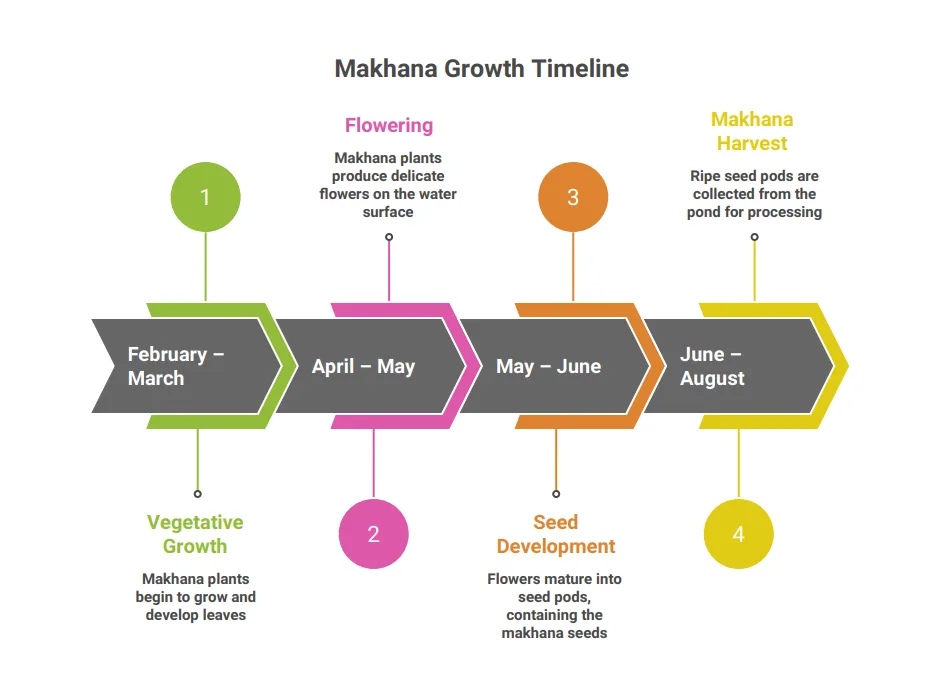
The lifecycle of the Makhana has predictable seasonal growth patterns based on average monthly temperature and rainfall data.
- Temperature changes throughout the year directly affects the growth of Makhana plants during spring-summer months.
- Availability of flowers and seed production occurs during peak summer months, typically from late June through August.
- Once the seeds are mature enough to be harvested in late July-early August, they must be harvested before the periodic rains associated with the monsoon season.
Natural Challenges Affecting How Makhana Is Harvested
The number of factors associated with nature can affect both the growing of Makhana and the way it is harvested.
- Many times the rising and falling of the water levels in the ponds can negatively impact the development of seeds.
- Excessive amounts of rain can also negatively impact the Makhana plant, much like the failure of the plant to flower.
- In many countries Makhana harvest is labor-intensive and due to water conditions it can be extremely laborious to harvest Makhana underwater in a timely manner.
These external challenges have a direct impact on the growth and harvest of Makhana and force Makhana farmers to be skilled at timing their harvesting methods based upon the weather and pond conditions and use good management practices to assist in protecting both the quality of their Makhana seeds and the natural habitat of the pond during the harvesting process.
Traditional Makhana Harvest: Manual Techniques Passed Through Generations
The Makhana harvest is primarily conducted using traditional methods passed down through the generations and involves manual labor. The reason for this is that, due to the way Makhana grows underwater (in ponds), there are limits to how many different ways Makhana can be harvested using mechanized equipment without damaging either the crop or the pond ecosystem. Through many generations, Makhana farming communities have developed a set of methods that require an equal balance between patience and timing, as well as physical skill, and these techniques are all performed manually.
This is not only necessary to protect the quality of Makhana seeds, but it also maintains the cultural heritage associated with Makhana farming, and also supports the rural livelihoods dependent on Makhana farming.
Manual Harvesting Methods Used in Makhana Harvest
Manual Harvesting Techniques Are At The Heart Of Traditional Makhana Cultivation.
- Farmers use a technique known as 'pond diving' to search for the pods containing the Mature Makhana Seeds Growing Underwater In Ponds.
- The Farm Workers use Their Hands To Loose The Mature Seed Pods From The Bottom Of Ponds, So There Is No Damage Done To The Seed.
- Harvested Seed Pods Are Collected In Small Batches To Minimise Any Damage
These very carefully devised methods that are used to harvest Makhana have also been designed in a manner such that only the fully matured seeds are Selected. Therefore, this level of care directly influences the overall quality of the Makhana and its potential popping capabilities.
Tools and Skills Required for Traditional Makhana Harvest
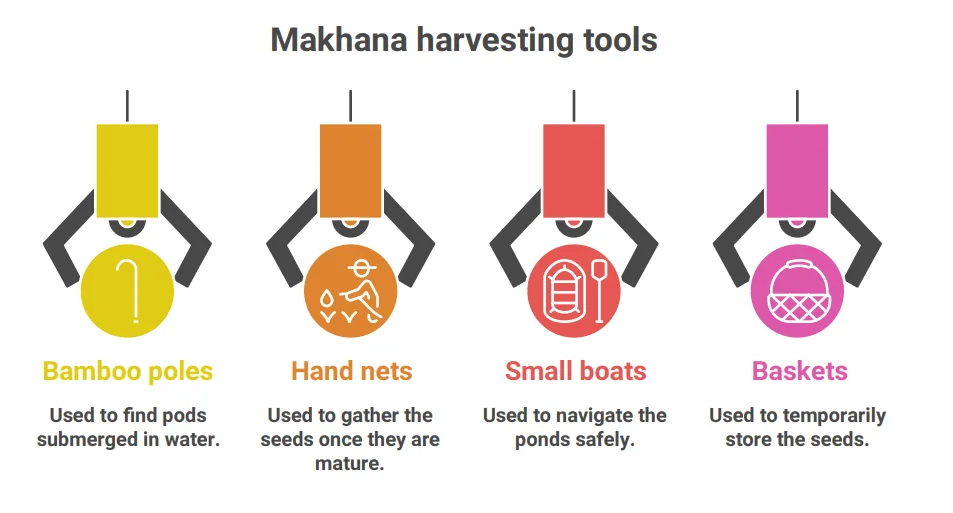
The tools utilized in harvesting traditional makhana are simple to use however the amount of knowledge needed to effectively harvest the product is vast.
- Bamboo poles can be used to locate seed pods beneath the surface of the water, allowing harvesters to identify areas with a high concentration of mature seeds
- Small nets and baskets are used to collect and temporarily store harvested seeds
- Harvesters often rely on their ability to feel the surface texture of the seed to determine if it is ready for harvesting
Why Manual Harvesting Preserves Quality and Livelihoods
Manual harvesting provides numerous advantages that machinery cannot provide.
- Because of their fragility, delicate seeds do not break apart during harvesting when they are harvested manually.
- By maintaining the seed's natural popping ability and texture, farmers have a significant advantage over those who use machines.
While understanding how makhana actually grows, harvesters also create and preserve quality products and support their culture by providing jobs for local farming communities. The manner in which farmers harvest makhana is: How they preserve sustainability, ethics, and develop a cultural relationship with the crop.
Modern Innovations in How Makhana Is Harvested Today
Makhana (Water Lily seeds) farming has always been an ancient craft. However, with New Technology, Makhana Farmers are now able to collect Makhana Much More Safely, Efficiently & Productively.
New Technology will Support Farmers Not Replace Their Knowledge, Allowing A Natural Harvest Of Makhana In The Natural Way They Grow Now.
The Combination Of The Old Ways And New Technologies Is Producing A More Abundant Yield Of Makhana While Still Preserving The Quality And Sustainability Of Makhana.
Mechanized Support Improving Makhana Harvest Efficiency
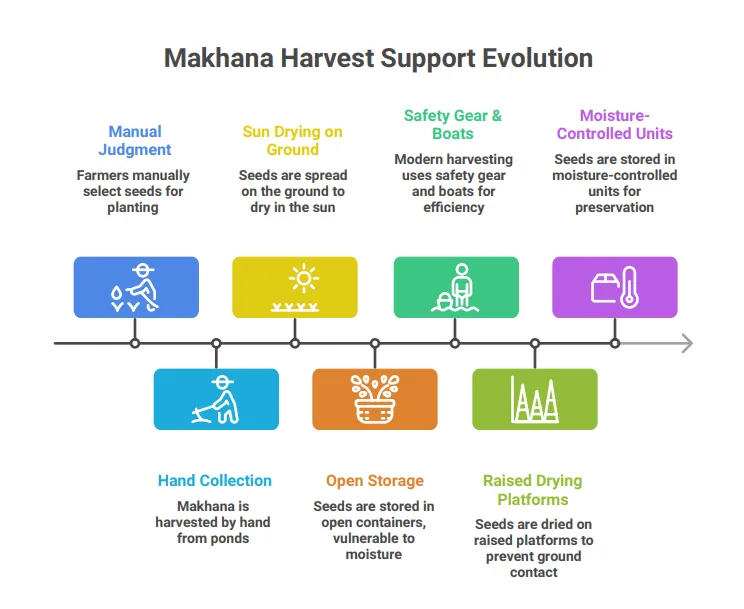
New Tools Are Being Used To Decrease Physical Strain And Increase The Efficiency Of The Workflow Within The Makhana Harvest.
- Lightweight boats are allowing Farmers To Travel Safely Across The Ponds While Makhana Collecting.
- Drying Platforms Are Offering Farmers The Ability To Dry Makhana, Much Faster After The Harvest Is Taken Away From The Water.
- Simple Mechanical Separators That Will Save Labour Time By Minimising Manual Sorting During The Harvest Of Makhana.
These New Tools Are Helping Farmers Collect Makhana With Less Interference To The Selection Of Seeds And The Pond Environment, Therefore Increasing The Safety And Speed Of Harvesting Makhana.
Balancing Technology with Traditional Makhana Harvest Methods
Modernization of Makhana harvesting utilizes methods that respect the wisdom of previous generations of farmers.
- Seed selection is performed by hand based on the seed's maturity.
- Transportation, drying and storage remain somewhat controlled by the farmer; Technology assists with this portion of the process.
- Farmers maintain complete authority in areas that involve critical decisions involving Makhana harvesting methods.
Productivity Gains Without Harming How Makhana Grows
The methods of modern technology nutrition protect the natural growing environment of Makhana.
- There is no use of large machinery when harvesting the Makhana.
- The Lotus and soil of the pond will remain untouched after harvesting.
- The seasonal cycle of bringing in Makhana is continued and respected.
Improvements made to yield while respecting the natural growth of Makhana ensure that there are no compromises made in Farm Environmental Practices when utilizing the innovative technology that we use. We ensure that the new(innovative) technology compliments the Farmer with sustainable, productive, and future-ready Makhana harvest.
Enjoying this read? Get more like it.
Get fresh snack inspiration and updates from our team.
Post-Harvest Processing: From Raw Seeds to Edible Fox Nuts
Once harvested, the processing of the makhana or lotus seed is vital for determining the final quality and the amount of money that the seed can be sold for.
While it is important to understand how the makhana grows and is harvested, it is also crucial that the makhana is processed correctly after harvest in order to create a light, crunchy snack from the hard and raw seed.
Each step in the post-harvest processing is based on skilled labor and requires a specific level of accuracy to ensure that the nutritional value and popping quality are preserved.
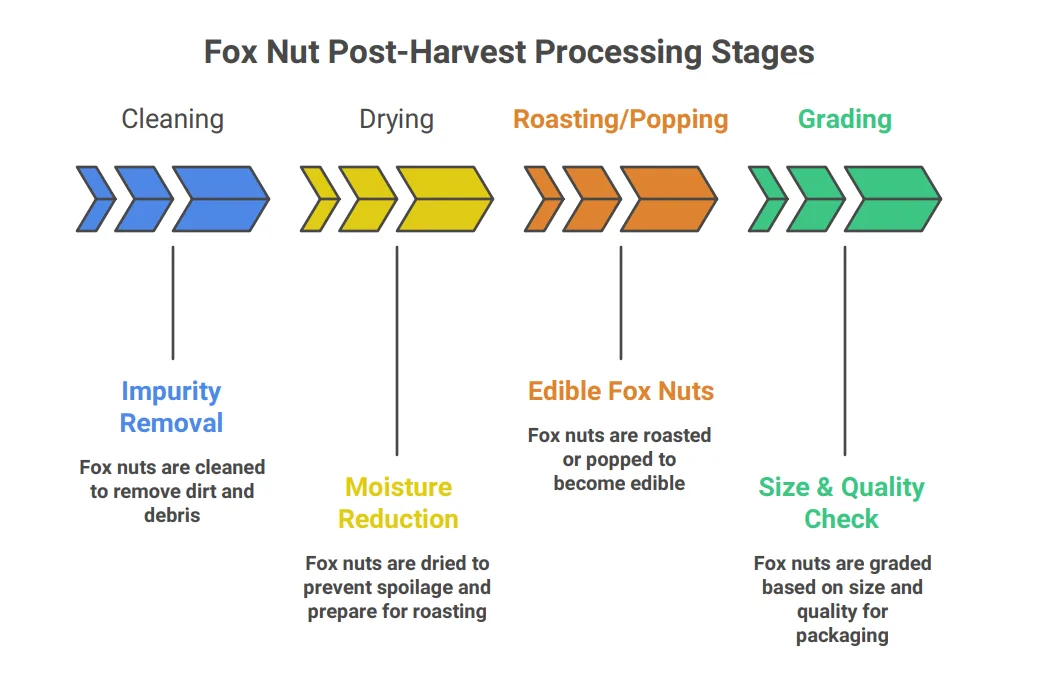
Cleaning and Drying After Makhana Harvest
The makhana seed is covered in mud, plant material and moisture immediately after harvesting, so these items must be removed.
- The seeds must be washed thoroughly in order to get rid of dirt and impurities.
- After washing, the cleaned seeds are placed in the sun to dry.
- The drying process must continue until the seeds' moisture content drops to a safe level.
Clean and dried makhana seeds are stabilized after harvest and ready for roasting without spoiling due to moisture. When the cleaning and drying process is rushed, the overall process of making the makhana into a popping snack is affected.
Popping Techniques That Transform Harvested Makhana
Popping identifies the skill level and defines the stage of the processing of Makhona.
- Dried seeds are roasted with the proper amount of heat.
- The heating process causes the hard shell of Makhona to break apart and grow bigger
- The size and/or softness of the puffed Makhona is determined by how long and at what temperature it is heated.
Only seeds harvested at the correct level of ripeness, which reflects the growth of Makhona, will pop properly. Therefore, this step in the processing of Makhona reflects how well Makhona was harvested, as halffilled seeds or immature seeds will not pop properly.
Grading and Sorting for Quality Makhana Harvest Output
Once Makhona is popped, you will begin grading it
- Larger or better puffed Makhona are labelled as premium quality.
- Smaller Makhona and/or broken pieces of Makhona are separated.
- Grading Makhona uniformly extends the shelf-life and increases marketability.
Sustainability in Makhana Harvest and Farming Practices
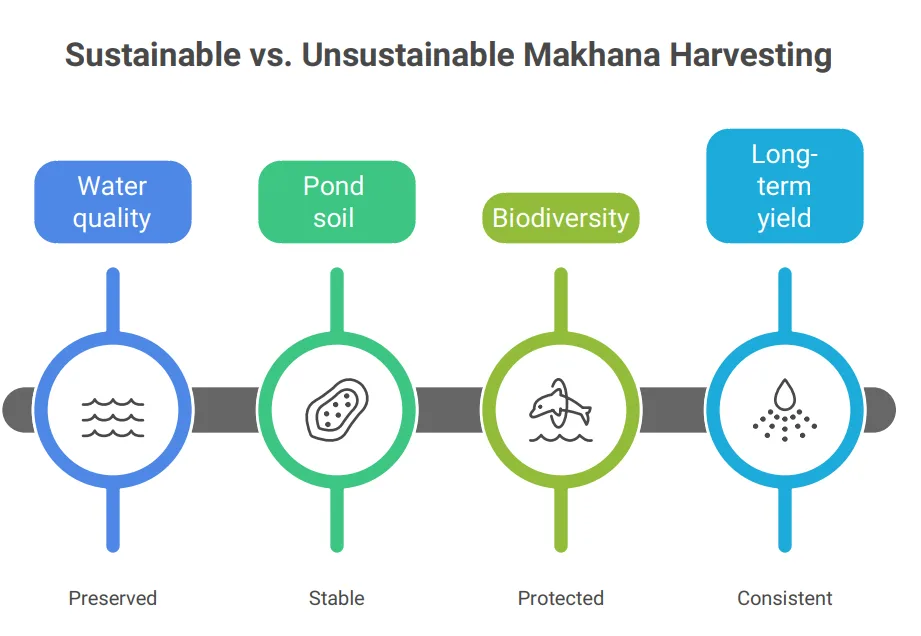
Sustainability is the key to cultivating Makhana because it relies on healthy ponds filled with freshwater (wetlands). A full understanding of Makhana's growth characteristics leads farmers to prioritize maintaining ecological balance (i.e. clean water, healthy Lotus roots, and seasonal rainfall) in order to produce quality seed.
Farmer's traditional knowledge combined with their care for their environment has led to successful harvests of Makhana by adopting environmentally friendly farming practices. By adopting these same practices, farmers are protecting biodiversity and conserving resources, while ensuring that we have livable environments for future generations.
Eco-Friendly Methods Supporting How Makhana Grows
The Growth of Makhana naturally complements Eco-Friendly Agriculture
- Makhana is cultivated in ponds, using limited amounts of chemicals
- Lotus plants assist with the addition of oxygen to pond water and maintain the health of the pond micronutrient
- The timing of Makhana Co-Operative crop seasons corresponds with the natural season, meaning that external pressures on crops are minimal
The above-listed eco-friendly practices are in line with the manner in which Makhana would be grown in its natural habitat, preserving the quality of Water Bodies.
Sustainable Harvesting That Protects Wetlands
The way harvesting is done allows for the preservation of the fragile wetlands.
- Lotus root harvesting occurs through hand collection rather than the use of heavy equipment in the pond itself.
- The harvesting of lotus roots will not disturb the pond's growth substrate or rooted plants.
- Harvesting occurs on a seasonal basis which allows the pond to regenerate naturally.
Supporting Farmers Through Ethical Makhana Harvest
Promoting sustainability also means protecting the community and its population.
- Harvesters are paid fairly and have safe working conditions.
- The passing down of traditional skills from one generation to another.
- A fair trade community supports the economy of rural communities.
When consumers select responsibly harvested makhana, they are supporting all of the elements of an ethical process that values both the environment and the community. This approach to harvesting environmentally friendly, socially responsible, and economically sustainable makhana will pay respect to the natural growth process of makhana.
Makhana Supply Chain: From Harvest to Global Markets
The supply chain of makhana starts in their natural habitats (freshwater ponds) and ends at the global retail market. Every step in the supply chain (i.e., growth, harvest, storage, processing through post processing) has a significant impact on the overall quality, safety, and uniformity of the makhana product.
As a premium, labor-intensive crop, when and how makhana is harvested can impact the life of the makhana stored, whether it meets export standards and international market needs. Proper management of the makhana harvest leads to full traceability, maximum freshness, and compliance with the full range of global food standards.
Packaging Standards After Makhana Harvest
Packaging is critical for protecting makhana throughout the harvest and post-harvest process by:
- Providing moisture protection from spoilage and mold.
- Only using food-grade materials to maintain maximum freshness and texture.
- Using hermetically sealed packaging to ensure maximum crunch and shelf life.
Packaging provides the first level of quality assurance for makhana after the harvest, so the product is protected from any damage during transportation and storage.
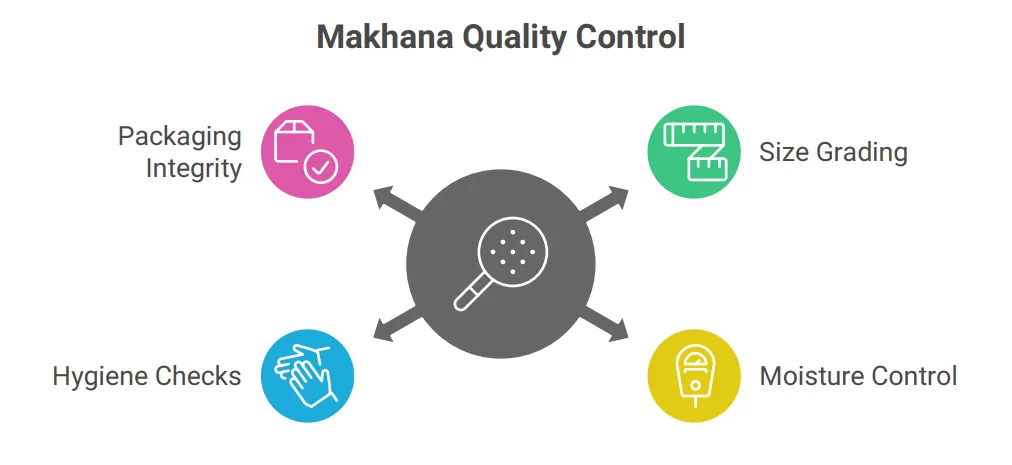
Quality Control in Export-Grade Makhana Harvest
Quality control determines whether or not Makhana is considered export quality.
- Visual Inspection for Size, Color, and Uniformity
- Moisture Content Testing (Prevent Moisture Contamination)
- Food Safety and Hygiene Compliance
Growing Global Demand Linked to How Makhana Is Harvested
The rise in global demand for Makhana has been caused by the numerous health benefits associated with it, along with the fact that Makhana is a sustainable crop to grow.
- Makhana Harvested Manually Will Give You the Highest Quality
- The Use of Sustainable Farming Methods Has Drawn the Attention of Eco-Conscious Consumers
- The Ability to Trace Where the Makhana is Sourced Provides Assurance to Consumers in International Markets
By following the natural growth of Makhana and maintaining their traditional harvesting practices, Makhana Producers can meet the Global Quality Standards and Sustainability Expectations. The Connection Between Ethical Farming and International Market Demand Supports the Global Brand of Makhana Harvests and has Created a Great Demand for the Makhana Superfood Worldwide.
FAQs
Q1 - How makhana is harvested from ponds?
Makhana is harvested manually by skilled farmers who enter ponds, locate mature seeds underwater, and carefully collect them by hand without disturbing the pond ecosystem.
Q2 - How makhana grows differently from other crops?
Unlike land crops, makhana grows underwater in freshwater ponds from lotus plants, making its cultivation and harvesting process unique and highly specialized.
Q3 - When does makhana harvest usually take place?
The makhana harvest typically occurs between June and August, once the seeds have fully matured after the summer growing season.
Q4 - Is makhana harvesting environmentally friendly?
Yes, traditional makhana harvesting is eco-friendly as it relies on manual techniques, minimal machinery, and preserves wetlands and biodiversity.
Q5 - Why is manual makhana harvest still preferred?
Manual harvesting ensures better seed selection, higher popping quality, protects the ecosystem, and supports the livelihoods of local farming communities.
Conclusion: Why Understanding How Makhana Is Harvested Matters
The way we cultivate our food lets us know how to better appreciate our food once it is harvested. Makhana is grown sustainably and harvested through environmentally friendly practices. The lifecycle of makhana provides insight into how local knowledge, skill and resources are being utilized to promote sustainable agriculture, through the respect for nature and the traditions passed down through generations, and to promote economic well-being of communities involved in harvesting and growing.
The consumer today can appreciate the hard work it takes to harvest the makhana they eat. They are more inclined to purchase makhana produced with sustainable and ethical farming practices. The steps involved in getting makhana from pond to plate allow consumers to understand the nutritional value of the superfood, and by understanding how it is produced and harvested, consumers will make decisions about the purchase and consumption of makhana, thereby ensuring that this superfood continues to be a popular choice for years to come.