
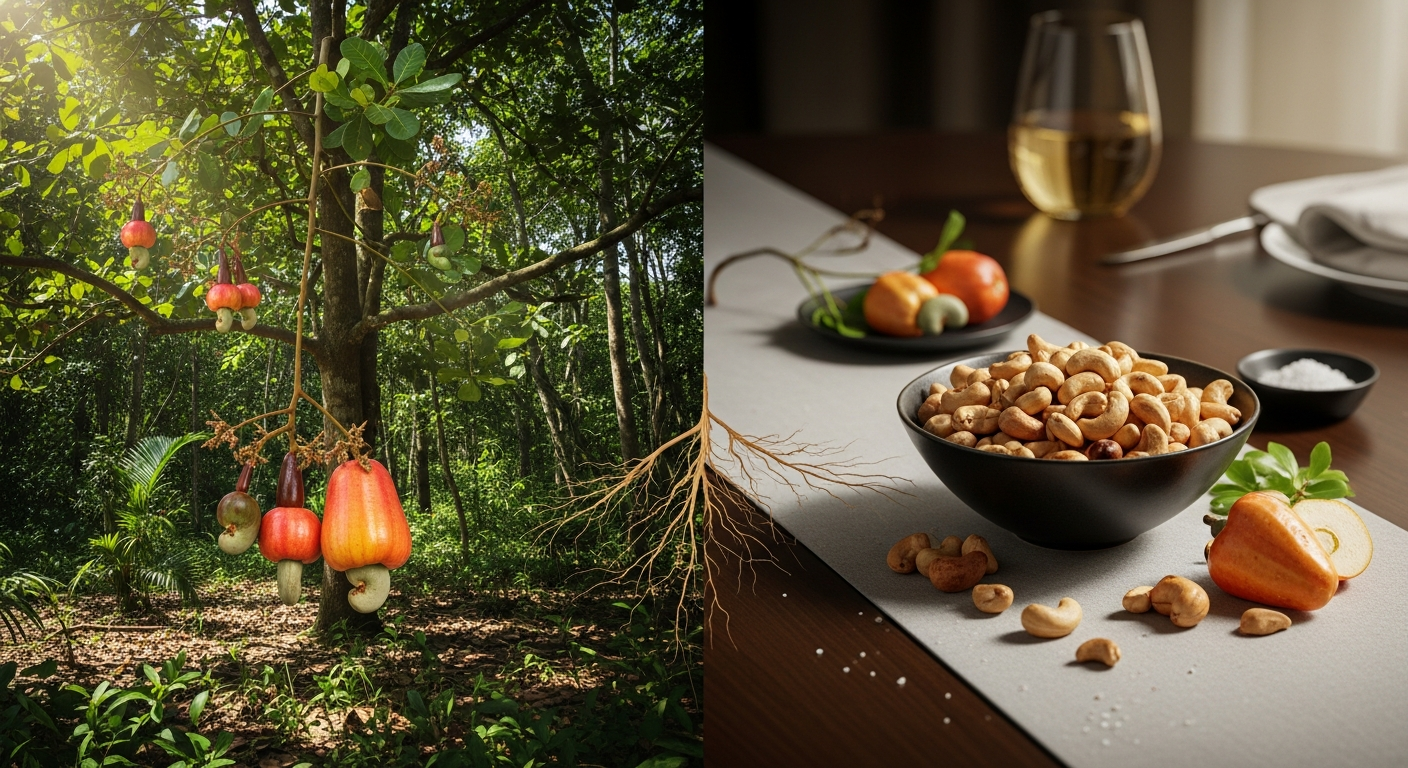
Cashew nuts are derived from tropical evergreen trees native to the warmer coastal areas of the earth's surface, but cashew nuts have become one of the most popular snacks in the world. To understand where the cashew originated, you must first look at the history of this very modest nut, which can be traced back to South America, where native tribes used it not only as food but also for its medicinal and economic value.
The journey of the cashew tree has travelled from South America to the many continents where the cashew trees have now been established; to India, where it has thrived in the various different climates and regions, to become an economically important agricultural crop and a staple of many diets around the world.
The path of the cashew, from its wild state of growth to thriving and carefully controlled cultivated farms, is a rich story of the journey of nature and a testament to how a tradition that connects us all can feed us through time.
Uncovering the True Origin of Cashews
While cashews are simple looking seeds, their development has not been simple. The origin of the cashew nut can be traced back through the history of mankind back to ancient cultures on the other side of the world to the tropics and the forests of Africa.
Thus, studying the origins of the cashew nut allows us to see how this seed moved through time from a natural environment to a worldwide distribution.
The Native Roots and Cashew Tree Origin
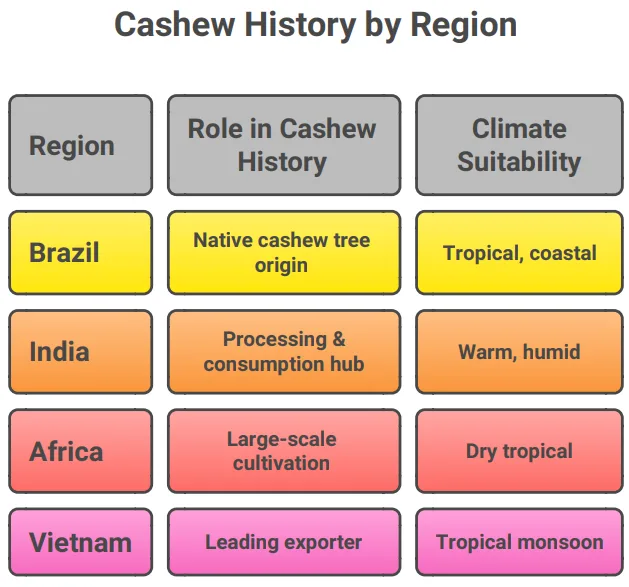
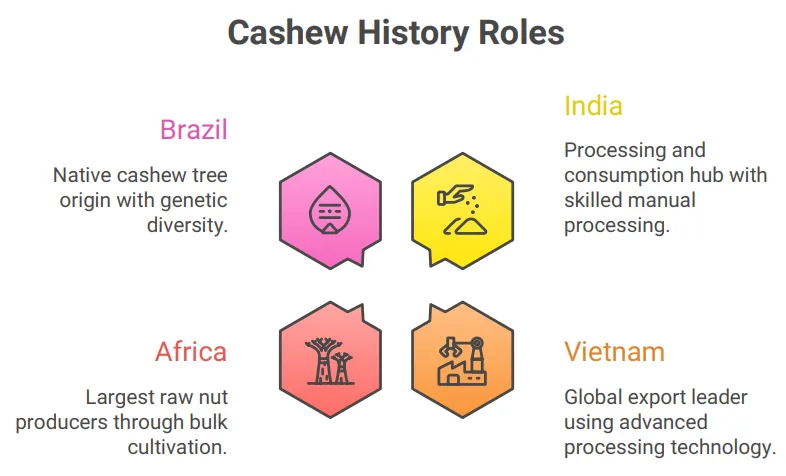
The origin of the cashew tree is found in Brazil, specifically in its tropical coastal forests, where the cashew tree naturally grows.
The main characteristics of the original cashew trees are:
- Grows in hot and humid, sandy environments
- Produces both a cashew apple (fruit) as well as the cashew nut
- It has a natural defense against drought and using poor-quality soil
The indigenous peoples took advantage of all parts of the cashew tree, including the fruit pulp and nut shell oil, so it was an important source of survival for them.
Where Do Cashew Nuts Come From Originally?
The cashew nut originates from South America but has spread around the world very quickly through maritime trade.
Below you will see the route that cashew nuts took to get around the world:
- In the 16th century, Portuguese traders introduced the cashew nut to India and Africa.
- Cashew trees adapted very well to the coastal climates of India
- India has become one of the largest processors and exporters of cashew nuts.
Currently, Cashews are widely cultivated in the following countries:
- India
- Vietnam
- Brazil
- Nigeria
- Ivory Coast
Although cashew nuts are now grown globally, Cashew nuts continue to be linked to the Brazilian jungle as their origin.
Early History and Discovery of Cashews
The first humans that found cashew trees used cashews for both nutritional and medicinal purposes.
Native people believed cashews had many health benefits and used various parts of the cashew tree for medicinal purposes, such as:
- Digestion woes
- Skin ailments
- Boosting energy
As trade increased in Europe and Asia:
- Cashews were wanted because they did not spoil quickly
- Roasting of the nuts was developed as a safe way to remove the poisonous oil from the shells of the nuts
- Over time, products such as nut butters, cashew oil, and cashew milk were developed.
The cashew tree's innovation story is the story of turning a large, difficult-to-handle seed into a food that is nutritious, safe, and convenient for people throughout the world to eat.
The Journey of Cashews Across the World
Cashew nuts have become ubiquitous as a familiar snack in many countries. The journey of cashew nuts around the world began thousands of years ago and involved many centuries of exploration and cultivation.
The discovery, cultivation and spread of cashew nuts occurred at different rates. Human migration played an important role in the spread of cashew nuts, as did the establishment of trade routes, and advancements in agriculture.
Portuguese Explorers and Global Spread
In the global spread of cashew cultivation, awareness and acceptance began with Portuguese explorers in 1540. On their exploratory missions throughout South America, they encountered a native species of a plant (the cashew) thriving naturally along the sandy shores of Brazil, with the first phase of its worldwide distribution.
During this first stage of introduction:
- Portuguese merchants transported cashew seeds around the world on their sailing ships.
- Cashew trees were used as nurseries to help protect coastal areas from being eroded by tides.
- The nut traveled through trade routes to India, Africa, and Southeast Asia.
Prior to exporting or commercializing the purchasing of cashew nuts, Indigenous peoples utilized cashew trees for stabilizing coastal land, making the nut available as an emergency food source, leading to their increased recognition as sources of nutrition and commerce.
Cashew Cultivation in India, Africa, and Vietnam
When cashews were introduced to regions outside of South America, they adapted well to new environmental conditions. Today, the majority of cashew production occurs in the above three listed areas, although Brazil was the country in which cashew originated.
Reasons for the Successful Growth of Cashew in Africa, India, and Vietnam.
- Cashew trees have flourished in these areas primarily because of:
- Tropical warm climate conditions
- Sandy or laterite type soils
- The extended period of drought prior to the formation of nuts.
From Forests to Orchards
The cashew tree has been around for thousands of years as a wild member of the tropical forest ecosystem, developing without many human interactions. As time passed, the way people grew cashew trees changed from letting them grow naturally in the forest to creating organized orchards, perfectly aligning the cultural heritage of the cashew tree with the agricultural innovations of today through organized farming.
As people began to grow cashew trees in orchards, they made several changes to improve their product, including:
- Selectively breeding for high nut yields
- Creating controlled orchards for consistency
- Processing nuts safely through roasting and shelling
Today, cashew orchards are protected by centuries of knowledge, innovation, and respect for Mother Nature; however, today's farming practices are still closely tied to the ancient practice of gathering cashew nuts from tropical forests.
The Unique Growth Process of Cashews
The unique growth method of cashew nuts is unlike that of most nuts, which grow either submerged within their fruits or within a shell. In fact, the growing process is very different for cashew nuts than it is for most other nuts.
Learning about how cashew nuts grow will provide you with information about where cashew nuts are grown, as well as why they need extra attention when processed and harvested.
The Cashew Apple and Nut Formation
The nut is produced outside the cashew apple, instead of inside like most other nuts.
How cashews grow on trees:
- The cashew tree develops small white or light purple flowers that turn into a pear-shaped fruit (fruit) called the cashew apple.
- The cashew nut is found on the outside of the cashew apple.
- Each cashew apple contains one nut, which makes the process of cashew growing slow and labour-intensive.
While the cashew apple is rich in vitamin C, the cashew nut is encased inside a tough outer shell. The atypical structure of the cashew apple is one of the reasons the cashew is not regarded as a nut from the perspective of botany.
How Cashews Are Harvested
The harvesting of cashew nuts is done with extreme precision; however, the timing of the harvest is greatly influenced by the natural growth cycle of the cashew tree and the particular type of cashew nut from where it is being harvested.
The harvesting of the cashew nut includes the following:
- Most cashew apples will fall off naturally when they have matured.
- The nuts will be manually separated from the apples.
- The nuts are then being sun-dried for moisture content reduction.
- The nuts will be stored carefully prior to processing.
Because of the limited number of nuts that each tree can produce each season, most harvests in most areas are done by hand. The traditional hand harvesting method of the cashew tree continues to be used as it has been throughout history for the purpose of preserving the quality of the nut.

Why Raw Cashews Need Processing
Processing is not optional for raw cashew nut consumption, as shown by the following example of cashews:
- Raw cashew nut shells contain toxic resins and cause skin irritation with direct contact.
- Roasting or steaming cashew nuts to neutralize the toxic components of the shells.
There are three main steps of processing cashew nuts:
- Steaming and roasting cashew nuts
- Cashew nut shells are removed under a controlled environment (shelling).
- The cashew nuts undergo the final drying process and are graded into categories.
Careful processing ensures that the consumption of this natural product is safe and the product considered processable.
Enjoying this read? Get more like it.
Get fresh snack inspiration and updates from our team.
Cultural and Economic Importance of Cashews
Beyond the nutrients and flavors derived from cashews are the invaluable cultural, social, and economic significance of this crop on many different continents and within many communities. Cashew nuts have been used for centuries by forest-based rural communities, with their cultivation now an important part of global agriculture and trade.
The origin of cashews as a food product and the relationship of cashew production to the global marketplace has been created by the traditions, ways of life, and cuisines of people around the world.
Traditional Uses in Native Regions
The traditional uses of cashew trees in native regions (Brazil, South America) included more than cashew nuts.
Traditional Uses of Cashew Trees:
- The natives would ferment cashew apples for drinks and juices.
- The natives used the bark and leaves of cashew trees in their forms of Traditional Medicine/Folk Remedies.
- The natives roasted cashew nuts and consumed them for energy during their long working days.
Indigenous groups saw the value of the entire tree, not just the nut. The holistic use of the cashew tree speaks to the time when cassowary trees were first introduced, where food, medicine and sustainability were interconnected.
Economic Role in Producing Countries
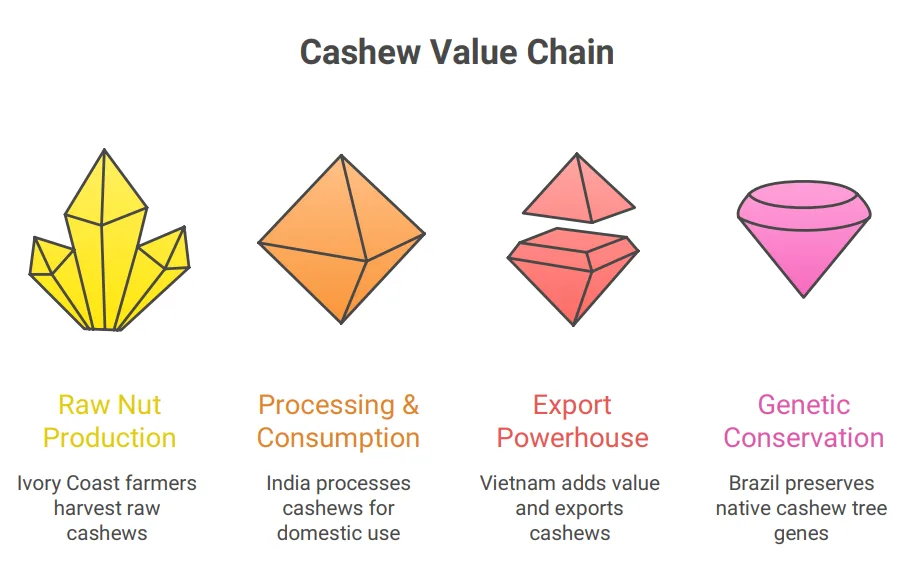
The economic contribution of cashew nuts and the developing countries that produce them today plays an important part in their economies. The farming, processing, and exporting of cashew nuts creates millions of jobs, particularly in rural areas.
Cashew nuts have three different types of contributions to the economy:
1. They support small and marginal farmers.
2. They create large-scale employment in processing units.
3. They generate export revenues.
Cashews in Global Cuisine Today
Cashew has become a major part of world cuisine as we know it today. Cashews have become so popular that they are now used to create a wide range of cuisine, from traditional meals to fusion food, thus making cashew production a very diverse industry.
The main ways that cashews are currently being used around the world include:
A. Meals containing cashew-style gravies or a curry with cashew nuts
B. Vegan versions of milk, cheese and cream all made using cashews as the primary ingredient
C. Snacks (nut butters, desserts, etc.)
D. Thickener for sauces and sweets using cashew nut flour
The creaminess of the cashew is an added benefit that will allow the use of cashews in various recipes, from traditional Indian recipes to current plant-based recipes used in the west. As such, the cashew has gone from a local source of food to being highly sought after on a worldwide scale.
Sustainability Challenges and the Future of Cashew Cultivation
The increase in global consumption of cashews is raising both the issue of where cashews come from and how they are produced. The traditional cashew nut source comes from the forest-based ecosystems and has historically been produced using smallholder agricultural methods, while the current model consists primarily of large scale mono-crop agriculture.
Understanding this process and how it has changed will provide insights into how the future of the cashew will be structured with respect to sustainability, ethics and innovation.
Environmental Impact of Cashew Farming
The environmental impacts of growing cashew nuts are varied depending on how it is being done; however, there are historical examples of how the growing of cashew nuts has helped create and maintain healthy soils as well as restore degraded land.
Positive environmental impacts associated with cashew nuts include:
- The ability of cashew trees to prevent soil erosion along both coastal and arid landscapes
- Cashew nut trees require significantly less water than most other crops that are commercially grown
- Cashew nut trees grow well on degraded land or 'marginal' land that is not conducive to other types of cultivation.
Environmental Challenges Associated with Cashew Nut Growing include:
- Deforestation caused by the establishment and expansion of large-scale, monoculture plantations
- Excessive use of chemical fertilizers/pesticides
- The loss of biodiversity because of monoculture farming systems.

Ethical Sourcing and Fair Trade
The human labour involved in harvesting and processing cashew nuts makes up a large part of their origin and how they are produced as well. The production of cashews is one of the most time-consuming of all nuts and therefore has some significant human labour involvement, as well as other ethical implications.
Key ethical issues include:
- Unsafe conditions of working when removing the shells from the cashews
- The extremely low pay that farmers receive for their work as well as the low pay they have to provide to workers
- The lack of personal protection gear during processing and handling of cashew nuts
The ethical sourcing of cashew nuts looks at:
- What is a fair wage for cashew farmers
- A safe processing environment for cashew processing
- The empowerment of women involved in rural processing units
Ethical trade initiatives support workers as well as the communities that are supported by the cashew tree they work with.
The Future of Cashew Production
Future developments will require creating a balance between traditional and innovative methods of Cashew Production. As the Cashew is originally a natural product, the implementation of new technology will allow both increased Sustainable/Cashew Production and Increased technology to utilize less land for Cashew Production.
Future developments that will help in the advancement of the Cashew Industry include:
- New varieties of Cashew trees that are climate-resistant.
- Mechanised and safe processing methods.
- Increased Organic and Fair-Trade opportunities.
- Increase waste reduction by using by-products of the Cashew apple.
FAQs
Q1. What is the origin of cashews?
The origin of cashews traces back to tropical forests of northeastern Brazil in South America, where they grew naturally in the wild.
Q2. What is the cashewnut origin in simple terms?
In simple terms, the cashewnut origin began in Brazil and later spread to India, Africa, and Asia through global trade.
Q3. Where is the cashew tree origin located?
The cashew tree origin is located in Brazil, where the tree first evolved in warm coastal and forest regions.
Q4. Why are cashews not sold raw?
Cashews are not sold raw because their shells contain toxic substances that must be removed through proper roasting or steaming.
Q5. Which countries produce the most cashews today?
Today, major cashew-producing countries include India, Vietnam, Ivory Coast, Nigeria, and Brazil.
Conclusion: Embracing the Rich Heritage Behind Every Cashew
Cashew nuts have their own unique and rich history, which traces back to lush tropical forests, expanding through the globe and across many cultures. Recognizing where cashews originated from can help people understand more about how cashew nuts represent a much larger relationship between man's traditional knowledge of the environment and man's modern agricultural practices. Every single phase of the cultivation of a cashew apple to the processing of a cashew nut is representative of how deeply a cashew nut's origins shape the popularity of cashew nuts throughout the world.
As cashew nuts were imported from South America to Asia and Africa, they also established themselves as a means for many millions throughout the world to make a living from cashew nut production. The emergence of cashew nuts as a food source became part of the culinary fabric, nutrition customer needs, and formed an entire economy as a trade commodity throughout the world. This journey from a wild seed to a premium nut illustrates how cashew nuts developed from origins of a wild forest growing seed to the globally desired premium nut appreciated for its flavour and value for nutrition and still maintaining the relationship with where it originated from in nature.
A consumer's decision to purchase and consume responsibly-sourced cashew products and to support the sustainable farming and ethical practices of many small-scale farmers around the world is important. By embracing the story of each single cashew nut, we not only view cashew nut items as an enjoyable snack, but we also support the values of tradition, resilience, and global connectivity that have been embedded in our culture by other generations before us.