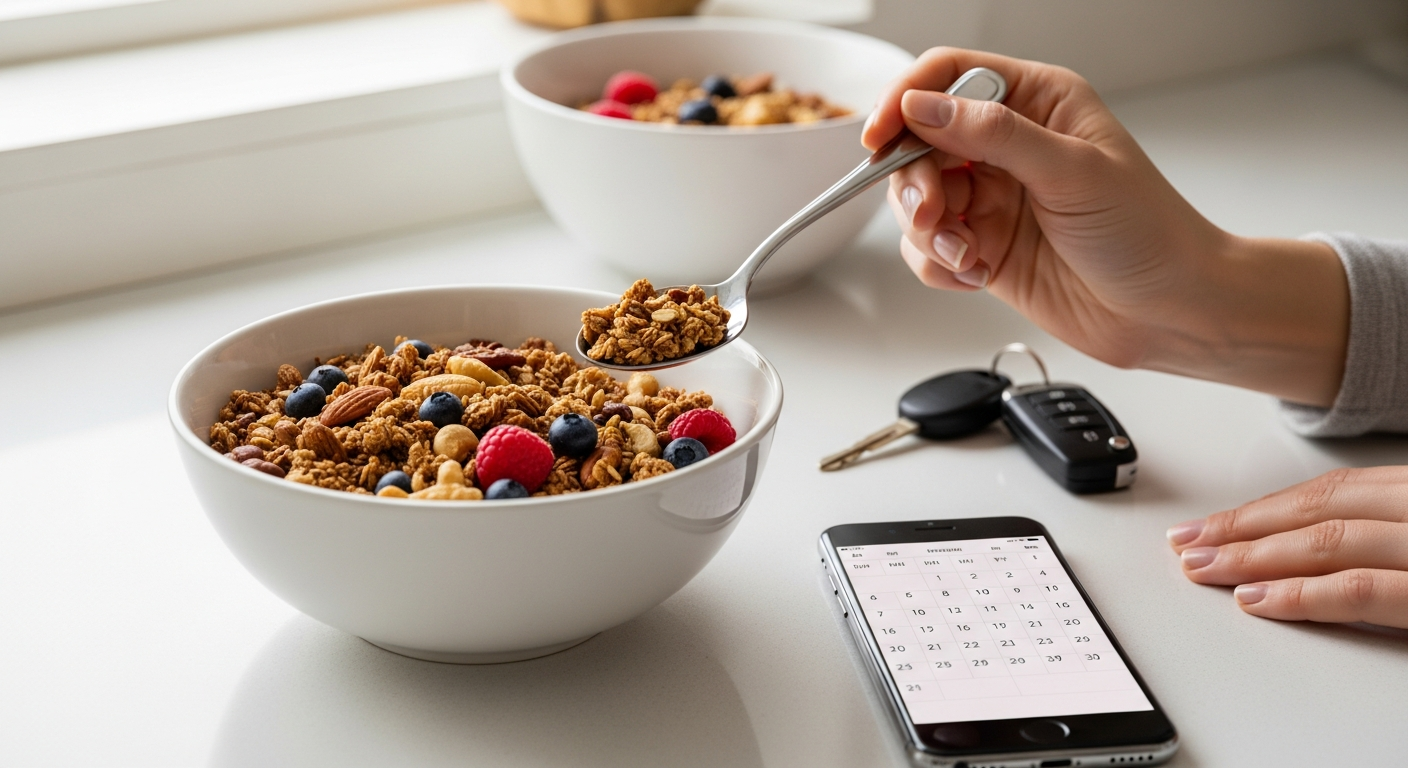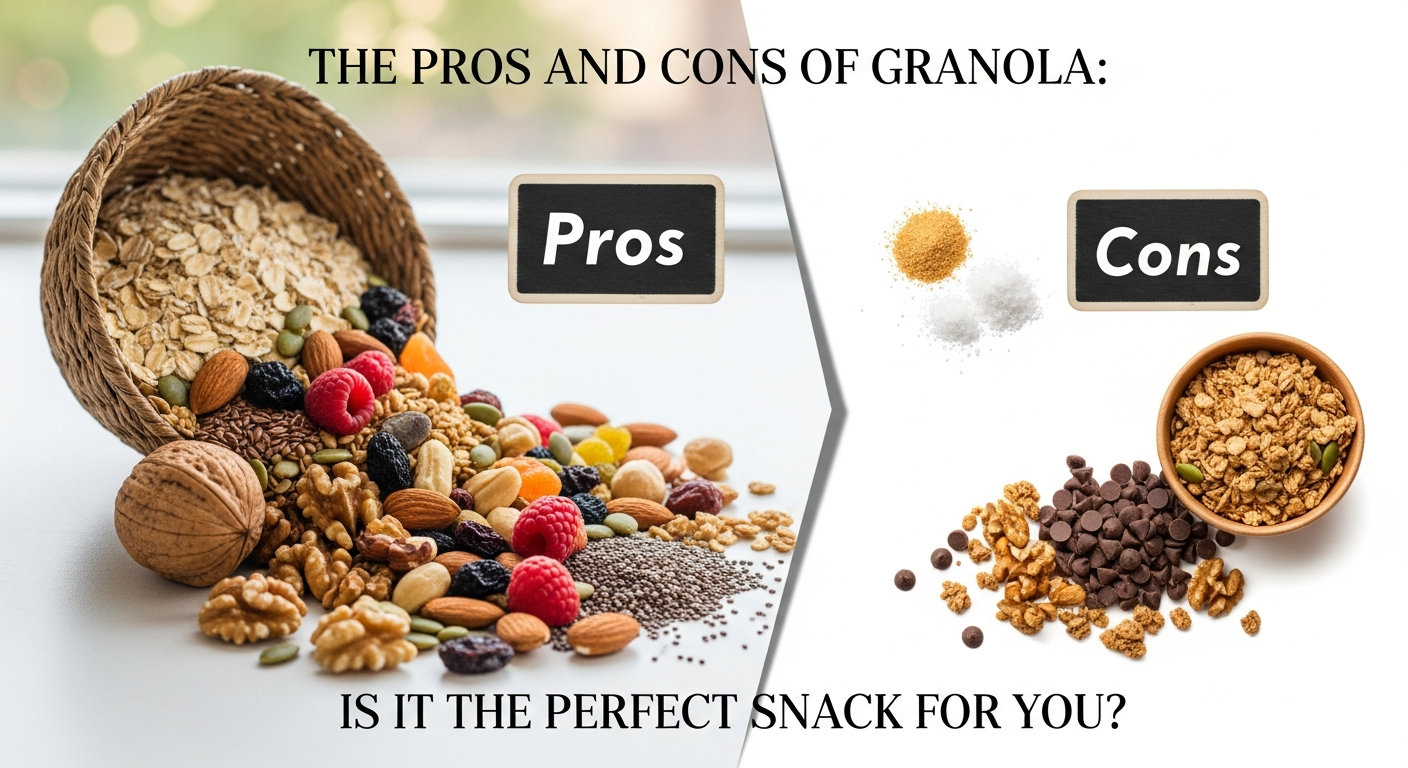
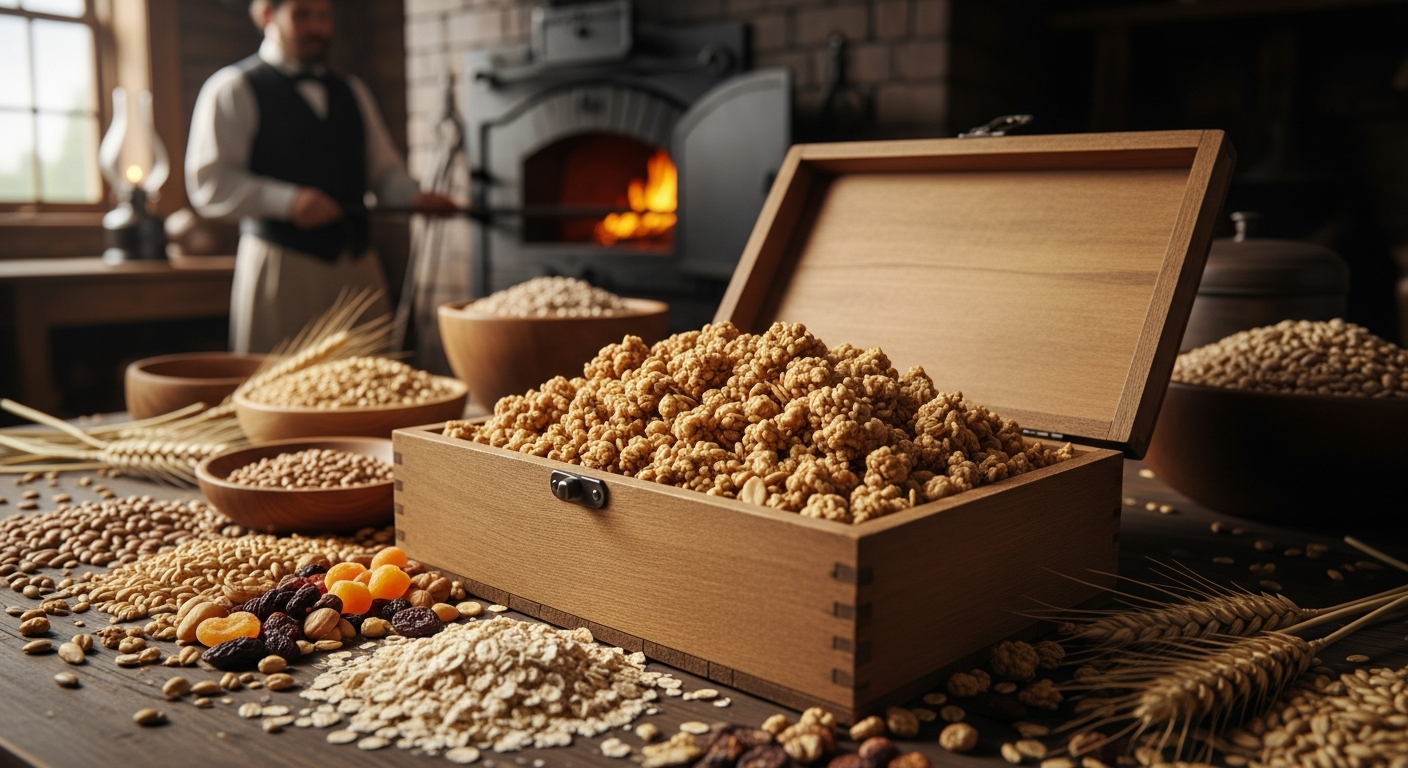
Granola is a rich, crunchy breakfast composed of rolled oats, nuts, and healthy sweeteners. For hundreds of years, people have found granola to be a wholesome way to begin each day, providing the nourishment they needed to feel their best. Granola was invented in the 1800's as a way to help people improve their digestion and health.
Granola is a great source of fibre, protein, and carbohydrates that provide energy with very few calories. The goal of granola is to be satisfying and easy to digest while supporting a healthy diet through the combination of the three major macronutrients (carbohydrates, proteins, fats). Many of the early health reformers were major supporters of granola due to its ingredients being simple, its low temperature during preparation, and because they believed that food plays an important role in healthy living.
Granola has evolved from the earliest form (known as granula) in sanitariums to the modern-day snack mixes available worldwide. Each bowl of granola carries with it the tradition of the past, the nutritional benefits of the present and future, and ultimately the flavour of life's journey.
Introduction: Why Understanding the Origin of Granola Matters
Granola's roots provide insight into why it has been viewed as healthy since its inception. This relationship to health continues today. Granola started out as a healthy food. As people became healthier, so did their view of granola, which led granola to be a breakfast food for the average person.
Granola represents the evolution of how we eat and the impact of cultural values, nutrition science and lifestyle trends have had on our eating habits. Thus, understanding the evolution of granola can help a consumer make better, more thoughtful decisions about their food consumption.
The Cultural and Nutritional Significance of Granola
As a whole-food product, granola reflects many of our core beliefs regarding health, nutrition, balance, sustainability, and living a natural lifestyle. The focus for granola was on providing high-quality nutrients to help create and sustain the body, and granola was not widely accepted until it became more popular around the world.
What distinguishes granola from other foods?
- The high fibre content of granola provides your digestive tract with an easily digestible source of energy.
- The fact that it is minimally processed is in line with the natural food movement.
- Granola is more than a snack; it is a "functional food" (i.e., a food with an intended function).
Granola as it was originally developed will continue to be an appropriate way to fuel your body and keep it healthy well into the future.
How Granola Reflects Changing Health Trends
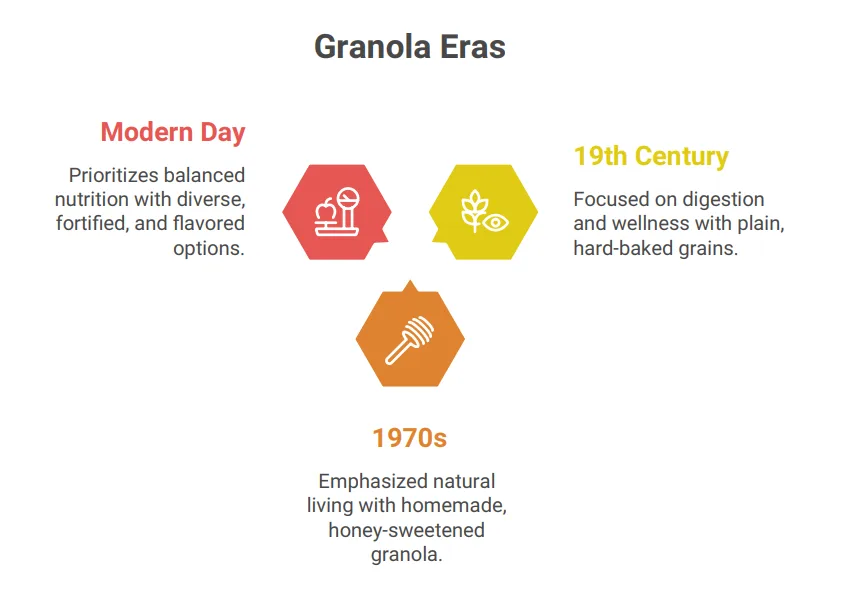
As the development of Health Science is a product of the growth of Granola, it began as a 'Medicinal Food' but has had many adaptations throughout the years due to the changing beliefs of diet and the ongoing movement toward more natural and healthy food products.
Summary Points:
- Changed from Medicinal Foods to Breakfast Foods
- Influenced Fitness and Clean Eating
- Developed Low Sugar/High Protein
- Adapted according To Vegan and Gluten-Free Diets
Why the Granola Origin Still Influences Modern Eating
The principles of making granola—simplicity, balance, and nourishment—continue to guide consumers in their choices of breakfast cereals today.
Key Takeaways:
- Transparency of ingredients: Consumers want to be able to recognize ingredients found in granola.
- Balanced energy: The original recipes were made to provide sustained energy throughout the day rather than quick bursts of energy.
- Portion awareness: The original recipes allow for moderation and fullness.
- Sustainable Choices: The granola origins are in line with being environmentally conscious.
Because of these principles that continue to exist today, granola is still a valid buying choice. Consumers have an understanding of what they are getting when they select granola and how it relates to the nutritional guidelines set forth by its origins.
Uncovering the History: Where Did Granola Originate?
The origins of granola can be traced back to a period when food was thought to be important not only as nourishment but also as a means of healing, discipline, and reforming lifestyle choices. The creation of granola had a specific intent; that is, to aid in digestion and promote overall health.
Understanding the origins of granola assists in understanding why granola remains a highly nutritious blend of grains and sugars that is enjoyed today as part of a nutritious breakfast.
The Origin of Granola in 19th-Century America
Granola is a 19th-century American food that has roots in the growing interest in healthy lifestyles and preventative medicine that started in the mid-1800s. Original versions of granola were called granula; granula were made from baking grains into hard chunks that needed to be soaked prior to eating.
- Granola was created to be consumed by patients with digestion problems.
- The original granola had a focus on whole, unrefined grains and not processed foods.
- The original granules had a specific meal preparation schedule.
- The importance of nutrition in the first recipes of granola outweighed taste.
The original granules built the foundations of today's cereal culture. Today's versions of granola are sweeter, crunchier, and have many more flavors than early granules, but the underlying concept of "simple nutrition" remains the same.
Early Health Movements That Shaped Granola
Granola's earliest health movements were influenced by a growing view that food could influence people's morals, physical health, and mental health.

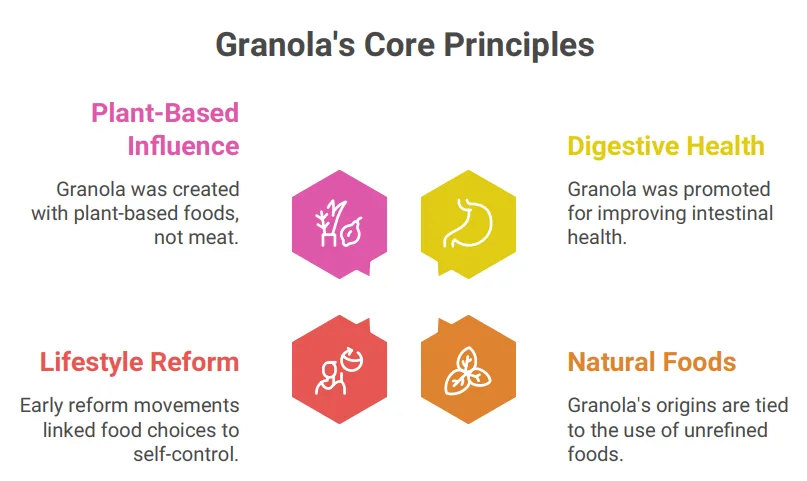
The most popular early health reform movements, as well as their philosophies, led to granola becoming viewed as more than just a meal – it was seen as a healthy food option. Granola continues to be viewed that way due to its connection with the philosophy of "clean eating" and mindful eating.
First Granola Recipes and Their Purpose
The first granola recipes had basic ingredients and were made for practical purposes, rather than for pleasure. They were formulated to nourish the body over time, so as not to spike your blood sugar, but to provide you with a steady flow of energy.
Key Points
- The original granola products contained only a limited amount of sweetener and grain.
- The granola was baked hard so that it would hold its shape when soaked in liquid.
- The original granola recipes were primarily designed to keep people feeling full for as long as possible.
- The original granola recipes were prescribed by health care providers for medicinal purposes.
Granula and Granola: The Surprising Story Behind the Name
Granola's history is largely about the evolution of its namesake as much as it is about the evolution of its recipes and the legal issues that surrounded its changing popularity.
It was originally marketed as a very solid health food, granula, which then morphed into the crunchy snack we know today as granola. This will be explored further in the next video, as we examine how granola went from medical to more common use in our homes every day!
Granula vs. Granola: What Was the Difference?
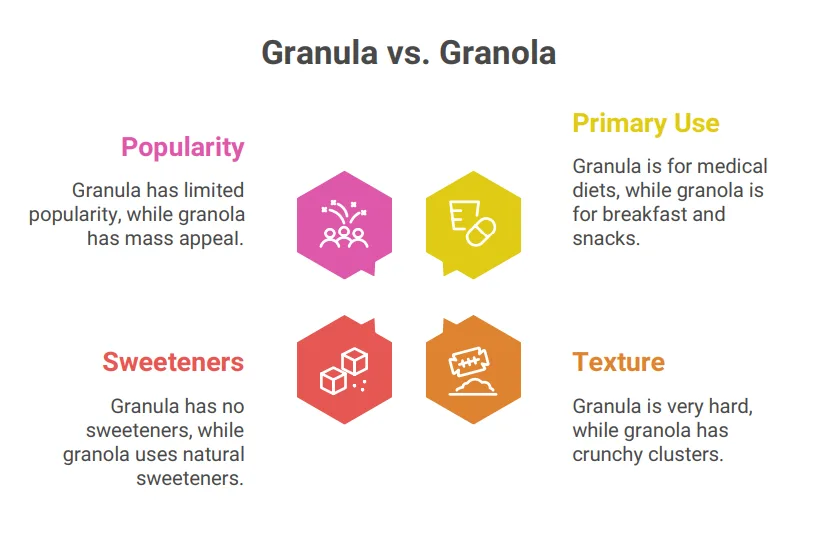
By looks alone you can see that both words have similar sounds but the two types could be very different in terms of consistency, how they were meant to be used and who would be able to find them.Granula was traditionally only for people with health problems while Granola evolved into something used by a wider range of consumers.
Key highlights:
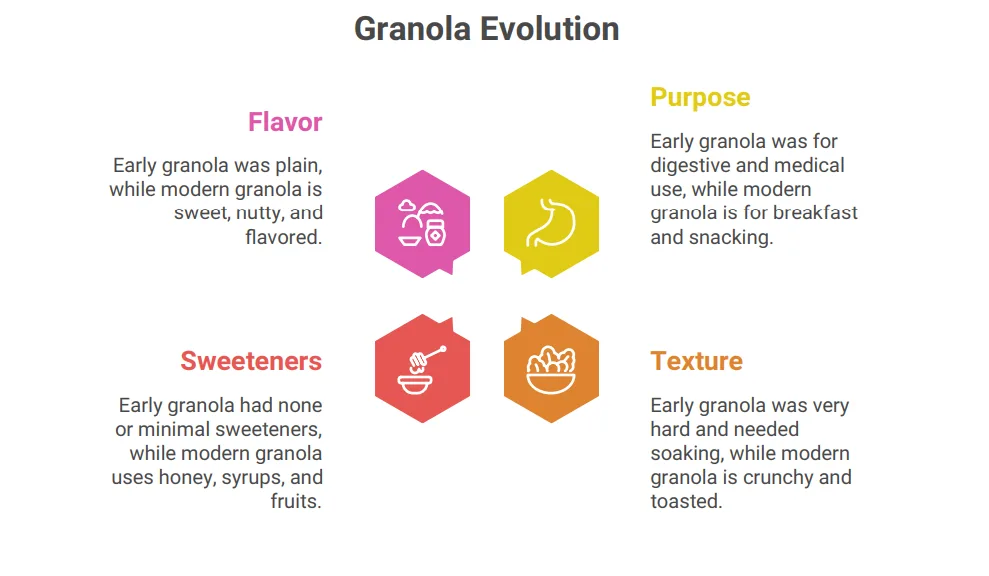
• Consistency: Granula had a very hard consistency; today’s Granolas are typically toasted and have an added crunch to them.
• Ease of Use: You had to soak Granula before it could be eaten; today, Granola can be eaten right out of the box.
• Granola catered to sick patients: Granola caters to the entire family.
Granola has been sweetened and now comes with more of a flavor than just what it tasted like before.
Dr. James Caleb Jackson and the Birth of Granula
The story of granola starts with Dr. James Caleb Jackson, a pioneer in health reform who had the idea that simple foods could be used to heal the human body. In the mid 1800's he developed a food called "granule" to be part of a strict program of health based on healthy eating habits.
Overview of the Original Philosophy of Granola:
- Health as a Priority: Food was to be used for healing purposes rather than for comfort.
- Only Whole Grains: Granules avoided using processed/refined food ingredients.
- DIGESTIVE Health-oriented: The primary purpose of granule was for slow digestion and promoting gut health.
- HEALTH & SANITARIUM: The granola was served as part of a strict health program in the environment of a Sanitarium or an institution for the care of the sick.
Aside from being healthy, granola had a hard texture which limited its popularity. This limitation directly impacted the next stage of the history of granola.
How the Name ‘Granola’ Came Into Use
As manufacturers of Cereals were making refinements to Granula, they also needed to make some adjustments to the name. They began calling their redesigned product granola, which is more pleasant (softer, sweeter, for example) and appealing to consumers.
Summarized points:
- The original name was no longer an option for them.
- Toasting grains was easier than hard-baking them.
- Expanded marketing opportunities due to increased consumer interest in granola.
The transition from a "medicinal" product to a "food" product was also indicated by the name change. It was the beginning of a new era for what would eventually become mainstream breakfast products.
Dr. John Harvey Kellogg’s Role in Granola’s Evolution
A complete understanding of the beginning of granola cannot occur without a thorough examination of the role played by Dr. John Harvey Kellogg. Dr. Kellogg took granola from being a very hard medicinal food and made it enjoyable.
By doing this, he helped move granola toward a point where it was accepted by the masses as we now know it. His numerous attempts at experimentation and ingenuity allowed granola to achieve a status among the common people that it had previously not enjoyed.
The Battle Creek Sanitarium and Health Foods
Battle Creek Sanitarium is credited with creating granola. As a wellness facility, we believed that healing could be accomplished through the food we consumed. At our facility, we viewed all foods including granola, as a form of medicine.
Themes of the Battle Creek Sanitarium include:
- Healing properties of Foods: Our meals were intended to assist with digestion and improve overall health.
- Whole Grains: Early granola was made without the use of white flour.
- Strict Diets: All patients followed strict daily meal plans.
- Plant-Based: Meat was not served.
These themes continue to define what granola is — a healthy food. Today's granola still reflects an emphasis on the importance of healthy, clean nutritional choices.
Kellogg’s Innovations in Breakfast Cereals
Dr. Kellogg thought that healthy food should not only be healthy but easy to make and reproduce. He greatly impacted both the original granola concept as well as the cereal industry through his research.
Aspects of a diet:
- Better grain processing produces cereals that are easier to chew and digest.
- Standardized preparation allowed for the mass production of foods similar to granola.
- In the morning, cereal had become the main meal.
- Balanced nutrition and convenience are key features of a healthy breakfast.
How Granola Became More Palatable and Popular
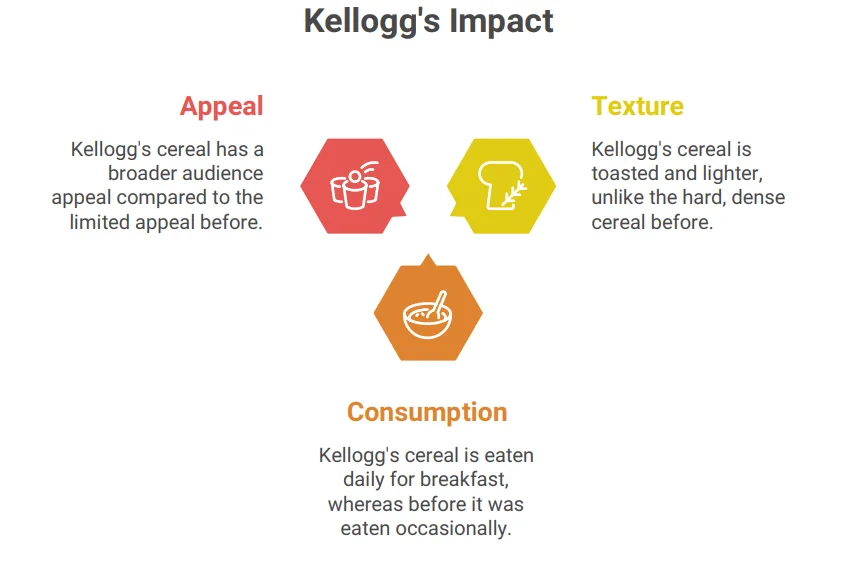
Kellogg's greatest contribution to granola's original flavor was to improve its taste and texture. Both aspects were critical for granola to become as widely consumed as it is today.
Key Contributions to Granola's Flavor:
- Granola was made using toasting instead of baking at high temperatures, resulting in a superior crunch and flavour.
- Granola would now have a more delicate texture; soaking them would no longer be required.
- Granola has been reformulated to have a more mellow, family-friendly flavour.
- Granola transitioned from being viewed primarily as a health product to being accepted more widely as an everyday breakfast food in American culture.
Enjoying this read? Get more like it.
Get fresh snack inspiration and updates from our team.
The Evolution of Granola: From Health Food to Mainstream Favorite
Granola has changed from being primarily a health food, to being a favorite breakfast item that has been mass produced. Originally, granola was made to be eaten for its nutrients—there were not many options to choose from. But as the world became more health-conscious, so did granola.
The history of how granola made its way into homes around the world, and how it continues to thrive, reflects society's changing attitudes toward health and wellness.
Granola’s Shift From Medical Food to Breakfast Staple
Granola transitioned from Medical Food to Breakfast Food over time; it originally was primarily ingested under the direction of a health care provider, typically to assist in improving digestive function, however it quickly grew in popularity due to its versatility as an alternative food source outside of the medical realm.
The four major factors contributing to this shift were:
- The evolution of Granola from therapy through treatment diets into everyday nutrition sources;
- Broader Audience Appeal due to increased Flavor and Texture;
- Routine Consumption (as part of Daily Breakfast); and,
- The Establishment of a Nutritional Trust/Confidence based upon Granola's original health focused origin.
Early Commercialization of Granola
Commercial production of granola has significant impact on Granola's evolution to the modern day in which the granola producers identified the true potential of granola and marketed it into greater distribution of many sources.
Key Points:
- Recipes standardised for consistency and reliability.
- Innovations in granola packaging provided better shelf life and improved convenience.
- Granola is marketed as a healthy replacement for sugary breakfast cereals.
- Distribution of granola has expanded to include retailers other than just health food stores.

How Granola Entered American Household
The way granola entered American households was shaped by evolving lifestyles and changing breakfast preferences, through the need for nutritious, convenient, and reliable foods.
Essential Services
- Convenience: Quick and easy serving options (milk or yogurt) made it accessible
- Perceived Health Benefits: The history of granola built its positive perception
- Adaptability for Families: Its softer texture offered appeal to all ages
- Cultural Integration: Became accepted as part of a daily morning food ritual
Granola has moved beyond a fad into a functional foods category that will forever change the way Americans eat. The way granola is consumed goes back to when it first began to be consumed; it represents how people perceive food today.
Granola and the Counterculture Movement of the 1960s–70s
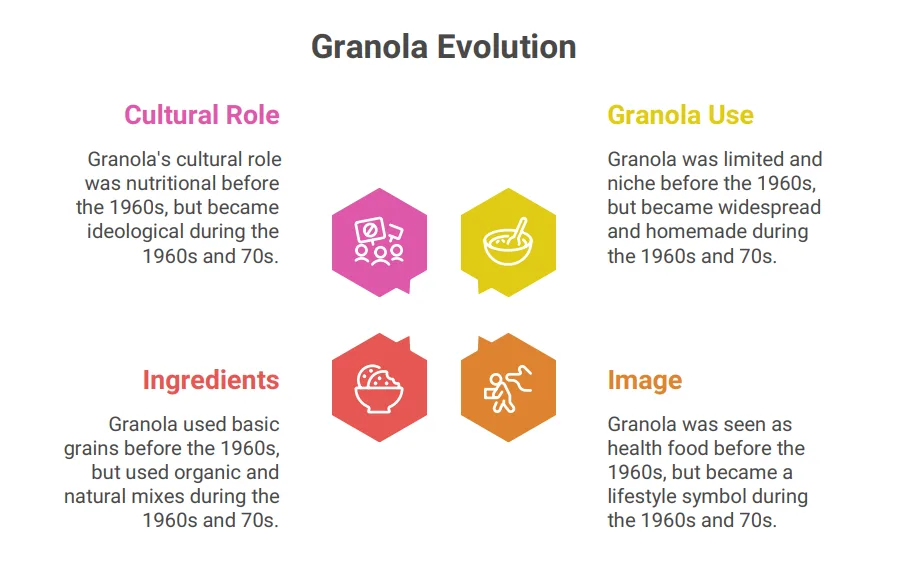
Granola was originally viewed as a nutritious cereal; however, as society began to express itself through food, it took on greater cultural meanings during the counterculture movements of the 1960s and 1970s.
As a result of industrialization and the popularity of processed foods, granola became a widely accepted food product again, representing a natural, truthful alternative. Granola now represents how lifestyle, value systems and identity shape dietary choices rather than simply the nutritional aspect.
The Hippie Movement and Natural Foods
People in the counterculture of the 1960s rejected artificial lifestyles and instead embraced living with nature's bounty (including food). Granola embodied this concept.
What does this mean?
- Granola represented a back-to-nature philosophy (simple, natural living).
- Granola was a natural alternative to processed food (boxed cereals were not eaten).
- Granola was favored over animal products (vegetarian/plant-based support).
- The community aspect of food and meals included homemade granola as a shared item.
The term "granola" originated during this time because of the distinction being made between what was necessary (medical use) and what was desired (culture), i.e., the freedom to experience granola/health through your own awareness and personal/societal growth.
Granola as a Symbol of Health-Conscious Living
Before 1970, granola was still bad for your diet. After the introduction of "granola," it became associated with a healthy lifestyle. The term itself has evolved into symbolizing a commitment to living healthily and sustainably.
- Granola is now associated with a healthy lifestyle.
- Granola represents more than a snack food (e.g., it is also a representation of wellness and sustainability).
- Granola is also a concept that illustrates mindful eating (i.e., eating with awareness of what we are eating) and portion control.
- As a brand, granola has created the perception of healthy eating among many consumers.
- Granola represents eco-friendly and socially-conscious ideals.
Homemade Granola and the Organic Food Revolution
Homemade granola is at the centre of the organic food movement which arose from the rise in popularity of organic produce.
Here are some key points:
- DIY Grains – Families were able to prepare their own granola using very few ingredients.
- Organic Ingredients – Consumers preferred to use natural sweetener and whole grain products.
- Customisation – Families would adjust their granola recipes according to their own tastes and nutrient needs.
- Put Your Trust in What You Eat – Homes were confident about what they were eating because they knew where their granola originated from based on the ingredients used.
FAQs
Q1. What is the origin of granola?
The origin of granola dates back to 19th-century America, where it began as a health food made from whole grains to support digestion.
Q2. Who invented granola?
Granola was first created by Dr. James Caleb Jackson, a health reformer who developed it as a nutritious dietary food.
Q3. Why was granola originally created?
Granola was originally created to promote digestive health and provide simple, nourishing food for wellness-focused diets.
Q4. How did granola become popular again in the 1960s–70s?
Granola regained popularity during the natural foods and counterculture movements, which favored whole, unprocessed foods.
Q5. Is modern granola different from the original version?
Yes, modern granola is sweeter, crunchier, and more flavorful, while the original version was plain, hard, and medicinal.
Conclusion: Why the Origin of Granola Still Matters Today
Learning about the origins of granola helps consumers see beyond the mere convenience of granola as a cereal while allowing us to connect our lifestyle choices about our diet to a greater purpose. The original intent of creating granola was to create an enjoyable, nutritious food source using whole grains to improve digestive health and support the body’s needs through its nutritional value and energy.
As we move into the next generation of health-conscious consumers, the elements that defined the early origins of granola continue to shape how and what we choose to eat. In addition to being a convenient source of food, granola has remained true to its initial intention by continuing to be a food that promotes balanced, healthy living through its use of simple, wholesome ingredients. Consumers now have access to products that are gluten-free, low-sugar, and other similar products; these alternatives demonstrate how the original preparation of granola and its nutritional qualities continue to have relevance in our lives today.
Understanding the origins of granola enables us to make better decisions regarding the types of foods we eat and will still help us to reconnect with our commitment to healthy living. As we have seen with all-purpose granola and its newest adaptations, it will continue to be an example of purposeful food that can adapt to modern dietary requirements while maintaining its roots.