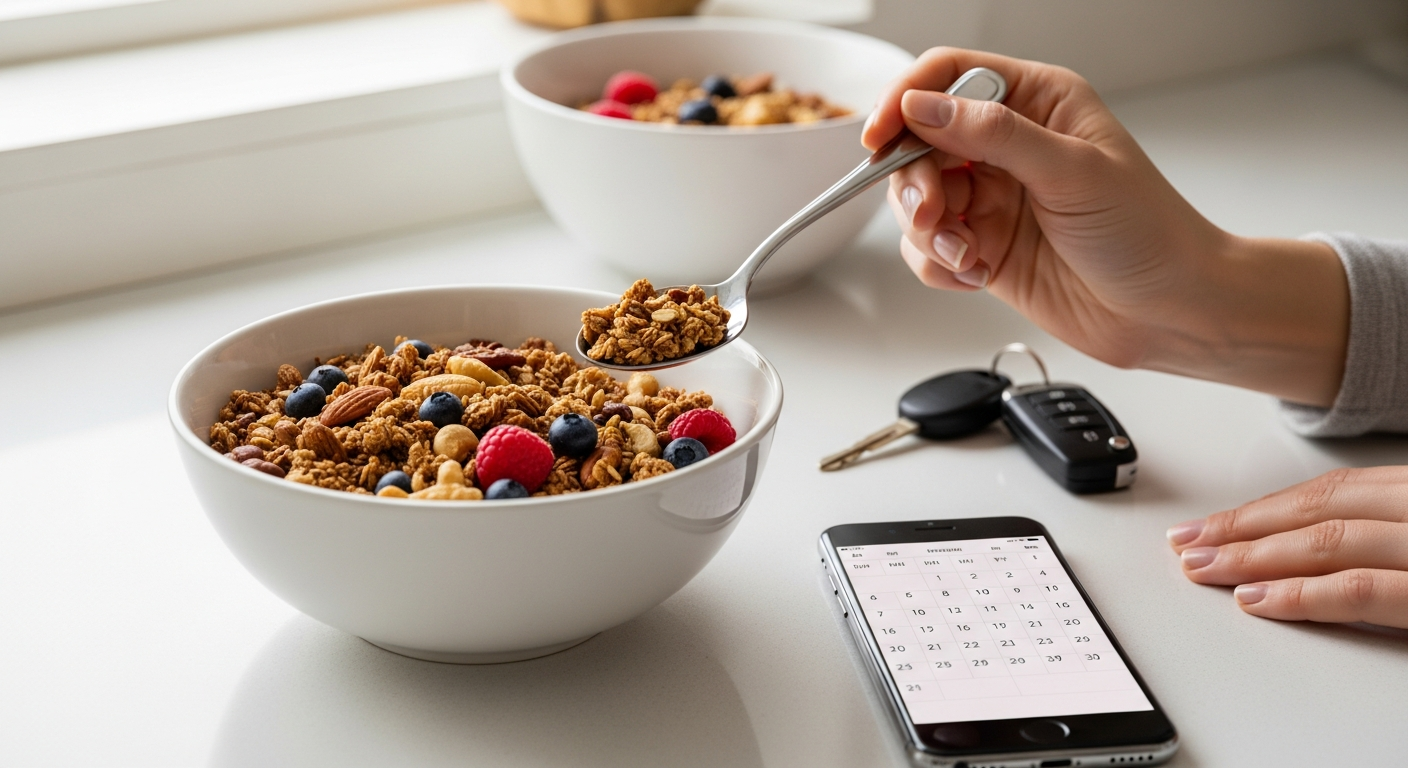
One of the foods many people choose today to eat healthily is granola. Granola is a commonly eaten snack food made from oats, nuts, seeds, and natural sweeteners, so there are many healthy alternatives for people looking to stay on track with their diet. Granola can be eaten as a breakfast food, a snack food, or added as a topping to other foods, and will provide both a sweet treat, as well as nutrients.
Granola cereal is known for its crunchy texture and is easy to add to your daily routine due to its versatility, making it a good fit with modern diets.
Granola contains a variety of nutrients such as fiber, healthy fats and protein, vitamins, and many other nutrients (e.g. calcium, iron) and is a nutritious food to eat every day for the following reasons: it aids with digestion, will give you energy throughout the day and make you feel full for a longer time, which makes granola a healthier snack choice than many processed snack foods; therefore, granola has been viewed by many as a comparative healthy snack option to other processed snack foods.
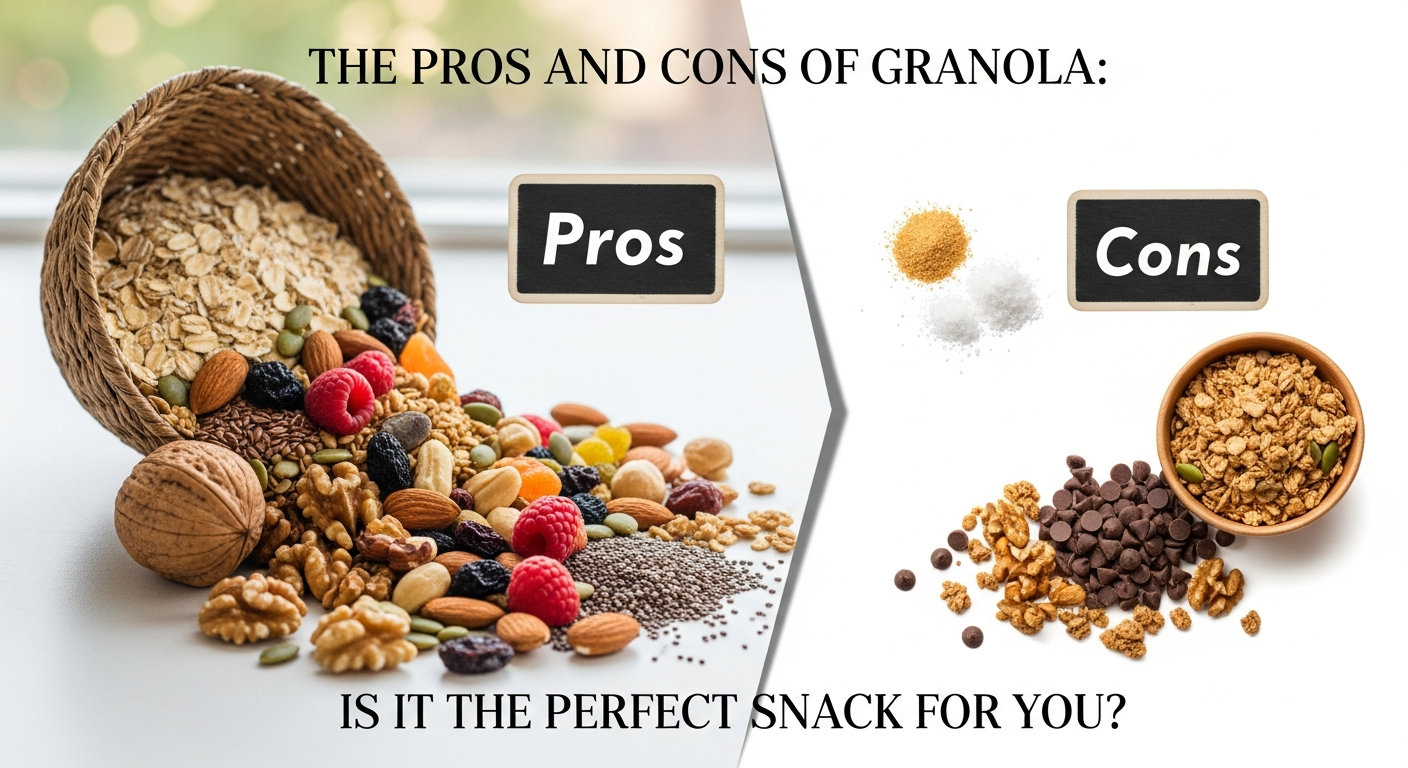
With that being said, determining the pros and cons of granola is important for determining if you would like to have granola as part of a healthy and balanced diet. For instance, if you consume granola that contains a lot of added sugar or if your portion size is large enough to provide more than the recommended daily sugar intake will ultimately determine how beneficial granola can be to you or your overall healthy lifestyle.
Understanding Granola: What Is It Made Of?
Granola consists of a healthy mix of whole grains such as oats, nut/seed products, naturally occurring sugars, and other nutrient sources. Granola can be made either baked or unbaked and processed to produce a crunchy and nutritious food product that can be eaten for breakfast, as a mid-day snack, or as a dessert. Granola is one of the most popular breakfast cereals because it provides an ideal balance of carbohydrates, fats, and proteins in a single serving.
Core Granola Ingredients and Components
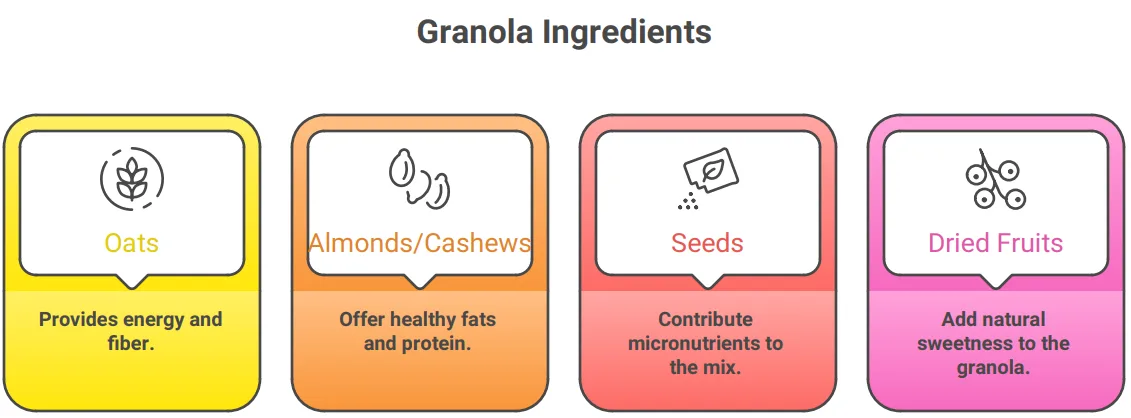
Granola consists of a mixture of naturally derived components that serve as both a foundation (i.e., make up the structure) and fill in the nutrition. These basic building blocks are essential for making granola taste good, have a good consistency and texture and provide some level of health benefits.
Now let's explore how each building block relates to the rest of the recipe:
- Oats are the base (i.e., serve as a way to hold everything together) and provide energy (i.e., they help fuel us) on a long-term basis.
- Nuts & Seeds = provide a source of protein (i.e., used by our bodies to repair and build new cells) and provide healthy dietary fats.
- Nuts & Seeds = create a crunchy texture and add healthy fats to our granola.
- Dried Fruits = sweetens the granola naturally while adding soluble and insoluble fibers.
The Role of Sweeteners in Granola
Sweeteners are a crucial ingredient in granola because they serve more than just sweetening purposes. They act as binding agents for other components and affect both flavor and texture.
Sweeteners serve four different purposes in granola:
- Binding agent — creates crunchy clumps of granola together
- Flavor enhancer — makes the grains taste good when combined with the sweetener.
- Energy Source — provides quick energy
- Shelf Stability — increases the shelf life of granola
Natural vs Processed Granola Ingredients
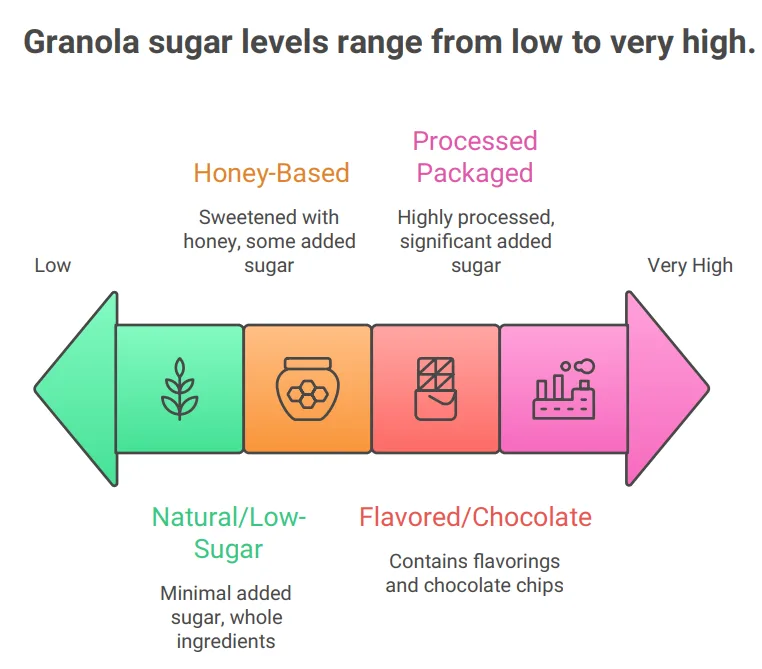
Granola is not all equal in the way that it is made - some are made from whole, unrefined ingredients, while others are very much processed. This can affect how healthy the food really is.
Natural Granola contains:
- Whole grains (whole kernels of oats, etc) - very little processing done to the whole grain
- Natural sweeteners (honey, jaggery, etc)
- No artificial preservatives
Processed Granola sometimes contains:
- Refined sugar and oil
- Artificial flavor and/or other additives
- Much more calories per serving than there are nutrients in the granola
Health Benefits of Eating Granola Regularly
Granola is now one of the most requested items for eating in today's health-conscious society. Due to its combination of nutritional value and convenience, granola can be an excellent addition to any diet when viewed as part of a complete meal plan.
If taken in appropriate sizes, granola will contain a balance of fibres, good fats, and other nutrients which contribute to total health. By knowing what these nutrients provide, you will be able to assess the actual benefits and disadvantages of consuming granola, allowing you to make informed decisions when making nutritional choices.
Fiber and Digestive Health Benefits
Granola is a rich source of fibre from various ingredients such as oats and seeds. The fibre content helps keep your digestive system functioning well.
Granola provides the following benefits:
- Helps in your digestion, as well as having regular bowel movements
- Keeps you feeling fuller for a longer period of time
- Promotes healthy bacteria in your gut
- Helps manage cravings and appetite.
Energy Boost and Nutrient Density
Granola has carbohydrates, healthy fats, and proteins, making it a food that provides a lot of energy and can be eaten every day.
There are four ways granola gives you energy:
- Granola provides both quick energy and a longer-lasting source of energy
- Granola helps you sustain energy throughout the day
- Granola can help support physical and mental activities
- Granola can help reduce fluctuations in energy level
Vitamins, Minerals, and Heart Health
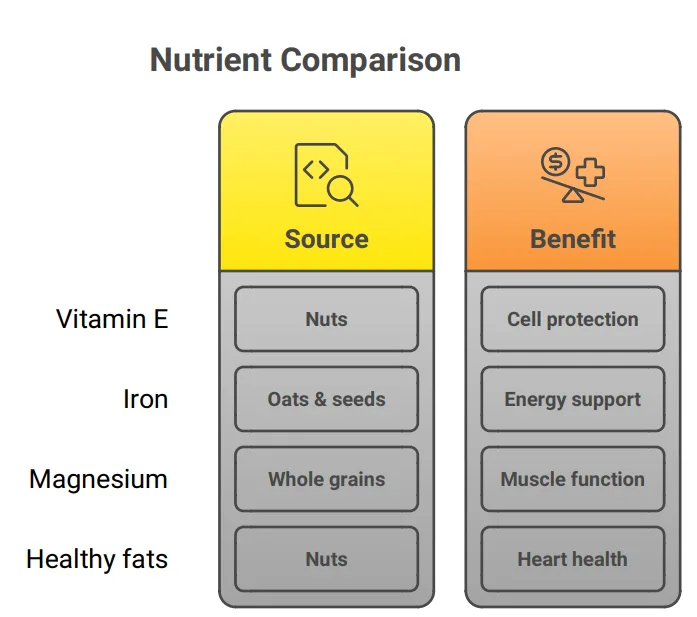
Granola contains lots of vitamins and minerals that aid in body function, including your heart! The sources of healthy fats (nuts) also support cardiovascular health.
Some nutritional benefits of granola are:
- Boosting the immune system
- Producing energy
- Supporting heart health
- Building muscle and nerve strength
Potential Downsides: What Are the Cons of Granola?
Although granola is typically considered healthy, not all types of granola provide the same health benefits. In addition to the benefits of granola, there are also negatives associated with granola that may impact one's health unless they are managed appropriately.
By understanding what the negatives are in relation to the positives, one will have a better understanding of the totality of both the good and the bad associated with granola and therefore will be in a position to make better decisions in relation to the types of granola cereal that you eat regularly.
High Sugar Content in Some Granolas
Many commercial granola options have added sugar to assist with flavor and texture. Removing this type of sugar will impact your overall sugar consumption if you eat them on a regular basis.
Issues associated with consuming granola with added sugars:
- Added sugars will raise your total calories consumed in a day.
- May induce a blood sugar level spike.
- Decreases the overall nutritional value of food consumed.
- Would not be the most desirable option due to use as a weight control food source
Calorie-Dense Nature of Granola
Granola can be quite calorically dense, naturally, because of the ingredients it contains such as nuts, seeds, and sweeteners; however, these same foods can be healthy and be part of an appropriate diet. However, if portion sizes are not limited, they can contribute to excessive calories.
There are some key concerns with eating granola:
- Only small amounts of granola contain a large number of calories
- It is easy to consume too much granola due to all of the flavors and textures.
- Possible effect on weight management goals
- Granola should be eaten in portions on a daily basis.
Allergens and Processed Ingredients Concerns
Certain granola products may have ingredients that are allergenic to some people, or include some processed items which may diminish their health benefits.
Main issues:
- Allergy to nuts may be present in a small number of consumers
- Preservatives used can lower the quality of a product
- Some will have artificial flavorings in them
- Nutritional balance may be affected by the use of refined oils
Granola vs Other Breakfast and Snack Options: A Comparative Look
Granola is compared to many other breakfast cereals and snacks because it continues to increase in popularity, offers many nutrients, and, while convenient, can also help you decide how granola ranks against other products currently available.
By reviewing the various comparisons that exist, you'll be able to evaluate the advantages and disadvantages of granola, as well as when granola cereal will be appropriate for your daily diet.
Granola vs Cereal: Which Is Healthier?
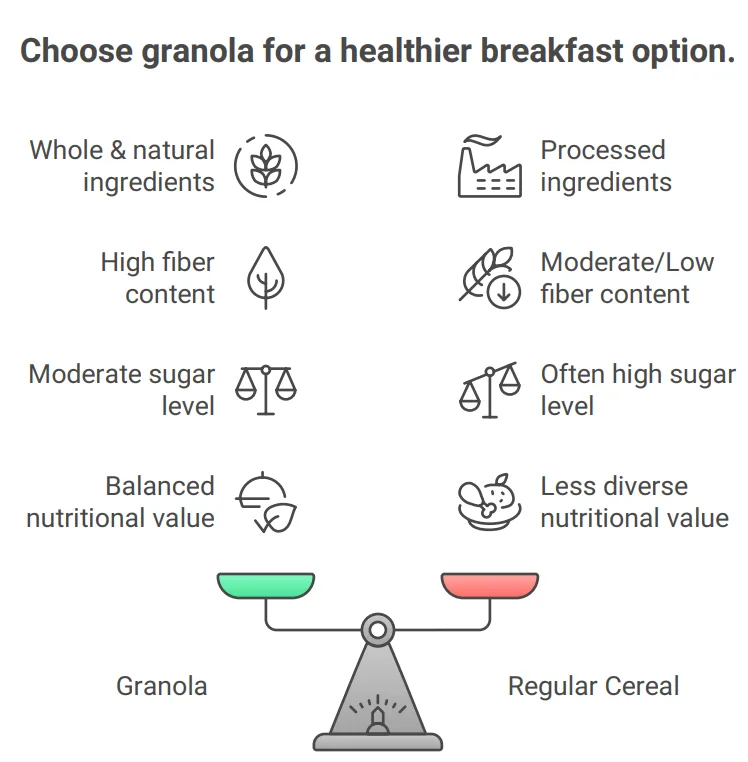
Granola and Cereal have multiple similarities such as both are often made with cereals(oats or wheat). However, there are several key differences between them. Granola typically contains ingredients like: Oats, Nuts / Seeds, dried fruit, oil, and sweetener, whereas most cereals will be processed.
The main differences between Granola & Regular Cereal are listed below:
1. Most Granolas contain more fiber and good fats than most cereals.
2. Many regular cereals contain refined grains.
3. Granolas can be more filling than many regular cereals.
4. Some regular cereals provide fewer calories per serving than Granolas.
Healthy Snack Alternatives to Granola
Granola is very popular, but there are many other healthy snacks that can be used for people with different types of diets.
Some of the most common ones include:
- Fresh fruit has natural sugars and provides energy.
- Nuts/Seeds provide both the protein and the fats we need.
- Yogurt is great for digestive health and is high in protein.
- Oatmeal Based Snacks are a lower calorie option.
When Granola Is the Better Choice
The combination of Convenience/Nutrition/Energy is satisfied with granola providing all three together, therefore granola is an excellent choice when you need something that can be consumed quickly and provides you with balanced nutrition.
The best occasions to select granola include:
- When you are needing a fast filling breakfast
- When you need a balanced snack
- When you want to use granola along with yogurt or milk to provide you with complete nutrition
- When you are looking for healthy alternatives to processed snack foods.
Enjoying this read? Get more like it.
Get fresh snack inspiration and updates from our team.
How to Choose or Make Healthier Granola for Maximum Benefits
Selecting the proper granola is important for you to derive the full benefit of granola products while avoiding any negative effects associated with the consumption of these products. Because granolas come in many varieties, understanding what type of ingredients are used in each of the granolas can help you make better decisions regarding your diet.
By focusing on the quality of ingredients, the preparation method, and the portion size of granola, you can balance the benefits and disadvantages of using granola as part of your diet and incorporate granola cereal into your daily routine in a healthier way.
Tips for Choosing Healthy Granola Cereal
When looking for a good quality, nutritious granola, you’ll want to begin by examining the product label and the types of ingredients included in it. By making some simple checks, you can greatly increase your chances of obtaining long-term health benefits from granola.
Some examples of what you should look for when selecting a granola include:
- Whole grains should be listed first as the most important ingredient
- Low level of sugar
- No artificial ingredients or preservatives
- Adequate amounts of fiber and protein
Homemade Granola vs Store-Bought
While both store-bought and homemade granolas provide convenience and nutritional value, there are some key differences.
The following are examples of how they differ:
- Homemade gives you complete control over the ingredients you use
- Store-bought granolas are typically much more convenient and have a very large variety
- Most homemade granolas have less sugar than their store-bought counterparts
- Store-bought granolas may or may not have preservatives added to them.
Portion Control and Smart Consumption
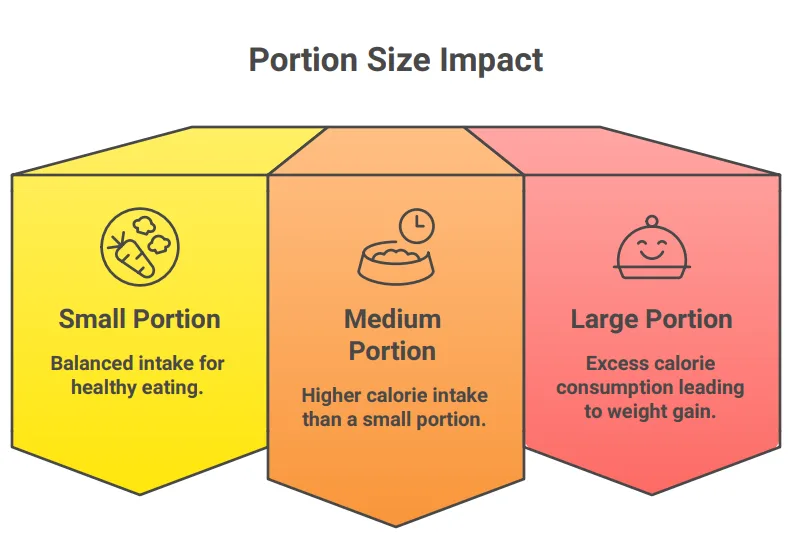
Granola is a great way to add new flavor to your diet; but eating too much of anything - even healthy food - can negatively affect your health. That's why it is important to control portions when eating.
Here are some tips on how to consume smartly:
- Eat your recommended serving size
- Don't eat too much granola just because it's good-tasting and crunchy
- Pair granola with healthy foods such as low fat yogurt, fruit, etc.
- If you want granola to be the main part of your meal, use it as either a topping or a condiment.
Who Should Consider Avoiding or Limiting Granola Intake?
Granola is an acceptable source of nutrition for some people, but it might not be very appropriate for others. If you are one of those people who need to watch their sugar levels, calorie intake, or things like added preservatives and artificial sweeteners; being aware of these limitations can help you determine whether granola is right for you.
If you know your particular health needs and dietary restrictions, it will be easier to incorporate granola into your daily routine safely.
People Managing Sugar Intake
Granola can sometimes have excess sugar in it and affect a person’s ability to keep their blood sugar levels in check.
Important aspects of the granola baked good concerns are:
- Sugars could affect an individual's blood sugar level
- Eating granola with added sugars can affect the overall metabolic makeup of the individual.
- The flavoured granolas may have more sugars than unflavoured ones.
- Check the nutritional information on the package before buying.
Individuals with Allergies
Granola is made from many different ingredients such as nuts, seeds, and oats (may contain gluten), therefore it is likely that some of these ingredients may cause allergic reactions.
The following ingredients can cause allergic reactions and/or do not work for everyone:
- Nuts (can cause allergic reactions)
- Oats (may contain gluten)
- Seeds (may not work for everyone)
- Cross-contamination in pre-packaged
Those on Low-Calorie Diets
Granola is high in calories because of its fat and carbohydrate content. Therefore, this food may not fit into a stringent low-calorie diet.
Important Points:
- High volume of calories in small servings
- Simple to consume greater than what is intended
- Potential to impede weight loss progress
- Portion control can be critical.
FAQs
Q1-What are the main pros and cons of granola?
Granola offers fiber and energy benefits but can be high in sugar and calories if not chosen carefully.
Q2-Is granola cereal healthy for everyday use?
Yes, it can be healthy for daily use when consumed in moderation and with low-sugar options.
Q3-Can granola help with weight loss?
Granola can support weight loss when eaten in controlled portions as part of a balanced diet.
Q4-Why is some granola considered unhealthy?
Some granola is unhealthy due to high sugar content, added oils, and processed ingredients.
Q5. Is homemade granola better than store-bought?
Yes, homemade granola is generally better as it allows control over ingredients and sugar levels.
Weighing the Pros and Cons of Granola to Make an Informed Choice
When you opt for granola as part of your daily intake, selecting the right type and amount of granola can offer you tremendous advantages. The fiber, healthy fats, and nutrients found in granola will provide you with support for your digestion, energy levels, and overall health. Granola cereal is a great way to conveniently include a nutritious food in your life; it can easily fit into your busy lifestyle (e.g., cereal as a breakfast base, snack, or meal enhancer).
To help determine if incorporating granola into your diet is worthwhile, you should understand the pros and cons associated with granola. The amounts of added sugars, calorie density and the quality of ingredients all play a part in determining how healthy the granola is for you. By selecting low-sugar, natural and/or homemade granolas; watching your portions; you will be able to reduce the chances of experiencing common problems while enjoying all the advantages that granola has to offer.
All of the above information provides you with an opportunity to make good decisions regarding the consumption of granola while being aligned with your personal health objectives. If you choose granola wisely, you will benefit in both great taste and healthy nutrition and promote good health over the long term.