
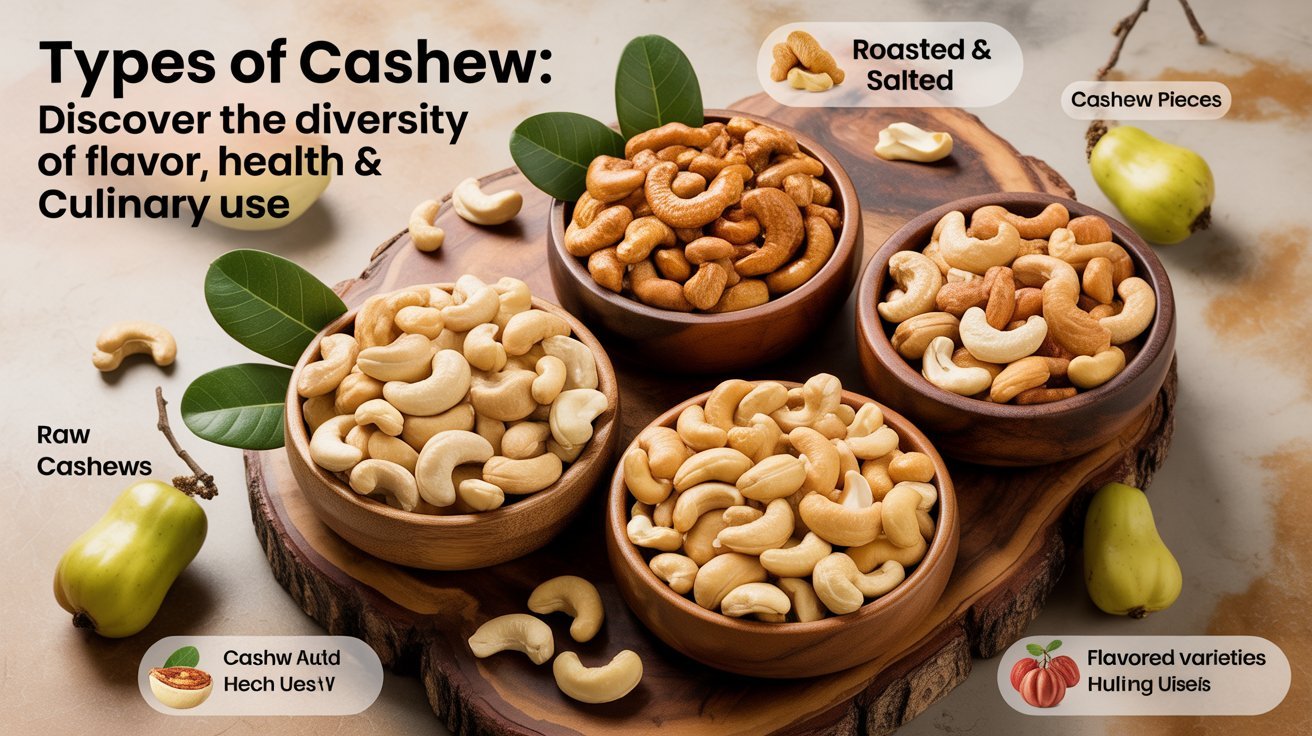
Cashews are a nut with fantastic versatility and nutrition, they have made their way into cuisines all across the world, particularly in Indian kitchens. Whether you are snacking all day, making sweets during a festive season, or including it into a creamy gravy, the knowledge of the different types of cashew can help you make optimal use of taste, texture, and nutritional health benefits.
In the cashew world, you will be able to find a variety of options, from whole, premium quality kaju variety like W180 and W210, to broken pieces of kaju used in cooking dishes, each type and quality of nut having its own purpose or value, thereby making cashews one of the most versatile items in your pantry!
From raw to roasted, whole to split, and regular to phool kaju — every type of kaju brings its own distinct profile of flavor, nutrition, and cooking potential!
Introduction – Why Knowing the Different Types of Cashew Matters
Cashews have shifted from a party treat to a pantry staple. As the global demand for foods that are plant-based, protein-packed, and multifunctional continues to grow, cashews are appearing in more homes, recipes, and health routines. But here’s the secret: all cashews are not created equal. Knowing the types of cashew or kaju type can help you to make better choices - snacking, cooking, or gifting.
The Rising Popularity of Cashews in Global Diets
- Cashews are now used all around the world, whether that be in traditional or modern cuisines—think Indian sweets, Thai curries, vegan cheese and even protein bars.
- The rise of vegan and dairy-free diets has created renewed interest in cashews of different types (especially raw and whole types) because of their creamy texture and neutral flavor.
- In global food trends, cashew-based milks, sauces, spreads and snacks have gained increased traction due to their taste and nutrient composition.
Why Different Kaju Types Are Important for Taste and Health
Different types of kaju (cashew) have distinct purposes: some are rich in texture and have the potential for cooking purposes, while others can be better served to know as a premium snack. Knowing which type of cashew meets each need will yield the best in flavor and nutrition.
Here’s a quick look:

Tip - Use W180 or W210 when the look and size matters. (This is useful for things like biryanis or sweets), or use LWP or SWP when making sauces, gravies, or desserts where the texture is not visible.
How Understanding Cashew Varieties Can Elevate Your Cooking
There are several cashew varieties and knowing them can improve your foods.
- Using whole cashew varieties like W180 gives your food a more premium look and enhances sweets and snacks such as Kaju Katli or dry fruit laddoos.
- Broken or powdered cashew varieties (LWP/SWP) are much easier on the wallet, while great for thickening curry sauces, making nut butters, or blending into smoothies.
- Understanding the different cashew varieties can also help with fat, calories, and cost—important factors for health and budget-conscientious shoppers.
The Most Popular Types of Cashews and Their Unique Characteristics
Cashews may look alike at first glance, but as you dig a little deeper, you'll come to find there are an astounding variety of cashew types - each offering varying flavor, texture, and purposes. There are whole and split, raw and roasted, flavorless and flavored even! Each cashew variety performs a different type for your kitchen or snack bowl. Here is a look at the most common types of cashew in use, and highlights of how they are different.
Whole vs. Split Cashews
1) Whole cashews versus split or broken cashews is the first real difference in kinds of kaju.
✅ Whole Cashews:
- Whole cashews means that you have unbroken whole cashew nuts.
- They come in different premium grades like W180, W210, W240 (the smaller your grade number, the larger your cashew).
- Best used for: Gifting, festive recipes, decorative toppings, snacking.
✅ Split or Broken Cashews:
- Split or broken cashews are cashews that have been broken during processing.
- They are sold as either LWP (Large White Pieces) , SWP (Small White Pieces), or B grade.
- Least expensive, most cost effective, same good nutrition.
- Best used for: Curries, gravies, sweets, chutneys, and baking.

Raw, Roasted, and Flavored Kaju Types
Another way of categorizing the kinds of cashew is based on their preparation temperature and flavors.
RAW CASHEW NUTS:
Steamed (not truly raw off the tree) to get rid of toxins. Mild flavor, soft texture.
👉 Works best for soaking, blending, making sauces, or any vegan recipes.
ROASTED CASHEW NUTS:
Roasted with or without oil to enhance a crunch and flavor.
👉 Best for snacking or in trail mixes.
FLAVORED CASHEW NUTS:
Tossed in masala, a herb blend, honey, or even chocolate!
👉 Perfect for festive snacks, gifts, or for munching on the go.
Fun fact: Raw cashew nuts are the go-to kaju type people use for plant-based dishes like cashew cheese or dairy-free gravies!
Which Type Suits Snacking vs. Cooking?
The type of cashew, or kaju, you should use ultimately will depend on your intended purpose:
Simply Cooking
- For cooking dishes like curries, gravies, or desserts, you may consider LWP, SWP, or raw cashews.
- These options are economical and effective for food that has little to no visual component.
For Sweets or Garnishing
- W180 or W210 are the preferred cashew types that are visually eye-catching and buttery-soft in texture.
- Phool cashews are perfect for presentation in Indian mithai, or biryani dish.
For Snacking
- You will want to use roasted or seasoned cashew varieties for crunch while snacking.
- Cashews are a fantastic on their own, or complemented with of dry fruit.
Cashew Grades and Their Culinary Uses
Did you know that cashews are categorized in grades, by size, shape, and quality? These grades are important for consumers since they are not only a representation of size and shape, but they define how each kaju type is utilized for cooking, gifting or snacking. Once consumers become aware of the varieties of cashew by grade, they will never look at a cashew the same again! Here we can explore the most common cashew different varieties and how to select the right cashew for each of your kitchen needs.
W180, W210, W240 – What the Numbers Mean
The “W” in cashew grading stands for “White Whole”, and the number indicates how many kernels are present per pound. The lower the number, the larger the cashew—and often, the more premium.

✅ Fun fact: Phool cashew is a local term often used for W180 – known for its size, smoothness, and visual appeal.
Uses for Broken Cashews (B Grade and LWP)
While entire cashews are valued for their size, broken cashews (B Grade, LWP (large white pieces), and SWP( small white pieces)) are equally useful in the kitchen.
- Here is how broken kaju types can be utilized:
- LWP (large white pieces): Perfect for gravies, kheers, or even halwa, when blending is required.
- SWP (small white pieces): Best suited for laddoos or energy bites, or to sprinkle over desserts.
- B Grade Cashews: Cost-effective choice for commercial kitchens, utilize for chutney, curry bases and/or roasted snacks.
What are the benefits in using broken kaju types?
- -Save money
- -Same nutrient value as whole
- -Use when texture/appearance isn't important
Choosing the Right Kaju Type for Sweets, Gravies, and Snacks
Not sure which kaju type to use? Here's a quick guide based on your recipe:

Comparing Nutritional Profiles of Cashew Varieties
Cashew nuts are not only a delicious snack but they also include nutrients that support heart health, energy levels, immunity, and more! It is common for people to question the difference among cashew varieties on the market today - raw cashews, roasted cashews, whole cashews, broken cashews, and etc. If you are trying to ascertain which kind and form of kaju offers the most health benefits, let us look at the nutritional information and breakdown of the cashew varieties and you can determine which is the best for you!
Which Kaju Type Offers the Most Nutrients?
There are many styles of cashew nut ranging from raw to roasted, whole to broken, flavored to plain; even though they all come from the same nut, the processing and grading may impact nutritional value.
Here are few notes:
- Raw cashews (typically used in cooking and recipes for vegan dishes) retain more nutrients including some heat-sensitive nutrients such as some antioxidant types.
- Roasted cashews will be more crunchy and flavorful but the process changes some of the vitamin content due to heat.
- For whole cashew forms (W180, W210), while whole is a bit denser (so, more calories), broken pieces are very similar nutritionally.
- Flavored or salted cajun will be a small amount of added sodium, sugar, or oils that is not a big deal unless you over consume them a lot.
- Best for nutrition: Raw, unflavored, whole cashew nut
- Moderately good: Roasted and slightly salted cashew nut
- Occasional use: Flavored or sweet-coated form of cashew nut
Calories, Protein, and Fat Breakdown by Variety
Here’s a general nutritional breakdown per 28g (1 oz) serving of common cashew different varieties:

Cashew Types Ideal for Weight Loss or Muscle Gain
Depending on your fitness goals, you can choose different types of cashew to meet your dietary preferences:
Weight Loss:

Muscle Gain:

Global Cashew Consumption – A Cultural Look at Cashew Varieties
Cashews have found their way into unique cultural practices and the cosmological celebrations for food and diet across every culture. People are able to use the different types of cashew in different varieties. The kaju type has made its way around the world; from delicately festive simple desserts found in pockets of India to the gourmet approaches of the West's vegan dessert recipes. That has extended far beyond dessert for a humble nut, and those uses have adapted to many different kinds of cuisine and customs. To explore the varieties depends on the continents lens, and gives further indication of just how widely identified the nut has become as a culinary and cultural favourite.
How India, Vietnam, Africa, and the West Use Different Cashew Types
Each region has its own preferences when it comes to kaju type—based on availability, flavor preferences, and traditional usage.

In India, cashews (especially premium phool cashew) are essential in festive cooking and gifting.
- Vietnam and Ivory Coast are leading exporters of cashew different varieties, focusing on raw and semi-processed nuts.
- In Western countries, cashews are celebrated in plant-based diets for their creaminess and health benefits.
Signature Recipes from Around the World Using Kaju
Cashews are culinary shapeshifters- soaking up flavors, providing crunch, or become silky smooth when blended. Here are some of the ways different cultures use various types of cashew in their recipes:
India:
- Cashew Fudge/Kaju Katli, Shahi Paneer, Dry Fruit Laddoo, Cashew Pulao
- Uses: W180, W210, LWP (in terms of rich and texture)
Thailand:
- Cashew Chicken Stir-fry
- Uses: Roasted- whole cashews have crunch but will absorb more flavor
Nigeria:
- Cashew Nut Soup
- Uses: Raw or broken cashew is used in thick, spice basted broths
USA/UK:
- Vegan Cashew Alfredo, Cashew Cheesecake, Trail Mix
- Uses: Raw-cashews for blending; flavored roasted for snacking
These recipes show how the different types of kaju can be highly versatile across sweet, savory, and health-centric cuisines.
Cultural Significance of Cashews in Festivals and Traditions
Cashews aren’t only food. Cashew is also the symbol of abundance, prosperity, and hospitality in many cultures.
India: Cashews are a common ingredient for Diwali, Eid and Wedding sweets. Even premium phool cashews are presented in decorative boxes as gifts.
Middle East: The cashew nut is popular as a garnish for rice dishes, like Maqluba, and for sweets such as Baklava, particularly during Ramadan, Eid and festive dinners.
Africa: In remote and rural parts of Africa, cashew apples can be harvested, and fermented into local drinks during celebration festivals.
Western Holidays: During American holidays, particularly Christmastime and Thanksgiving, cashew nuts are common in holiday snack platters, and gifts, usually presented with chocolate mixes and larger gift or fruit baskets.
All around the world, love of cashew varieties creates a unique connection through flavor, tradition, and shared enjoyment.
Raw vs. Roasted Cashews – What’s the Real Difference?
One of the most asked questions about cashews is: Should I pick raw or roasted cashews? There are functions for both, but knowing the actual differences between these two varieties of cashew will help you make better decisions around flavor, nutrition, and cooking with them. Let's explore the major differences between these cashew different varieties and how to best use each kaju variety.
Nutritional Differences Between Raw and Roasted Cashew

Roasted cashews may contain added oil or salt, so always check the label if you're watching sodium or fat intake.
Flavor and Texture Comparison
Roasting doesn't just change nutritional content, it also changes flavor and texture of the nut capable of changing your whole culinary experience.
Raw Cashews:
- Mild, creamy, subtly sweet flavor
- Soft, slightly chewy texture
- best for blending, soaking, and grinding
Roasted Cashews:
- Rich, nutty, concentrated flavor
- Crunchy, satisfying bite
- Offered plain, salted, spiced, or sweetened
In short, raw kaju types are best for cooking, roasted kaju types are for snacking.
Best Uses for Raw vs. Roasted Cashew Types
Knowing where to use each kaju type can enhance both your recipes and nutrition.

Sourcing and Buying Tips for the Best Quality Cashew Types
Whether you’re looking to buy cashews for daily cooking, festive gift giving, or healthy snacking, there is no denying that choosing the correct types of cashew can make a difference.
Because there are many different varieties and grades of cashew available (also some come raw, roasted, whole, broken), it’s important to know what you should be looking for when buying and storing your favorite kaju. So, here’s a quick buying guide to quality, freshness, and taste.
What to Look for on the Label
Before buying cashew nuts it is important to check the label for lots of information about the quality and types of cashew nuts in the package.
The following is useful information:
- Grade: Look for grades W180 (phool cashew), W210, W240, LWP, etc.
- Style: Raw, roasted, salted, unsalted, flavored
- Source of cashew: In many parts of the world and in many parts of India, Vietnam and Africa are considered to produce quality cashew nuts.
- Processing: Steam-treated (for raw cashews); dry-roasted vs oil-roasted
- Use Before: The fresher the better; cashews can run rancid due to storage conditions.
- Packing: Vacuum sealed and airtight packages typically maintain freshness.
✅ Pro Tip: The best kaju types for cooking and for gifting/preparing sweets/snacks during festival cooking are (W180 or W210), for everyday cooking look for the LWP or W320.
Online vs. Offline Buying Tips
Online and offline markets both offer good alternatives, but each has advantages and disadvantages. Here is a way to shop wisely.

- Best Online Places - Amazon, BigBasket, Bebeburp and Dry Fruit retailers like Happilo, Nutraj or local organic retailers.
- Best Offline Options - Wholesale dry fruit markets (be prepared for a lot of choice!), local kirana stores and local premium grocery stores with dry fruit counters.
Storage Tips to Keep Each Kaju Type Fresh
Now that you have found your favorite cashew varieties, storing them correctly is vital to preserving their freshness, crunchiness, and flavor!
General Storage Recommendations:
- Sealed airtight container - to reduce moisture and/or air exposure.
- Kept in a cool, dry place - to ensure that they aren't kept near a stove or windows.
- Refrigerated - although cashews will generally last sometime on its own, it is key for any raw cashews to to get stored correctly.
- Frozen - if you buy in bulk, freezing is also a good option. Cashews have a long shelf life, so you can keep the cashews up to 6-12 months while still keeping fresh flavor as long as you do not leave them out too long after removing them from the freezer.

Sustainable and Ethical Considerations by Cashew Type
As the global demand for cashews increases, it is essential to consider beyond flavor and nutrition. The production of different types of cashew- from raw to toasted, whole to broken- can be very positive or very negative in terms of the environment and the social consequences of the production. Understanding how different types of cashew are sourced and processed will allow for more informed and conscientious choices that can benefit farmers, communities and the planet. Next, we will look at how sustainability and ethics affect each kaju type you purchase.
Impact of Cashew Farming on Environment by Type
While cashew trees are a relatively low-maintenance, drought-tolerant crops with the ability to grow in marginal soils, certain agricultural practices in industrial farming and processing expose the environmental impact depending upon the type of kaju, and how it was treated.
There are a number of environmental implications including:
- deforestation to expand more plantation space
- overuse of chemical pesticides for non-organic farms
- water pollution from the improper disposal of the cashew shell oil (urushiol)
- carbon emissions from energy-intensive shelling and drying processes

Sustainable farming techniques—such as intercropping, organic pest control, and solar drying—can significantly reduce environmental impact across all cashew types.
Choosing Fair-Trade and Organic Kaju
All of the workers in cashew processing, in particular shelling, deal with extremely poor working conditions, exposure to bad chemicals, and unfair compensation. Purchasing fair trade and organic kaju types promotes ethical practices.
When purchasing cashews check for the following labels:
Fair Trade Certified: Certifies fair wages, safe working conditions, and community involvement.
USDA Organic / India Organic: Certifies that synthetic pesticides or fertilizers were not used, and that workers are treated ethically.
Non-GMO: Certifies that the cashews are free of genetically modified organisms.
Fair-trade raw cashews are perfect for food making, while organic phool cashews work well for festive use without compromising ethics.
Supporting Sustainable Cashew Brands
Your purchasing power has weight. Selecting brands that offer sustainable ingredients encourages a more equitable and expensive system—and no one is ever solely responsible for sourcing food—from farm to fork.
How do I identify responsible brands of cashews?
- Transparency of origin, including the region and farming practices
- Use of sustainable packaging
- Investments in farmer training and education
- Direct trade partnerships with farmer cooperatives
- Responsible and carbon-neutral operations
Examples of ethical/sustainable cashew brands are:
- Forest Essentials (India) which buy their fair-trade phool cashews for gifting sets
- Go Earth and Organic India offer certified organic cashew in several varieties
- Tony's and Equal Exchange (global) are advocates of fair-trade nuts including cashews.
FAQs
Q1 What are the different types of cashew available in India?
India offers a wide range of types of cashew, including whole grades like W180, W210, W240, and broken grades such as LWP (Large White Pieces) and SWP (Small White Pieces). These cashew different varieties are used for snacking, cooking, and gifting.
Q2 Which cashew grade is best for sweets?
For sweets and festive dishes, premium kaju types like W180 and W210 are preferred due to their large size, smooth texture, and rich taste.
Q3 Are raw cashews healthier than roasted ones?
Yes, raw cashews generally retain more antioxidants and nutrients since they are not exposed to high heat. However, roasted cashews offer more flavor and crunch, making both types beneficial in different ways.
Q4 Can I use broken cashews in cooking?
Absolutely! Broken kaju types like LWP and SWP are perfect for curries, gravies, desserts, and blending. They are cost-effective and deliver the same nutrition as whole cashews.
Q5 What is the most expensive type of cashew?
W180, also known as phool cashew, is the most expensive cashew type due to its large size, whole form, and premium quality—ideal for gifting and gourmet recipes.
Conclusion – Discover Your Favorite Kaju Type and Reap the Benefits
From rich gravies to festive treats and convenient snacks, cashews can enhance every recipe with flavor and nutrition. But the value of cashew goes beyond being tasty; once you're knowledgeable about the cashew types—whether raw, roasted, whole, or broken—you're ready to reel in other components of recipe transformation for your health and your budget.
Whether a handful of phool cashews make dinner with guests feel special, LWP is your go-to for your families everyday cooking, or you enjoy using raw cashews for a vegan treat, you will value the type of kaju you're using. Understanding the numerous varieties of cashew will also allow you to prioritize a balance of taste, texture, and nutrition at every meal.
So, embrace, your cashew varieties in your pantry-find and enjoy the delicious, versatile new taste twist cashew brings!




 +91 63528 07509
 sales@thefoodslife.com
 225, Orchid Plaza, Sama-Savli Rd, behind McDonald's, Vemali, Vadodara, Gujarat 390008