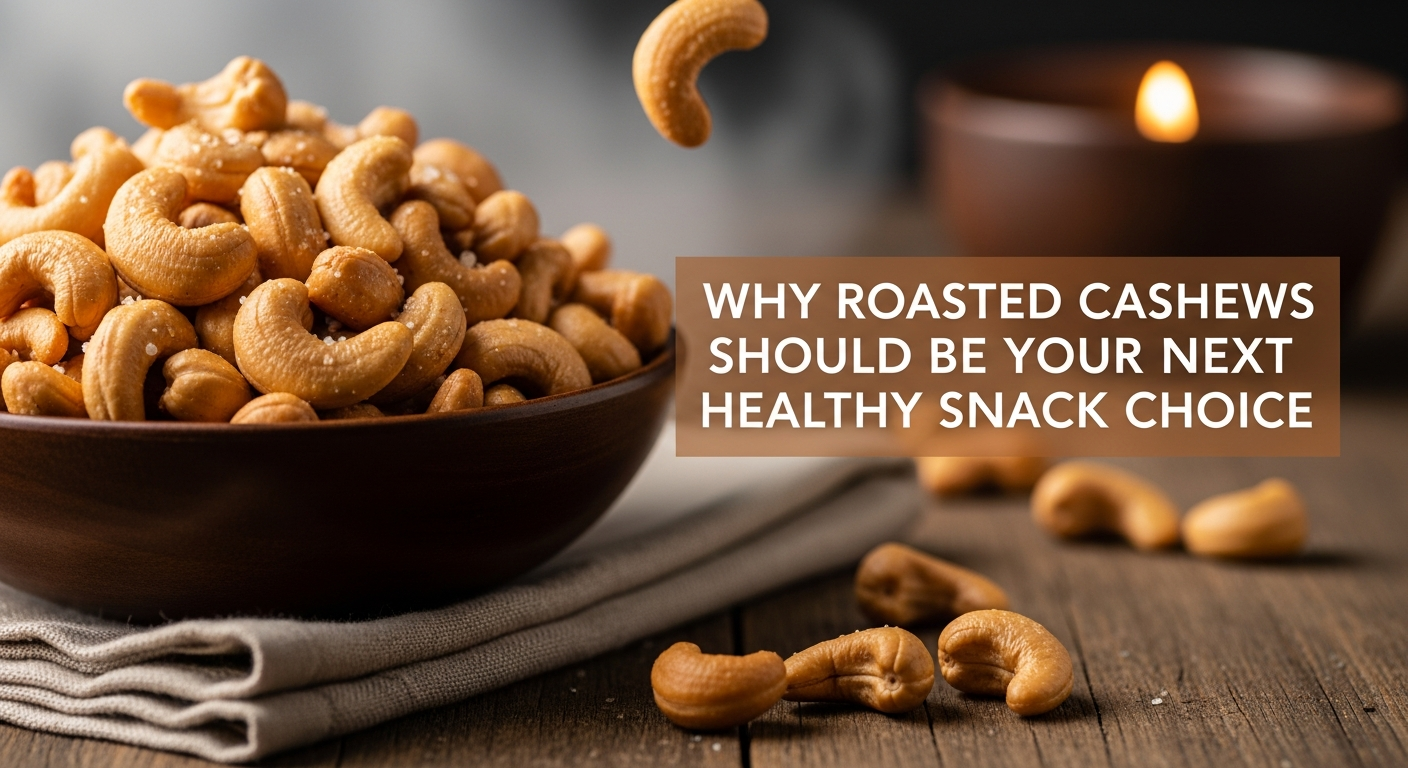
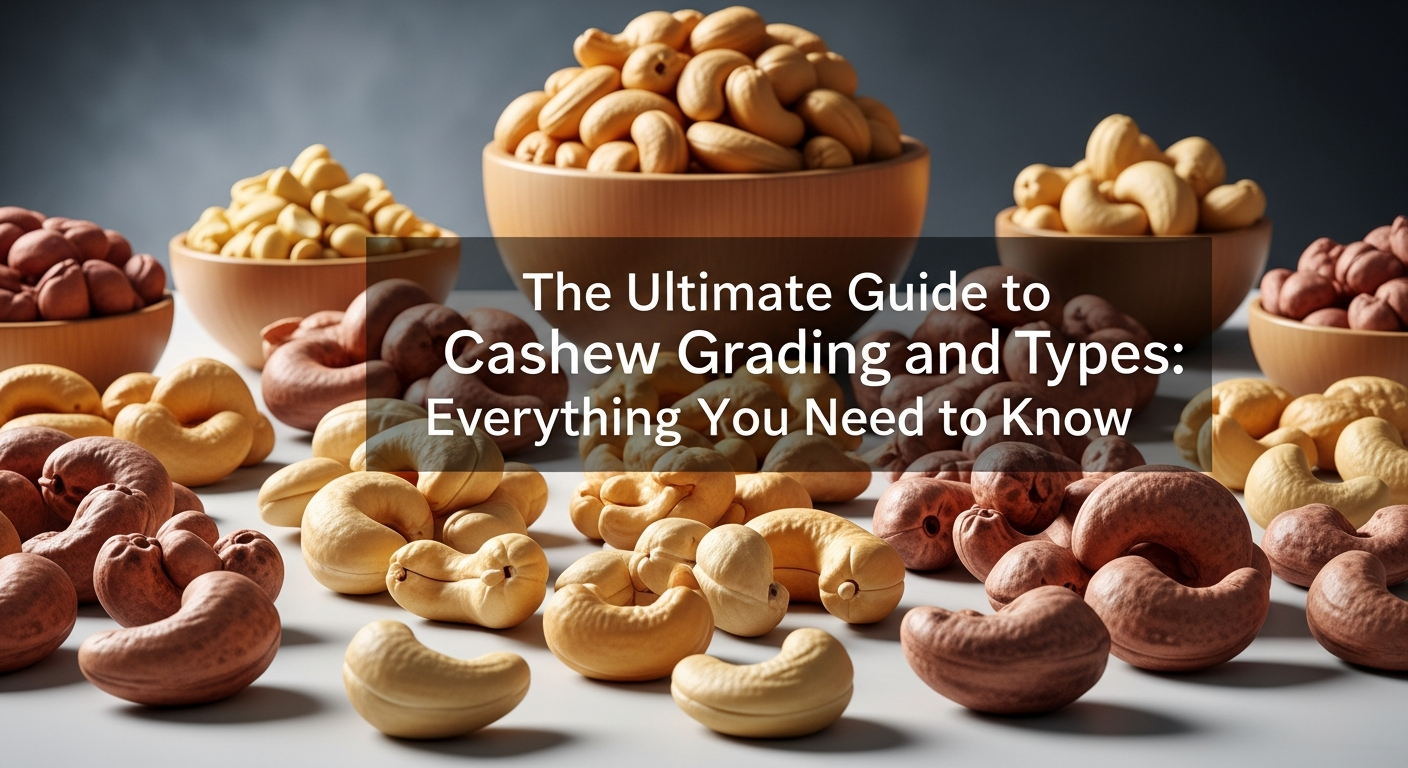
Cashew nuts are among the world's most loved type of nuts because of their rich taste, delicious creamy texture, and numerous uses in many foods including snacks, desserts and cooking. However, there are many different cashew varieties and grades of cashews based on kernel size, appearance, colour, form and whether the kernels are damaged in some way or not.
Each grade of cashews such as premium white whole, split(s) and smaller pieces are very different from one another and provide unique functions for buyers, retailers and food manufacturers. Understanding these classifications allows consumers to decide which cashews best meet their needs when snacking, roasting, baking, or purchasing large quantities.
Regardless of whether you are an owner/operator or a wholesaler; or simply a person who enjoys eating cashew nuts, knowing about the various classifications of cashew and their grading will improve the quality of your overall knowledge and buying decisions. Each type of cashew nuts, i.e., premium W240 and W320 cashews and low-cost broken kernels has its own individual value and importance to the larger markets around the world.
Understanding Cashew Grading: What It Means and Why It Matters
Understanding cashew grading/classification is important for anyone who is involved with cashews from wholesale to retail to consumers. Grading allows the classification of a product depending on several factors i.e. quality, size, colour and condition, thus assisting in maintaining consistency in cashew products throughout the market.
Grading systems therefore guide buyers in identifying the correct type of cashew to use for consumption, cooking, export and processing.
What Is Cashew Grading?
Grading of Cashew nuts is a process of categorising the nuts into various classifications according to internationally accepted standards for cashew quality.
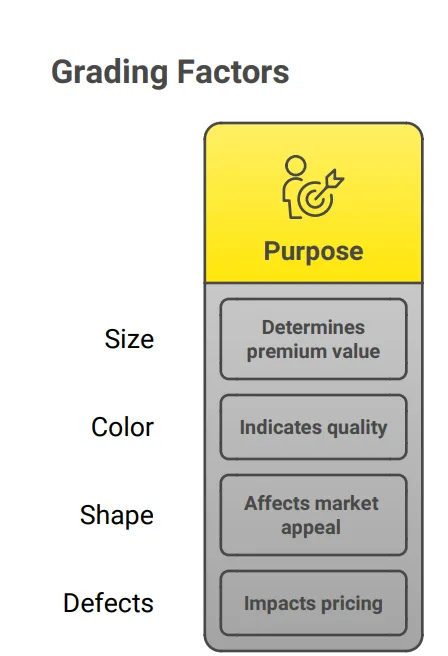
Key Criteria used to grade Cashew Nuts:
- Size of Nuts
- Appearance and Colour of Nuts
- Whole / Broken Nuts
- Defects / Marks on Nuts.
Importance of Cashew Grade Standards
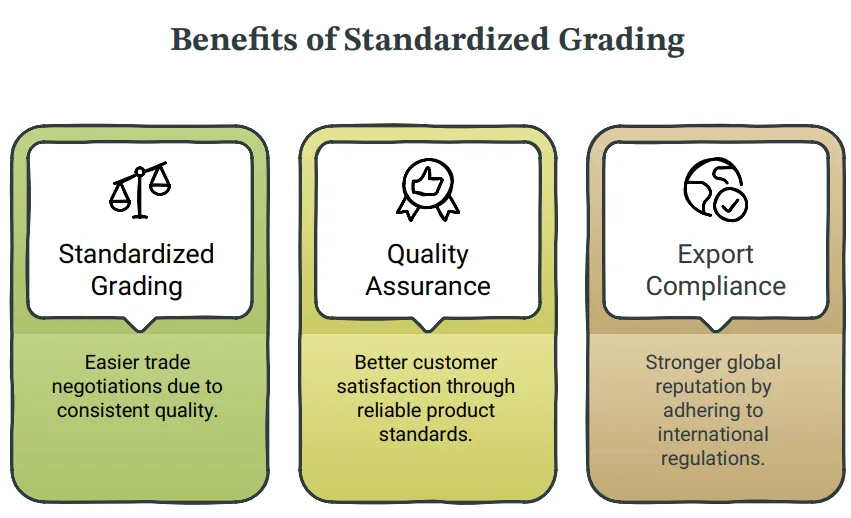
It is essential to have a proper grade system for cashews. This will create fair trade practices and allow buyers/sellers to trust that the product is of dependable quality.
Grading Standards Improve:
- Consistency of product
- Market value determination
- Ease of international trade
How does a grading system benefit businesses:
- Assist with pricing
- Increase buyer confidence
- Will assist in meeting export requirements

Why Cashew Grading Matters in Business
When it comes to companies that sell cashews, the impact of grading on profits and brand image is huge.
Grading's Importance in Business:
- Higher prices are received for harder to find, premium grades.
- Lower grades are used mostly for the food industry.
- Accurate grading eliminates discrepancies between sellers and buyers.
Factors Influencing Cashew Grading: Size, Color, and Defects
The grading of cashews, which contributes greatly to the quality and value of cashew products, is based upon a number of different factors, particularly with regard to size, colour and defects. These classifications provide assurance to buyers, exporters and food processors for meeting high standards of consistency and quality throughout the worldwide cashew trade.
Cashew Size Classification
Cashew grading primarily uses size to determine whether a cashew is of good quality or not, and therefore what prices will be paid in the marketplace; therefore larger types of the cashew kernel will generally carry a premium price.
Structure of size grading for Cashew Nuts:
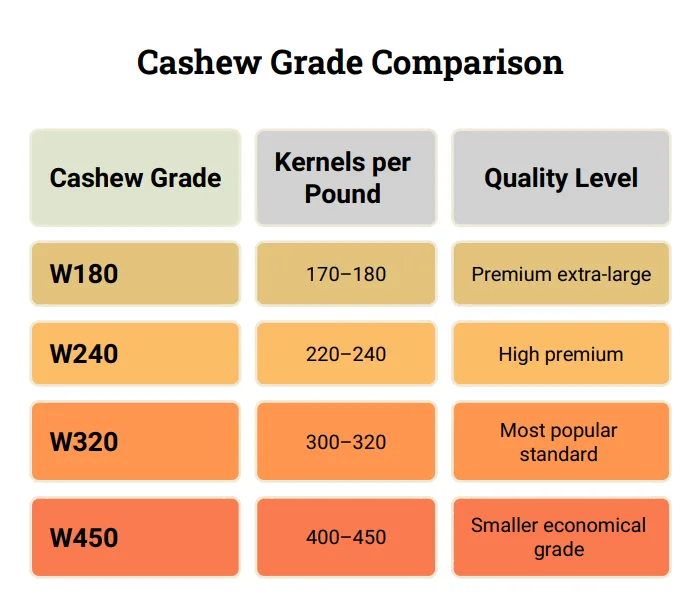
- The size of cashew nuts are classified by the number of cashews per lb of product
- The greater the number of cashew kernels per pound the smaller the average size of each individual cashew kernel.
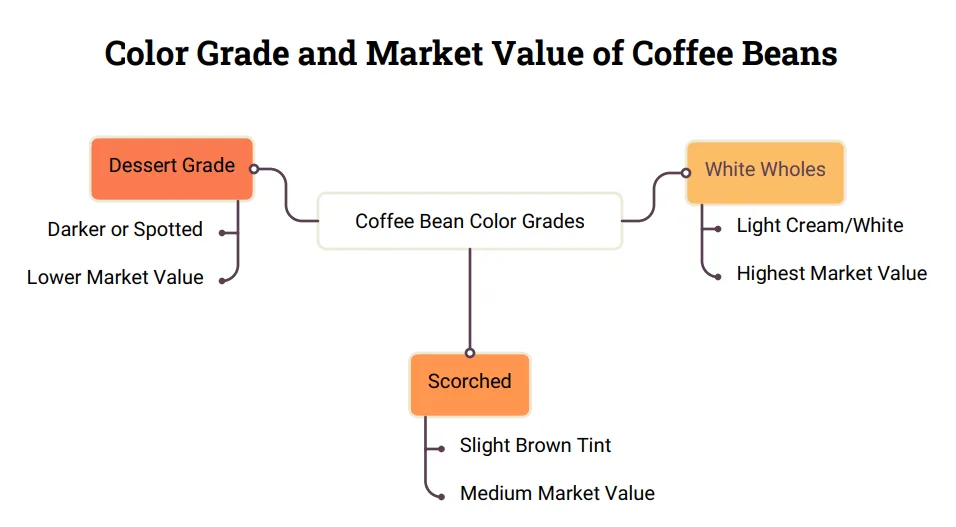
Color Grading Standards
In the cashew grading system, color is an important measure of cashew quality.
Main color categories included in cashew grading:
- White whole (highest grade),
- Black scorched (intermediate grade),
- Dried dessert-grade (lowest grade).
Common Defects in Cashews
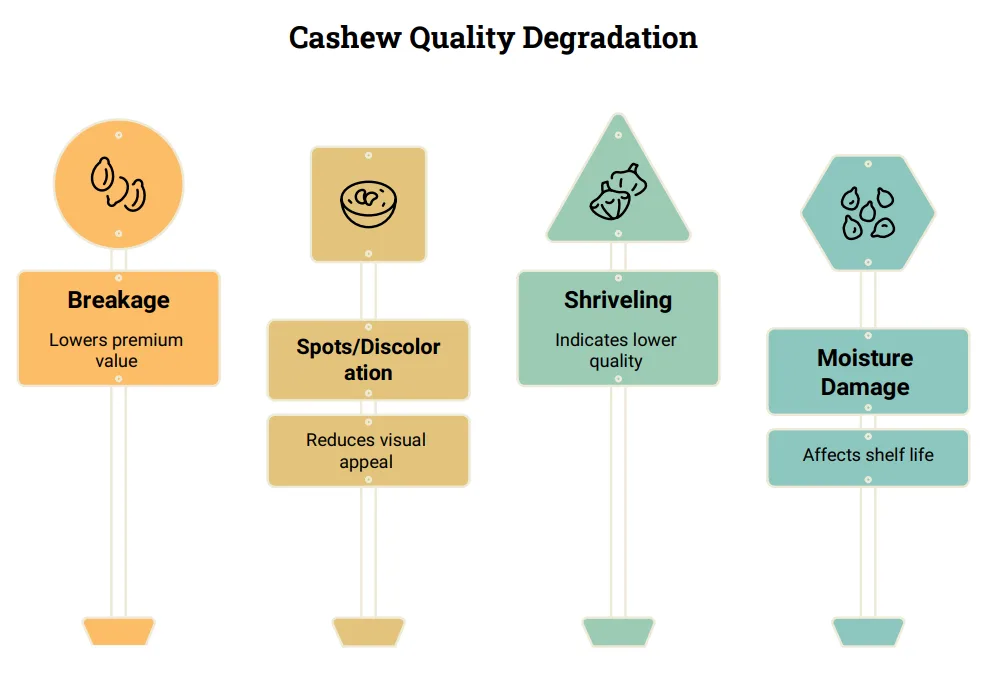
Defects also can devalue commercial cashew nuts, leading to different classifications.
Common defects include:
- Cracked or broken pieces of nuts
- Blackened or discolored nuts
- Dried-out or rotten nuts
- Signs of infestation in nuts.
Popular Cashew Grades in the Market and Their Uses
In the global cashew market, there are multiple cashew grades, which were developed for the purpose of meeting customer and business needs. Familiarity with many cashew grades can help cashew buyers make better selections for snacking, roasting, producing food, and exporting. The classification of cashew grades is performed according to kernel size, quality, and appearance, which is directly related to price and how an end user will use that type of cashew.
W320 Cashew Grade
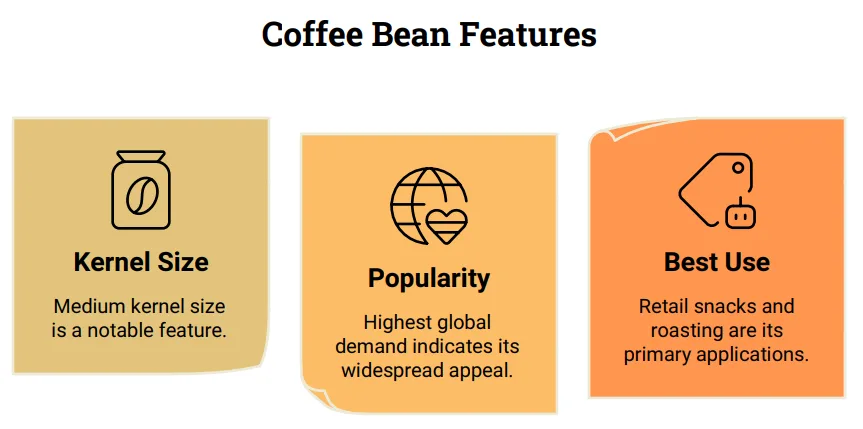
The W320 Grade of Cashew Nuts is the world’s most common grade of cashew nuts and is widely traded around the world. The W320 grade of cashew nuts combines size, quality, and cost-effectiveness.
Features of W320 Cashew Nuts:
- Around 300–320 kernels per pound
- Medium-sized, whole, white kernels
- Uniform in appearance with very few defects.
W240 and W450 Cashew Grades
W240 and W450 are two types of common grade types from cashew nuts, which are both major categories found in the market.
W240 cashew grade
This is the Premium Large Kernels category for cashew nuts.
Characteristics:
- Large attractive kernels
- Higher Prices are available in the market
- Most popular to use for luxury gifts or gift packaging
W450 cashew grade
This type of cashew nut contains smaller kernels and is less expensive.
Characteristics:
- Small size
- Low Price per kernel
- Good for bulk use or processing of bulk nuts
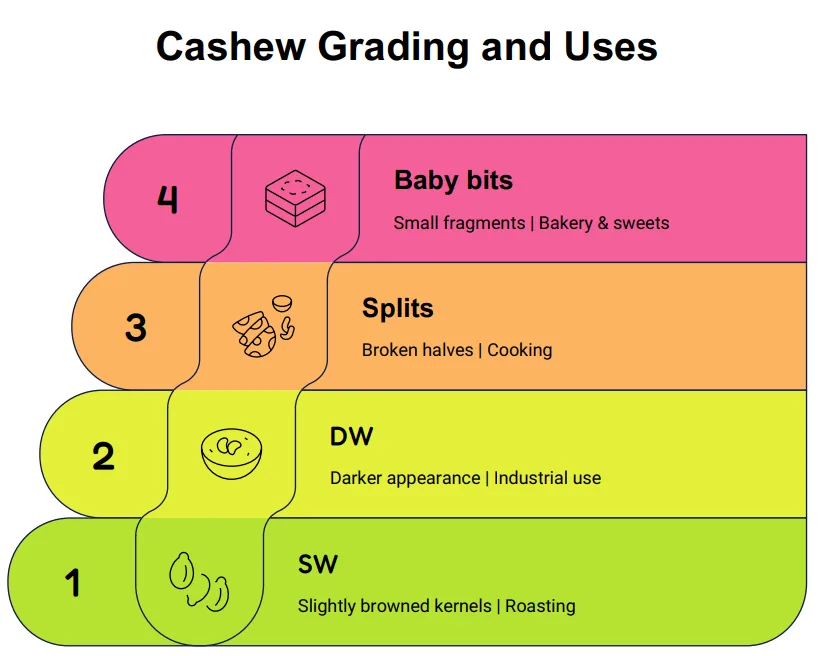
Other Common Cashew Grades
Besides the white whole grades, there are many other types of classification available to classify cashews.
Examples of the many other classifications include:
- Scorched Whole (SW)
- Dessert Whole (DW)
- Splits and Pieces
- Baby Bits and Butts
How Cashew Grading Affects Pricing and Market Value
Grading is critical to determining the commercial value of cashews, both domestically and internationally. Size, shape, color and other defects are key elements affecting pricing/consumer demand in the cashew grading/type market.
High quality cashews are likely to have better visual presentation and higher overall market value.
Price Differences by Cashew Grade
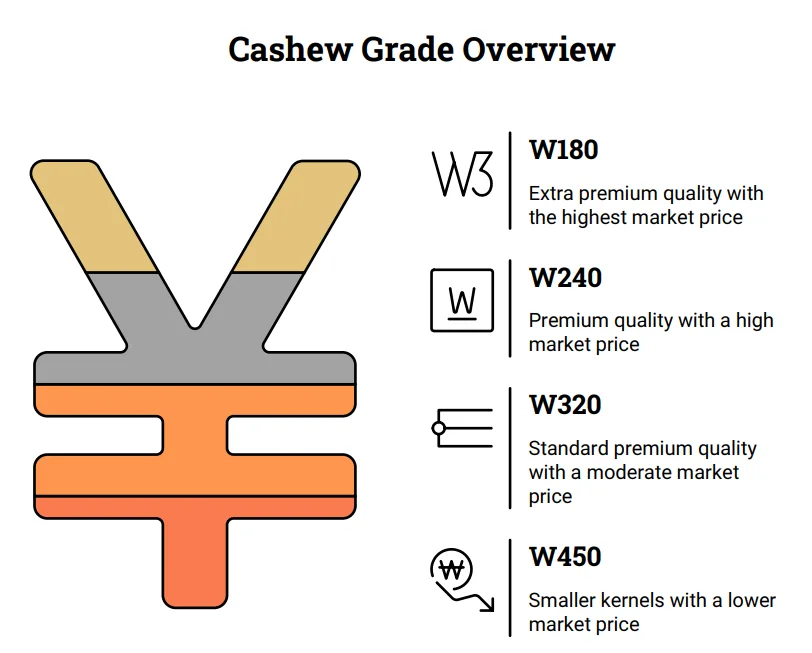
Cashew grades correspond to the quality of the cashew kernel — the larger the kernel, the less common it is and the more expensive it is to purchase.
Reasons why the most expensive (premium) grades are the most costly:
- Large kernels are less likely to be found in the market
- A more attra... more appealing to consumers
- A lower percentage of defects improves exportability and thus adds to the product's overall value.
Consumer Preferences and Market Demand
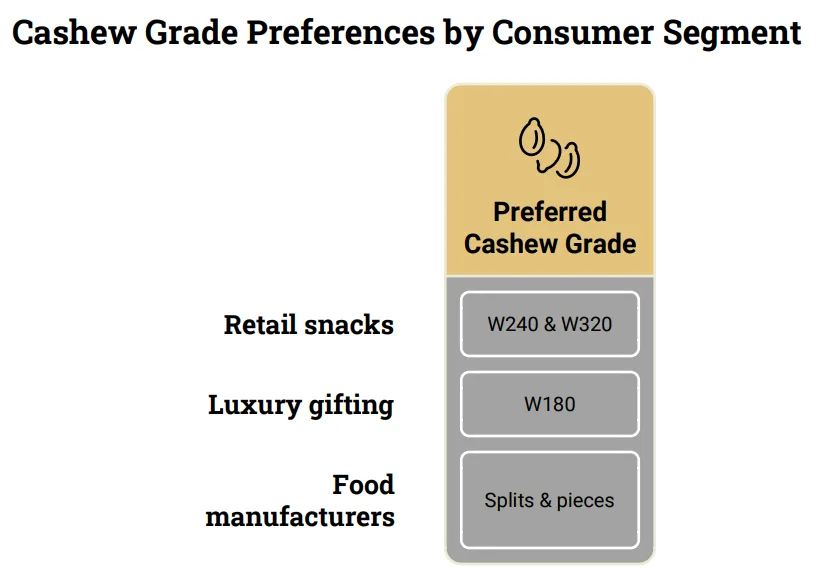
The demand for cashew nuts by consumers has a big impact on the value of different grades of nut.
Consumer preferences for premium product:
- Whole white kernels
- Uniform in size/colour
- Fresh, visually appealing cashew nut
Cashew Quality Assurance and Buyer Confidence
Commonly accepted grading standards help build trust with suppliers, exporters and customers.
Benefits of assurance:
- Fewer product disputes
- Consistent shipments
- Improved brand image
Enjoying this read? Get more like it.
Get fresh snack inspiration and updates from our team.
The Role of Cashew Grading in Export and Import Regulations
The Cashew Grading System is critical to the global trade of cashews. Cashew grading is one of the most important elements in meeting any export obligation and is also an important contributing factor to food safety and confidence between buyers and sellers on a global scale.
A uniform grading system will ensure uniformity in product quality among the various global trading countries and channels.
International Cashew Grading Standards
International grading systems provide a classification system of cashew products, which will help classify the products based on physical characteristics including size, color, and "kernel condition", the character of the kernel after it has been harvested.
Some international cashew grading categories include:
- White whole (W) grades
- Scorched whole (SW) grades
- Dessert whole (DW) grades
- Split and broken piece (SBP) grades
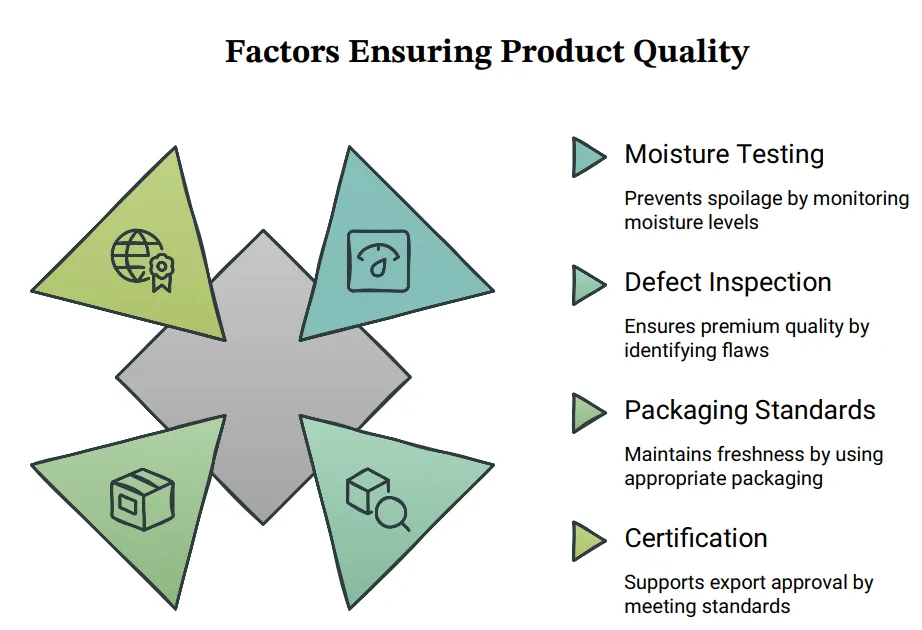
Certification and Quality Control
Quality assurance supports that they (exported cashews) enter the market in compliance with global health and safety requirements.
Key aspects of quality assurance include:
- Moisture Testing
- Inspection for damages & contamination
- Verification of the size & color
- Compliance with packaging & labeling requirements
Why Export Standards Matter
Establishing exports will facilitate a global economy and secure public confidence in products through:
- Reducing the likelihood of rejected shipments
- Enhancing access to foreign markets
- Establishing long-lasting buyer trust
Tips for Choosing the Right Cashew Type and Grade for Your Needs
Choosing the type of cashew you would like to purchase is determined by what you will be using the product for. There are many options available in grades and types of cashews to select from, but understanding the intended use of each grade will help consumers/retailers/businesses make informed decisions.
All cashew types, from very high-end premium snack grade kernels to low-end broken half pieces, are valuable in the current market.
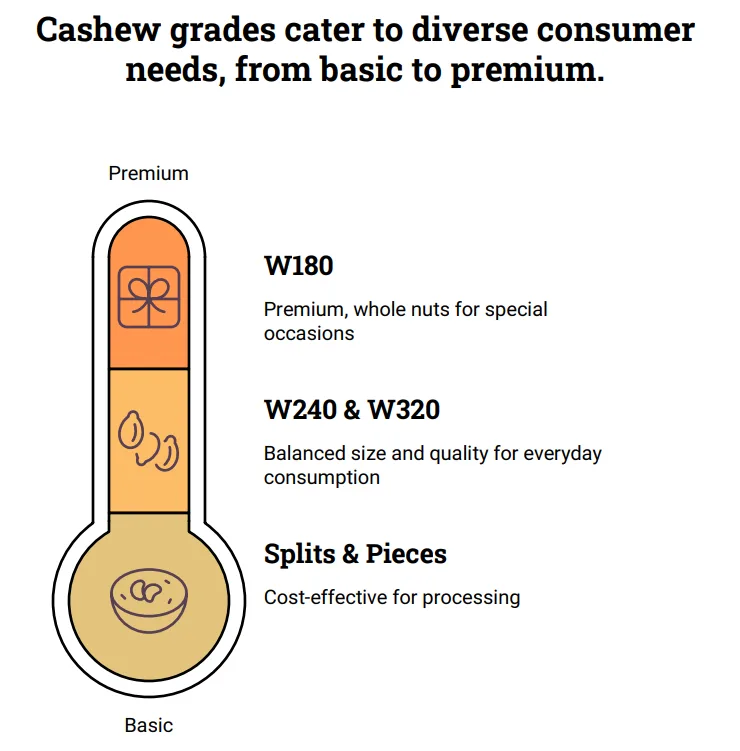
Best Cashew Grades for Snacking
Whole white cashews are the best type of cashew to use when snacking directly from the bag (in terms of their size, visual appearance, and texture).
The following list of whole white cashew grades is considered to be the highest quality whole nuts for direct consumption as a nut snack:
- W180 – Extra-large premium kernels
- W240 – Large, visually appealing whole cashews
- W320 – Most popular everyday snack grade whole cashew
Choosing Cashews for Cooking and Baking
Many use split or broken cashew pieces instead of whole pieces because using the split or broken pieces is often cheaper than using whole pieces.
Best grade of nuts for cooking:
- Splits
- Broken Pieces
- Baby Pieces
Bulk Buying and Quality Assurance Tips
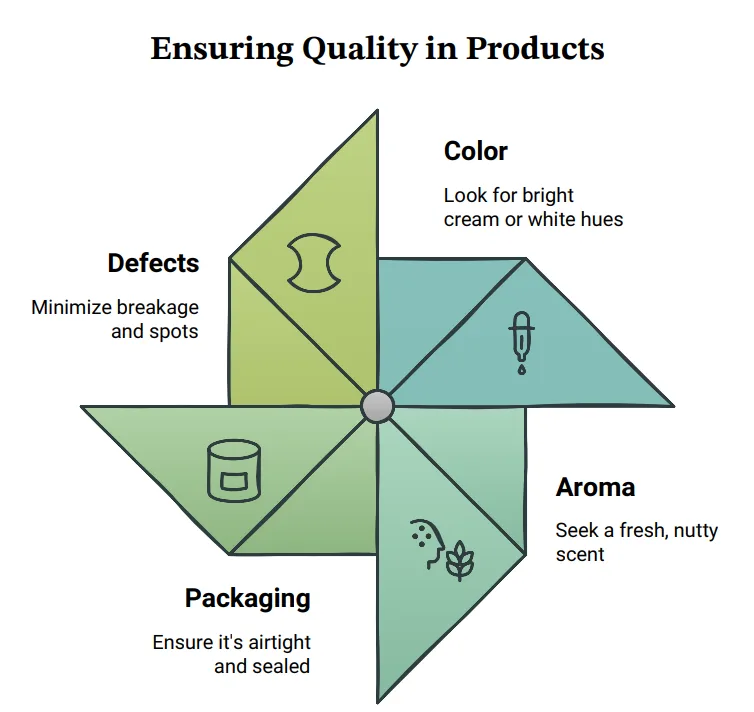
When buying cashews in bulk it is important to check for quality to ensure that the product will have a consistent freshness and flavor each time you buy it.
Important Buying Tips:
- The nuts should all look the same size and color.
- There should not be too many of the nuts that are split or damaged.
- Make sure all of the nuts are in a moisture-free bag.
- The store you will buy from should be very reputable.
FAQs
Q1. What is cashew grading and types?
Cashew grading and types refer to the classification of cashews based on size, color, quality, and whether the kernels are whole or broken.
Q2. Which cashew grade is best?
W180 and W240 are considered premium grades because of their large size and high-quality appearance.
Q3. What does W320 mean in cashews?
W320 stands for “White Whole 320,” meaning there are approximately 320 whole kernels per pound.
Q4. Why does cashew grade affect price?
Higher cashew grades have larger, cleaner, and more visually appealing kernels, which increases their market value and demand.
Q5. Which cashew grade is best for cooking?
Splits, broken pieces, and W450 grades are commonly preferred for cooking and baking because they are more affordable and practical.
Conclusion: Master Cashew Grading and Types to Make Smarter Purchasing and Selling Decisions
If you're an exporter/dealer/consumer/buyer of cashew nuts, etc., it is necessary that you have knowledge of the different types or grades of cashew nuts as these classifications are all associated with different uses that depend on their quality, size, appearance and market demand.
Understanding how to classify the various types/grades of cashew nuts will allow you to know which types/grades would fit your business best when acquiring cashew nut products.Additionally, the proper classification of the different grade/types of cashews will assist in establishing the right price for your product, will satisfy the requirements of the country of export, and will provide your customers with the quality expected.
High quality cashew products that are all the same size and colour should be sold at a higher price than lower quality cashew products that are the same size and colour but different types/grades and hence will be priced lower but are still usable in the food service industry (e.g. cooking, baking etc.) and in the food processing industry.
In conclusion, if you learn to classify the types and grades of cashew nut and understand the types and grades of product available, you will be able to understand/categorize the numerous global cashew markets better, and you will be able to make well-informed buying/selling decision based on expected quality/cost/application of your cashew nut products.