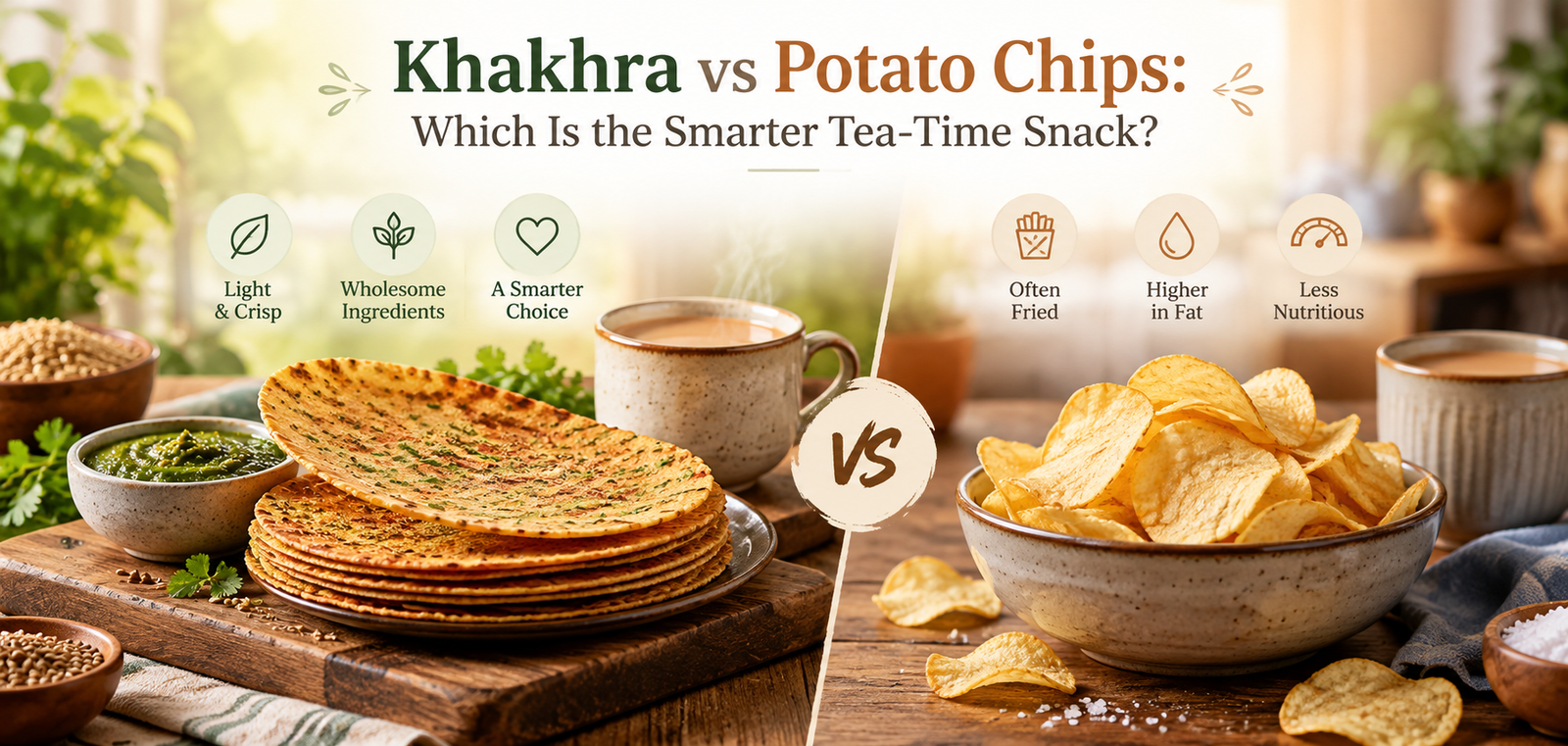
The 5 pm craving is real, and for most of us it ends with a packet of potato chips next to the chai. If you have been wondering whether khakhra vs potato chips is a fair fight, the short version is that one is roasted and wholegrain while the other is deep-fried and mostly starch. This guide compares the two on calories, fat, fibre and how full they keep you, so you can pick the smarter tea-time snack without giving up the crunch.
Quick answer
For everyday snacking, plain or methi khakhra is the smarter choice. A 30 g serving of roasted wheat khakhra typically has about a quarter fewer calories, roughly a third of the fat and more than twice the fibre of the same weight of fried, salted potato chips, and it keeps you full for longer.
Key takeaways
- Khakhra is roasted on a hot plate; regular potato chips are deep-fried in oil.
- Per 30 g, khakhra typically gives around 120 kcal and 3 g fat, chips around 160 kcal and 10 g fat.
- Whole wheat flour adds fibre and protein, which slow you down and curb the second-packet urge.
- Toppings matter: pair khakhra with a protein and a vegetable for a balanced tea-time plate.
- Baked vegetable chips are a good middle ground when you want a chip-style snack.
What is khakhra, and how is it different from chips?
Khakhra is a thin, crisp Gujarati flatbread made from whole wheat flour, a little oil and spices such as methi, jeera or masala. The dough is rolled paper-thin and roasted slowly on a tawa while being pressed down, which drives out the moisture and gives that signature snap.
Potato chips start as thin slices of potato that are fried in hot oil until crisp, then salted or flavoured. Frying is what makes them so moreish, and it is also where most of their fat and calories come from.
How each snack is made
- Khakhra: whole wheat dough, rolled thin, dry-roasted under pressure. Only a small amount of oil goes into the dough.
- Fried potato chips: sliced potato, deep-fried, then seasoned. The slices soak up oil while they cook.
- Baked vegetable chips: sliced beetroot or sweet potato, baked or air-dried instead of fried, so they sit between the two.
Khakhra vs potato chips: nutrition compared
The numbers below compare a 30 g serving, which is about two khakhras or a small handful of chips. They are typical values and vary by brand and flavour, so always check the label on your pack.
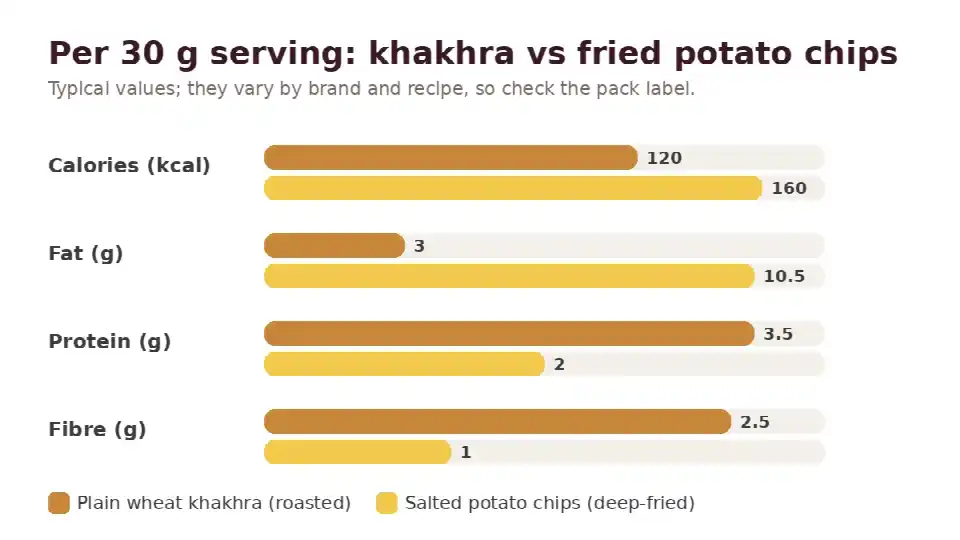 Per 30 g, roasted khakhra carries far less fat and more fibre than fried potato chips.
Per 30 g (typical)Plain wheat khakhraSalted potato chipsEnergyabout 120 kcalabout 160 kcalFatabout 3 gabout 10.5 gProteinabout 3.5 gabout 2 gFibreabout 2.5 gabout 1 gCooking methodDry-roastedDeep-fried
~25%fewer calories per 30 g
~70%less fat than fried chips
2x+the fibre, from whole wheat
ℹ️Note: flavoured khakhras with butter, cheese or sugar coatings are higher in fat and calories. For the best numbers, choose plain, methi or jeera versions.
Why khakhra is the smarter tea-time snack
Calories are only part of the story. What makes khakhra work as a daily snack is how it behaves once you start eating it.
Fibre and protein keep you full
Whole wheat brings fibre and a little protein, both of which slow digestion. Two khakhras with chai feel like a proper snack, while a bag of chips is easy to finish before the tea has cooled.
Roasted, not fried
Because khakhra is dry-roasted, it carries a fraction of the oil found in fried snacks. That makes it easier to fit into a weight-conscious or heart-friendly routine without feeling deprived.
✓ Khakhra
- Wholegrain and roasted
- More fibre and protein
- Long shelf life, easy to carry
- Works with toppings for a mini meal
✗ Fried potato chips
- Deep-fried, high in fat
- Low in fibre, easy to overeat
- Often high in salt
- Little to keep you full
Swap your chai-time chips today
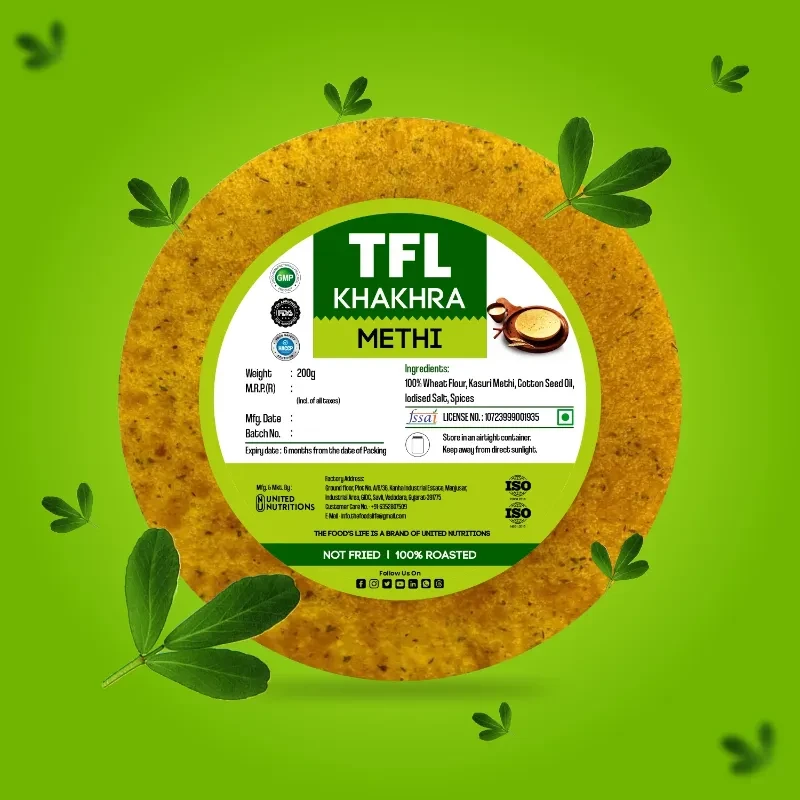
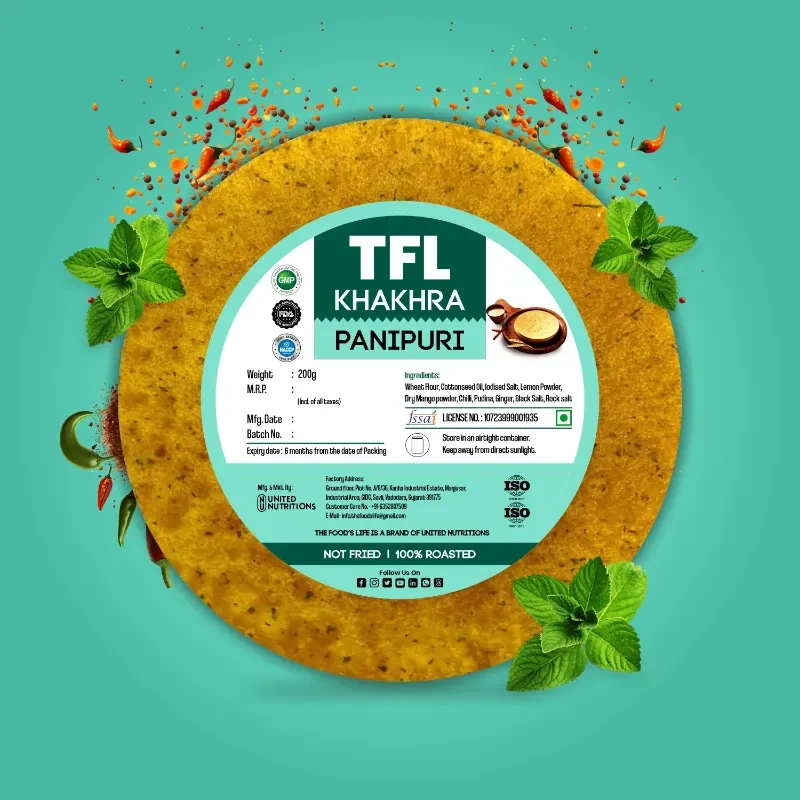
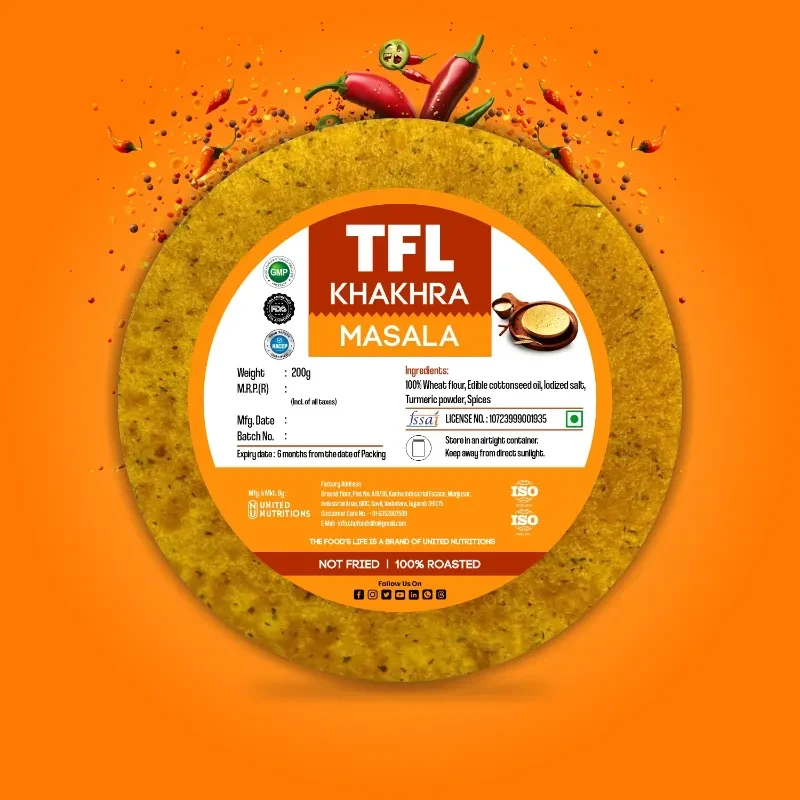
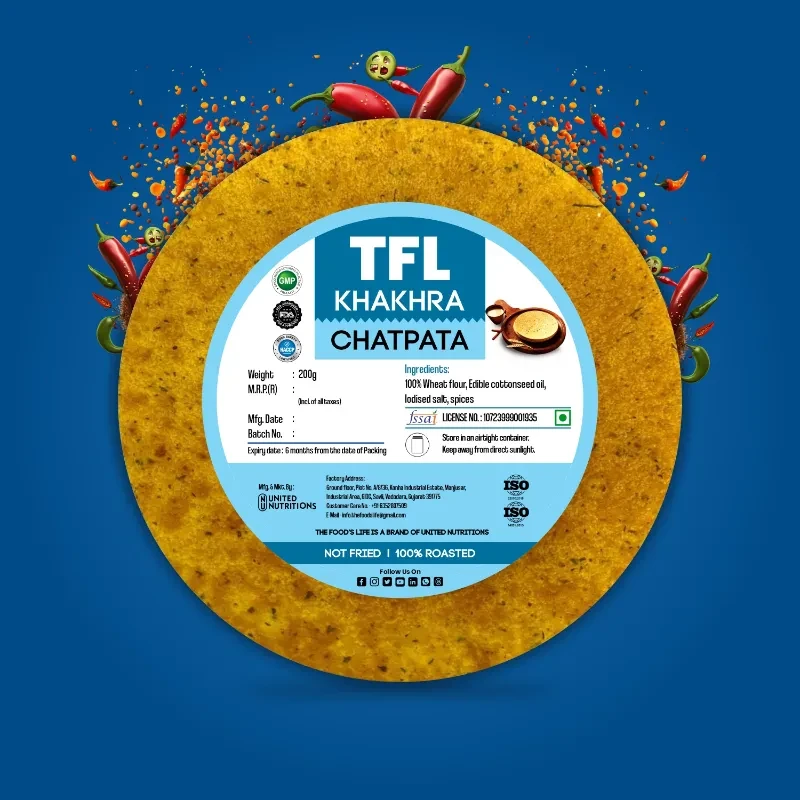
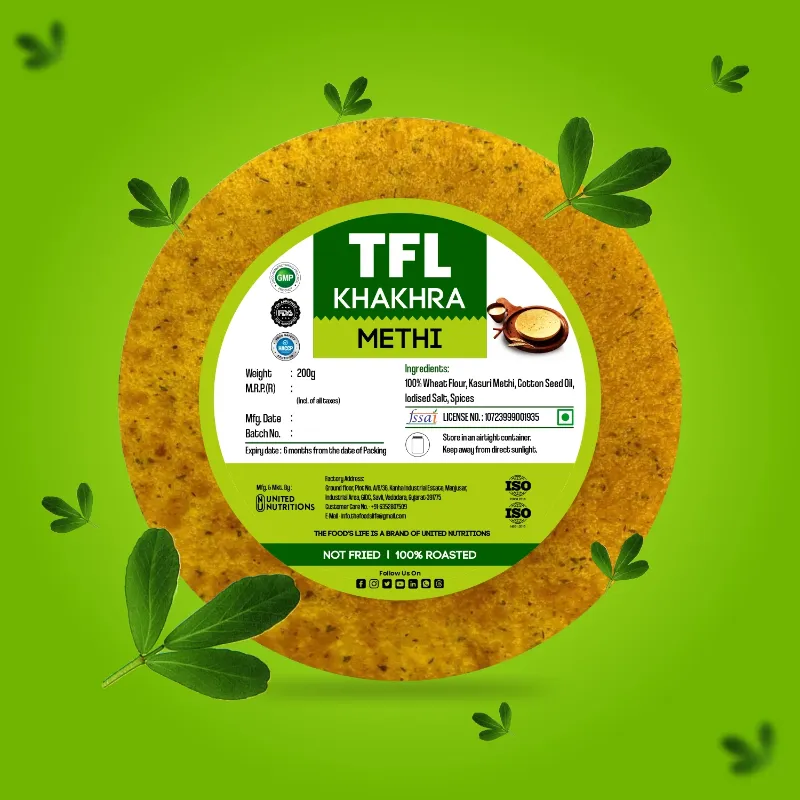
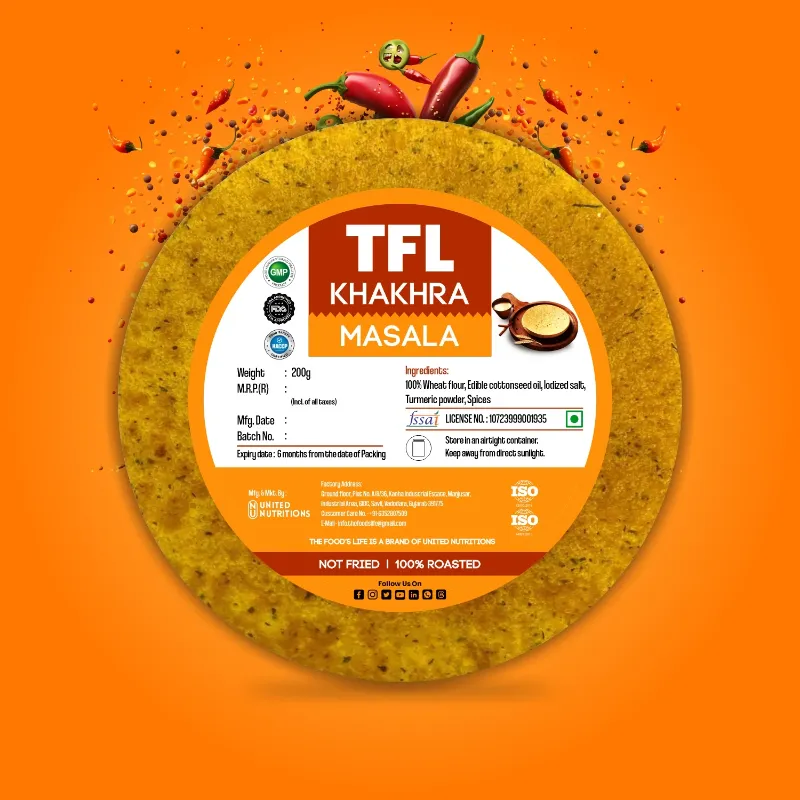
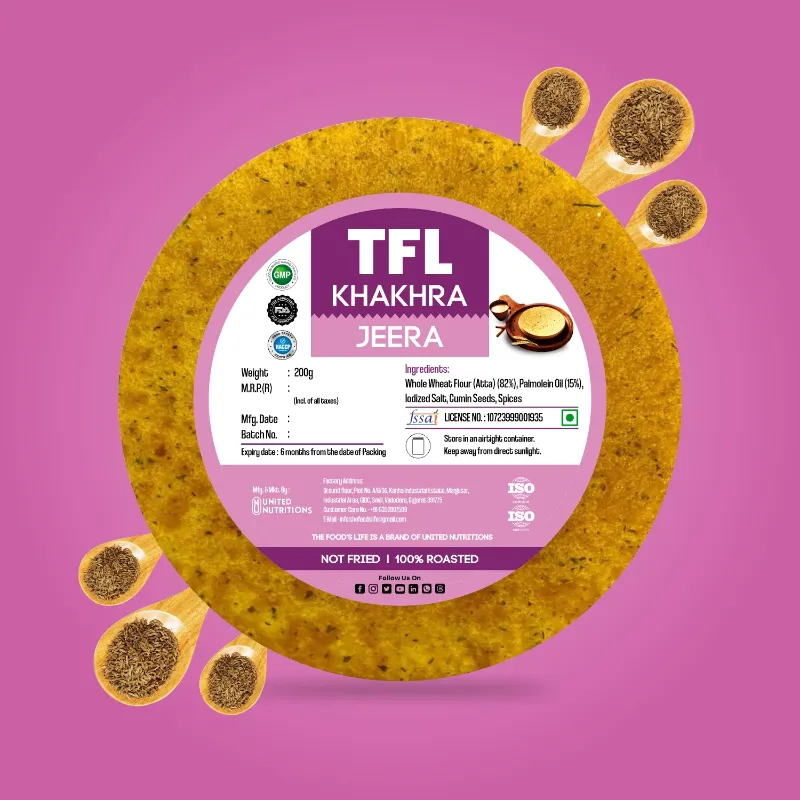
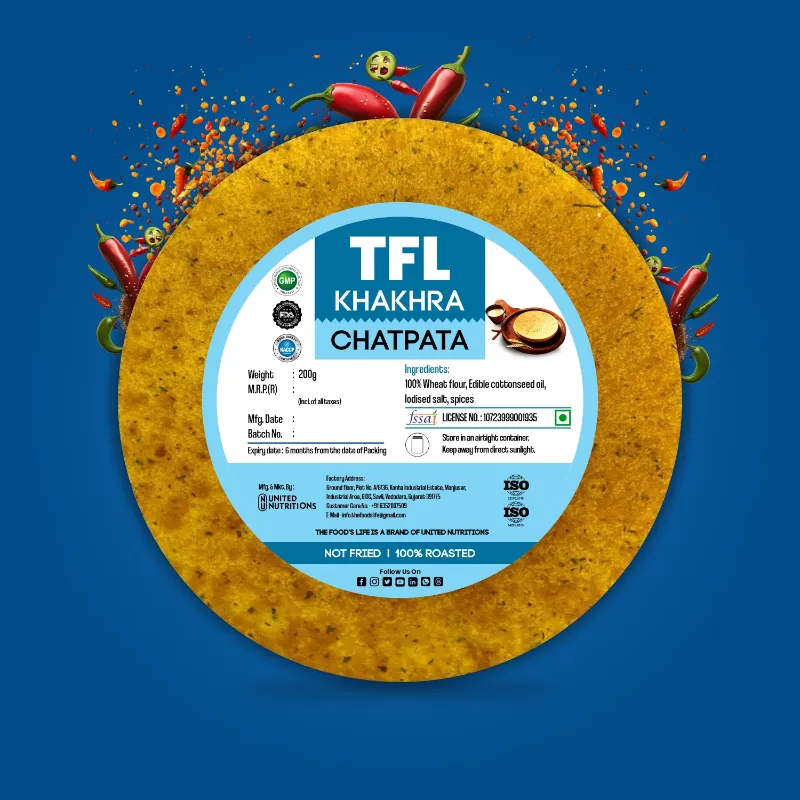
Explore roasted plain, methi and masala khakhras from The Foods Life.
How to build a better tea-time plate
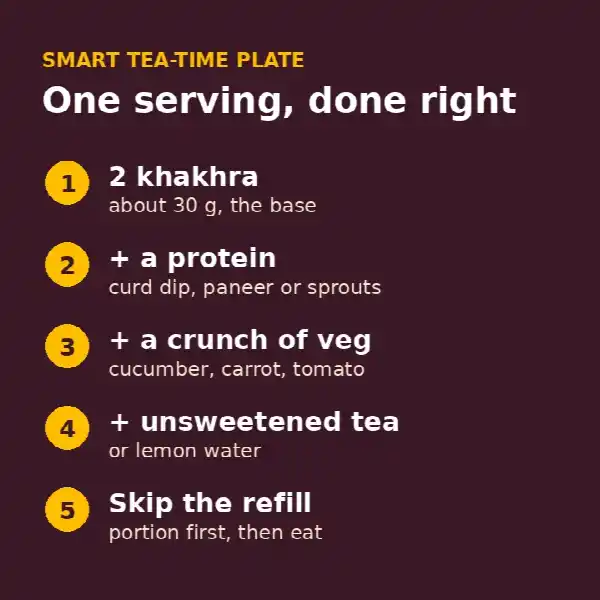
A simple formula: khakhra, a protein, a vegetable and unsweetened tea.
Khakhra is at its best when it is part of a small, balanced plate rather than eaten straight from the pack. Think of it as the crunchy base and add something that brings protein and freshness.
Try a spoon of hung curd, a few cubes of paneer, sprouts chaat or a smear of peanut chutney on top. Add cucumber, tomato or onion on the side, and you have a snack that holds you until dinner.
Keep the tea unsweetened or lightly sweetened, and skip the second refill of snacks. Most of the benefit disappears if the plate turns into a buffet.
- 1Pick the base. Two plain or methi khakhras, about 30 g.
- 2Add a protein. Hung curd, paneer, sprouts or a peanut chutney.
- 3Add colour. Cucumber, tomato, onion or a handful of salad leaves.
- 4Pour the tea. Unsweetened or lightly sweetened chai, and stop at one plate.
When you really want chips
Some days only a chip will do, and that is fine. The trick is to choose a lighter chip and portion it out instead of eating from the bag.
- Baked vegetable chips: beetroot chips and sweet potato chips give the crunch with less oil than fried potato chips.
- Portion first: tip a small bowl, about 30 g, and put the pack away.
- Mix it up: half a portion of chips with one masala khakhra still feels like a treat.
💡Tip: keep a pack of plain khakhra in your desk drawer or bag. The snack you can reach first is usually the one you eat.
Frequently asked questions
Is khakhra healthier than potato chips?
For most people, yes. Plain khakhra is roasted rather than fried, so it typically has far less fat, fewer calories and more fibre than the same weight of salted potato chips.
How many khakhras can I eat in one snack?
Two khakhras, roughly 30 g, is a sensible tea-time portion. Pair them with a protein topping and vegetables if you want the snack to keep you full for longer.
Is khakhra good for weight loss?
Khakhra can fit into a weight-loss plan because it is low in fat and filling for its calories. Portion size and toppings still matter, so avoid butter, cheese or sugary versions.
Which khakhra flavour is the healthiest?
Plain, methi and jeera khakhras are usually the lightest choices. Methi adds flavour and a little extra fibre without adding much fat.
Are baked vegetable chips a good alternative?
Baked beetroot or sweet potato chips are a better pick than fried potato chips when you want a chip-style snack. Keep the portion to a small bowl.
Can people with diabetes eat khakhra?
Whole wheat khakhra in a small portion, paired with protein, is often a better option than fried snacks. Everyone's needs differ, so check with your doctor or dietitian about what suits you.
Conclusion
In the khakhra vs potato chips match-up, roasted wholegrain khakhra comes out ahead on calories, fat and fibre, and it keeps you satisfied for longer. Keep chips for the occasional treat, choose baked versions when you can, and make khakhra your everyday tea-time crunch. Browse the full khakhra range to find your favourite flavour.


 +91 63528 07509
 sales@thefoodslife.com
 225, Orchid Plaza, Sama-Savli Rd, behind McDonald's, Vemali, Vadodara, Gujarat 390008